
Waymo developed its own chip for robotaxis and released its list of suppliers.
Waymo has revealed details about the contents of its robotaxis' trunk. A blog post published on Thursday outlined the structure of its onboard computer, introduced a custom 5-nanometer chip it designed itself, and listed the seven suppliers it collaborates with to create the system. The company describes this as the first glimpse into its trunk, which is significant for a company that typically shares very little about its hardware.
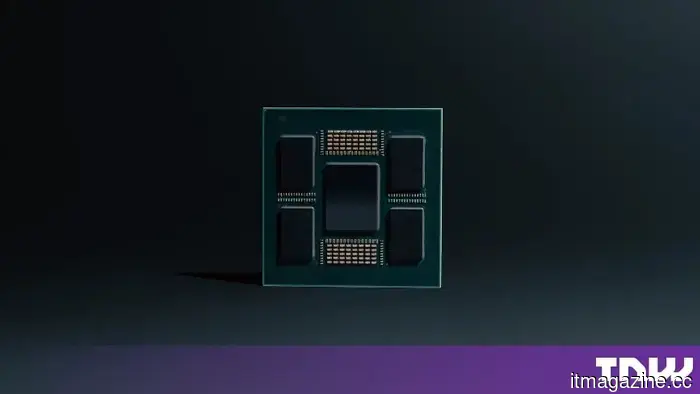
What the chip actually does is an area where the coverage and the company differ, so it’s important to be clear. The chip is an application-specific integrated circuit (ASIC) created using a 5nm process. Waymo states that it processes “the massive influx of raw data before it reaches our core ML brain.” It retrieves information from raw lidar, radar, and camera feeds, including temporal denoising for improved perception in low light, and then sends that data to a separate inference engine that operates the sensor-fusion models. Essentially, it functions as a front-end processor, preparing what the driving system observes rather than determining the vehicle's actions.
This distinction is critical for the performance figures cited. Waymo claims that “these ASICs alone deliver over 1,000 TOPS of ML performance dedicated to front-end processing and ML models.” Bloomberg noted that, based on this metric, Waymo's performance would be on par with Nvidia's latest autonomous-driving systems. This comparison involves one component performing a singular task versus entire driving platforms, but it is not a claim made by Waymo.
Waymo has not eliminated Nvidia from its partnerships, nor has it moved away from AMD; both are included in the supplier list along with Micron, Samsung, Sandisk, Socionext, and TSMC. The company describes a “balanced, heterogeneous system” that integrates its own machine-learning silicon with what it deems the top CPUs, GPUs, and accelerators available. The custom chip provides additional capability rather than replacing the commercial parts surrounding it.
Waymo also indicated that the ASIC is “just one of several exciting custom components we’re developing.” More proprietary silicon is forthcoming, although the company hasn't disclosed specifics.
Waymo's system is built around three main requirements: responsive, ruggedized, and redundant. The first requirement, latency, has led the company to coining the term “pixels-to-actuation” to describe the delay from when a photon hits a sensor to when the car reacts. In the past eight years, their raw computing power has increased twentyfold to reduce this latency.
The second requirement is physical durability. The computer is installed in a car, not a server rack, meaning it must withstand vibrations, shocks, and extreme temperature fluctuations from Midwest winters to Phoenix summers. Waymo connects it to the vehicle’s liquid cooling system, ensuring it operates silently while allowing for cargo space.
The third requirement is particularly noteworthy. According to the post, “Our compute is designed like two independent engines.” They typically function together handling full parallel workloads, but if one encounters a malfunction, the other assumes control. There is no human fallback, so the redundancy exists in the hardware itself.
Regarding scale, Waymo highlights that it has accumulated more than 200 million miles of fully autonomous experience informing this design. Currently, it operates about 4,000 vehicles across more than ten cities, reporting around 500,000 paid trips per week, as noted by The Verge. All these numbers come directly from Waymo. The company also asserts that its technology reduces accidents and injuries compared to human drivers, based on its own safety data, which has not been independently verified.
The system can process data from 13 high-resolution cameras simultaneously, which corresponds to the Ojai, a purpose-built four-seater also equipped with four lidar sensors. Zeekr, a subsidiary of the Chinese automaker Geely, manufactures the Ojai. TNW reported in May that the vehicle is more cost-effective to produce, more durable, and produced in China. Bloomberg has indicated that the custom chip is now being installed in Ojai vehicles, although specifics on quantity and timelines have not been disclosed.
Political considerations are relevant here, as Washington has been tightening regulations concerning Chinese vehicle hardware throughout the year. One supplier, identified by the Pentagon as a military entity, still employs Chinese lidar in American robotaxis. Waymo’s collaboration with Geely—where Waymo designs the intelligence while Geely manufactures the vehicle—serves as a response to this challenge, though neither company has explicitly framed it this way.
Just a day before the chip announcement, Waymo made the Ojai available to all riders in Los Angeles, Phoenix, and San Francisco, as reported by Engadget, after previously limiting it to select invitations.
Waymo is not acting in isolation; its parent company has been working on silicon design for years to manage AI infrastructure costs. Additionally, this past Wednesday, Marvell granted Google a $12.2 billion share option under a custom-chip agreement.
One notable comparison involves Waymo's
Other articles
 Octopus Charge consolidates 210,000 US charging stations into a single app, excluding Tesla, Ionna, and Electrify America.
Octopus Energy has introduced Octopus Charge in North America, featuring 210,000 chargers. In Europe, the service boasts 1.5 million chargers, which is attributed to regulatory requirements.
Octopus Charge consolidates 210,000 US charging stations into a single app, excluding Tesla, Ionna, and Electrify America.
Octopus Energy has introduced Octopus Charge in North America, featuring 210,000 chargers. In Europe, the service boasts 1.5 million chargers, which is attributed to regulatory requirements.
 A data center rack utilizing living neurons is now functioning in Singapore.
In Singapore, NUS, DayOne, and Cortical Labs have established a 20-unit rack of biological computers. However, the assertion of its efficiency lacks specific numerical support.
A data center rack utilizing living neurons is now functioning in Singapore.
In Singapore, NUS, DayOne, and Cortical Labs have established a 20-unit rack of biological computers. However, the assertion of its efficiency lacks specific numerical support.
 Android 17 prefers to slow down a single problematic app instead of affecting the performance of your entire phone.
Android 17 implements tougher memory limits for individual apps, which can either slow down or shut down apps that are using excessive memory. This provides Google with a fresh method to safeguard overall phone performance before a single memory-intensive app leads to broader issues.
Android 17 prefers to slow down a single problematic app instead of affecting the performance of your entire phone.
Android 17 implements tougher memory limits for individual apps, which can either slow down or shut down apps that are using excessive memory. This provides Google with a fresh method to safeguard overall phone performance before a single memory-intensive app leads to broader issues.
 Windows 11 will be removing the Drag Tray feature.
Microsoft is eliminating the Drag Tray feature from Windows 11 following user feedback that the file-sharing overlay disrupted regular drag-and-drop operations.
Windows 11 will be removing the Drag Tray feature.
Microsoft is eliminating the Drag Tray feature from Windows 11 following user feedback that the file-sharing overlay disrupted regular drag-and-drop operations.
 Cinemas, educational institutions, and ICE are all prohibiting the use of Meta smart glasses.
Cinemas, schools in the US, and ICE are all placing limitations on Meta smart glasses, but their motivations differ significantly. The regulation concerning cinemas has been in place since 2014.
Cinemas, educational institutions, and ICE are all prohibiting the use of Meta smart glasses.
Cinemas, schools in the US, and ICE are all placing limitations on Meta smart glasses, but their motivations differ significantly. The regulation concerning cinemas has been in place since 2014.
 The Google Pixel 11 will allow you to tailor the vibration settings of your phone.
Google's concealed vibration options are finally available. The Pixel 11 series allows you to choose distinct vibrations for ringtones, notifications, and even individual contacts.
The Google Pixel 11 will allow you to tailor the vibration settings of your phone.
Google's concealed vibration options are finally available. The Pixel 11 series allows you to choose distinct vibrations for ringtones, notifications, and even individual contacts.
Waymo developed its own chip for robotaxis and released its list of suppliers.
Waymo released details about its robotaxi computing architecture, which includes a custom 5nm chip and its seven suppliers. Nvidia and AMD remain included in the list.