

A professor from Berkeley wrote an op-ed discussing students who take shortcuts, but a detector marked her article.
On August 15, Zvezdelina Stankova published an op-ed asserting that Berkeley admits students who struggle with middle school math. Shortly thereafter, the focus shifted to how the op-ed itself was created. Stankova, a teaching professor of mathematics at UC Berkeley, presented her argument in the San Francisco Standard under the title “I teach calculus at Berkeley. Some of my students can’t do middle school math.”
The article gained traction quickly, attracting attention from Fox News and Townhall, and became a focal point in the ongoing controversy regarding the University of California’s test-blind admissions policy. Subsequently, Pangram, the tool used by Substack to identify machine-written content, flagged the piece, indicating approximately 33% of it was generated or assisted by AI. Chris Hoofnagle, a professor at Berkeley Law, shared a post about this finding, which garnered nearly three million views on X, shifting the narrative away from calculus.
Stankova has not refuted the use of technology. In an interview with the Daily Californian, she acknowledged utilizing AI for editing the piece and claimed the article involved “several hundred person-hours of intensive human work and deliberation, of which about 80 hours are my own.” This defense carries more weight than it initially seems. Under most campus policies, editing assistance is fully allowed, and the challenge lies in distinguishing between a tool that revises sentences and one that produces them—an issue universities have struggled to clarify over the past three years.
However, not everyone at Berkeley was convinced. Hannes Bajohr, a German instructor at the university who writes on machine authorship, told the paper that the situation “seems like deception” or at least somewhat dishonest, particularly in the absence of a disclosure at publication.
The op-ed itself presents claims that warrant careful examination, and they are significant. Stankova indicates that prior to 2020, when testing was mandatory, 71% of her Calculus I students were ready or nearly ready for the course, while by 2023, that number had fallen to 26%, with the most frequent diagnostic score being zero. She also points to disparities in admissions among Bay Area schools and mentions that five Nobel laureates, including Jennifer Doudna, have signed open letters advocating for the reinstatement of standardized tests. These statistics are drawn from her classroom diagnostics and campaign materials, and the university has yet to issue a rebuttal to either.
The discomfort in this situation arises not just from the controversy but also from the topic at hand. A discussion about academic rigor, partly formulated with a tool that students are penalized for using, evokes an irony that feels almost fictional. Moreover, it occurs during a semester in which Berkeley’s own computer science faculty have reported increased failure rates coinciding with greater AI usage in coursework, indicating a disconnect within the campus discussions about the same technology.
The issue of detection remains unresolved. While Pangram is considered one of the more reliable tools in a sparse field, independent researchers have suggested that its false-positive rate may be underestimated, and a 33% result is a probability measure rather than an admission. Detection tools have been asked to evaluate authorship in unusual contexts, such as a project analyzing the Pope’s writings for validation. However, none can yet effectively differentiate between a mildly edited human draft and a heavily prompted machine-generated piece, which is the critical point.
Faculty at other institutions have taken matters into their own hands concerning enforcement. For instance, a professor at Brown University reverted assessments to supervised, in-person examinations, effectively creating a controlled measure of the extent to which AI was influencing his students’ work.
Regulatory measures have not progressed. Under the EU’s labeling system, an AI-written article may go unlabeled, while a proofread email may carry a designation, and American universities lack any comparable framework to reference.
Neither Stankova nor the San Francisco Standard has commented on whether a disclosure will be appended to the article. The argument regarding UC admissions has not been retracted and, for now, stands as the more significant of the two contentious issues.
Other articles
 A professor from Berkeley discussed students who take shortcuts, but her op-ed was flagged by a detector.
An op-ed by a mathematics professor at UC Berkeley regarding declining standards was marked as being partially generated by AI, but she claims that she utilized AI solely for editing purposes.
A professor from Berkeley discussed students who take shortcuts, but her op-ed was flagged by a detector.
An op-ed by a mathematics professor at UC Berkeley regarding declining standards was marked as being partially generated by AI, but she claims that she utilized AI solely for editing purposes.
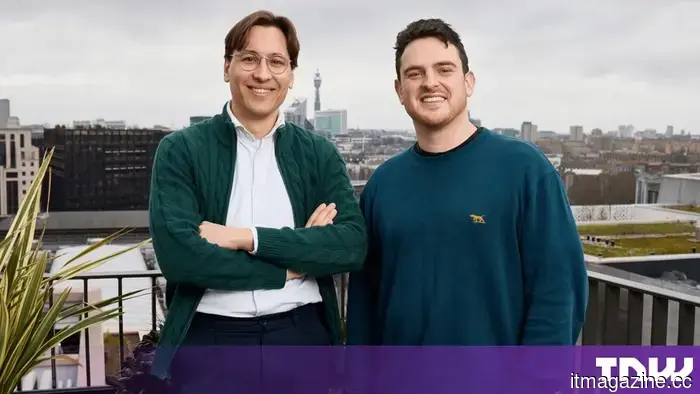 Callosum secures $100 million to reduce the costs of AI workloads, with the British government included as an investor.
The Cambridge-based startup Callosum has secured $100 million for software designed to distribute AI workloads across mixed chips, with support from the UK’s public AI fund among its investors.
Callosum secures $100 million to reduce the costs of AI workloads, with the British government included as an investor.
The Cambridge-based startup Callosum has secured $100 million for software designed to distribute AI workloads across mixed chips, with support from the UK’s public AI fund among its investors.
 Looking to purchase a new Pixel 11? Here are the top cases available right now.
Ranging from a $13.49 magnetic case that offers great value for its cost to Google's own $49.99 official case, these are the Pixel 11 cases that truly made it into my shopping cart.
Looking to purchase a new Pixel 11? Here are the top cases available right now.
Ranging from a $13.49 magnetic case that offers great value for its cost to Google's own $49.99 official case, these are the Pixel 11 cases that truly made it into my shopping cart.
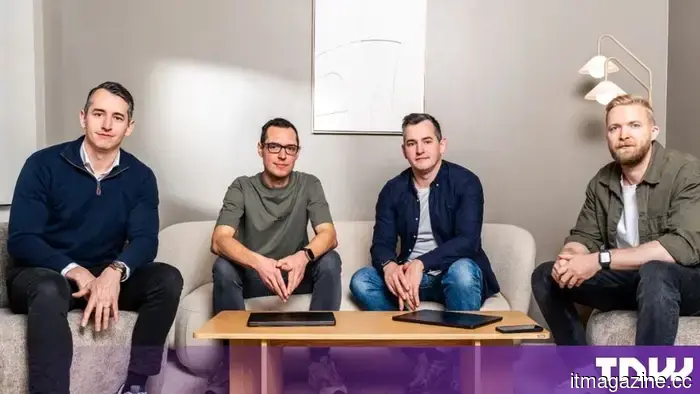 Velatir secures €5 million to grant European companies autonomy over their own AI.
Velatir, located in Odense, has secured €5 million in funding, co-led by Spintop Ventures and Ugly Duckling Ventures, just six months following its pre-seed round.
Velatir secures €5 million to grant European companies autonomy over their own AI.
Velatir, located in Odense, has secured €5 million in funding, co-led by Spintop Ventures and Ugly Duckling Ventures, just six months following its pre-seed round.
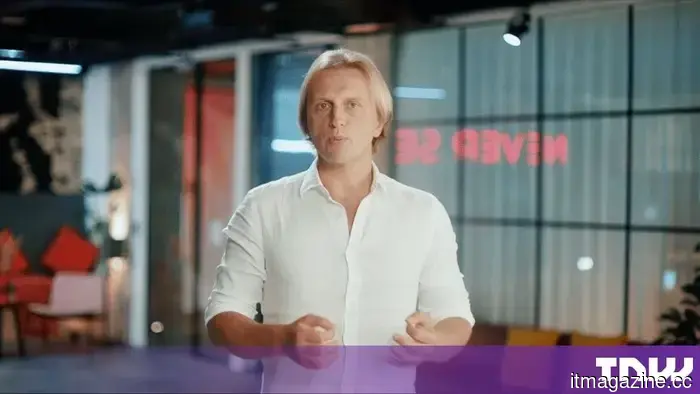 Revolut is willing to allow Nik Storonsky to borrow $250 million using his own shares as collateral.
Revolut has requested that shareholders increase Nik Storonsky’s borrowing maximum against his shareholding from $50 million to $250 million as part of a scheme referred to as Project Shasta.
Revolut is willing to allow Nik Storonsky to borrow $250 million using his own shares as collateral.
Revolut has requested that shareholders increase Nik Storonsky’s borrowing maximum against his shareholding from $50 million to $250 million as part of a scheme referred to as Project Shasta.
 A $1.3 billion loan will assist in constructing a data center for Anthropic in Texas.
Eagle Point is providing approximately $1.3 billion in financing for a 2,900-acre data center in Texas, which is supported by Anthropic, as part of a $16 billion arrangement with Google backing the senior debt.
A $1.3 billion loan will assist in constructing a data center for Anthropic in Texas.
Eagle Point is providing approximately $1.3 billion in financing for a 2,900-acre data center in Texas, which is supported by Anthropic, as part of a $16 billion arrangement with Google backing the senior debt.
A professor from Berkeley wrote an op-ed discussing students who take shortcuts, but a detector marked her article.
An op-ed by a mathematics professor from UC Berkeley concerning declining standards was marked as having some AI assistance, although she claims she only utilized AI for editing purposes.