

Reasons behind Unitree becoming the first humanoid robot company to go public in China.
On Wednesday, Unitree Robotics made its debut on the STAR Market of the Shanghai Stock Exchange under the ticker 688836.SH. Coinciding with this event was the opening of the 2026 World Robot Conference in Beijing. The timing was significant: humanoid robots are transitioning from laboratories and exhibitions to a new phase in capital markets and commercial competition.
Unitree set its initial public offering on the STAR Market at RMB 150.80 ($22.41) per share, issuing 40,446,434 new A-shares and raising approximately RMB 6.099 billion ($910 million) in total proceeds.
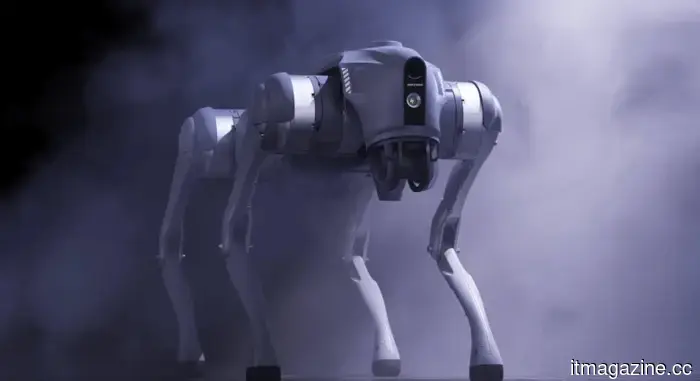
However, Unitree was not initially focused on humanoid robots. In 2016, founder Wang Xingxing left his university laboratory to establish the company. At that time, China's quadruped robot sector was still in its infancy. Quadruped robots, compared to humanoid robots, were easier to develop and commercialize in aspects like mechanical design, motion control, and practical uses. Hence, Unitree opted to begin with quadruped robots, introducing the Go, A, and B series, and gradually branching into research, education, and industrial inspections. This experience laid the groundwork for Unitree's early products and revenue. Between 2022 and 2025, the revenues from its quadruped robots grew from RMB 92.82 million ($13.79 million) to RMB 698 million ($103.72 million). By the time humanoid robots became a prominent industry trend, Unitree had already established a foundation for commercial expansion.
The real turning point for Unitree’s growth was the introduction of humanoid robots. In 2023, revenue from its humanoid robot division was just RMB 2.96 million ($440,000), representing less than 2% of total revenue. By 2025, this amount had skyrocketed to RMB 868 million ($128.98 million), accounting for over 51% of the company’s total revenue. Humanoid robots had officially emerged as the primary engine of growth for the company.
Models like the H1 and G1 enabled Unitree to transition from merely demonstrating robots to becoming a manufacturer of robotic products. In the past, simply having a robot that could walk or run was enough to draw attention at exhibitions. However, as the industry progresses toward commercialization, the critical questions now revolve around reliability in production, consistent sales, and generating sustainable income.
Unitree has made notable progress in this regard. In 2025, the company reported revenues of RMB 1.699 billion ($250 million) and a net profit of RMB 278 million ($41.31 million) attributable to shareholders. While many humanoid robot companies are still in the red, Unitree has showcased a level of commercial viability that serves as a solid foundation for its entry into capital markets.
Concurrently, Unitree’s IPO aligns with a pivotal moment for the industry. In 2026, the focus within the humanoid robotics sector is shifting from whether robots can be built to how effectively they can be utilized in real-world applications. Automakers, robotics firms, and AI companies are all striving for mass production and practical deployment. Consequently, the market is now prioritizing product capabilities, cost management, and the ability to scale both production and delivery.
The IPO of a robotics company with actual products, revenue, and profitability offers a clear reference for investors seeking to comprehend the rapidly evolving industry.
However, going public does not imply that Unitree has secured victory in the upcoming competitive phase. For the company, the principal challenge ahead might not solely be increasing robot sales, but enhancing their intelligence.
Over the last decade, Unitree has primarily excelled in mechanical design, motors, motion control, and hardware for robots. Yet, as humanoid robots enter the commercial arena, hardware alone may no longer suffice to establish a long-term competitive edge. Robots ultimately need to perceive their environment, make context-based decisions, and perform tasks that were not pre-programmed. The rivalry is thus shifting from the physical capabilities of robots to the sophistication of their algorithms and cognitive functions.
Following its IPO, Unitree is anticipated to amplify investments in areas like embodied AI foundational models. For a company that originated in a university lab, going public symbolizes the conclusion of one chapter rather than the end of its journey.
In the last decade, Unitree has demonstrated its capacity to create robots, market them, and generate substantial revenue on a large scale. The subsequent question is more direct: Can it leverage its hardware strengths to enhance its AI capabilities and maintain competitiveness in the forthcoming phase of embodied AI?
This may ultimately prove to be more crucial than simply being the first humanoid robot company to list on China’s A-share market.
Jessie Wu is a tech reporter based in Shanghai. She covers consumer electronics, semiconductors, and the gaming industry for TechNode. You can reach her via email at jessie.wu@



Other articles
 The covert CIA link that contributed to NeXT's endurance and facilitated Jobs' comeback to Apple
A recently disclosed connection with the CIA might have played a role in supporting Steve Jobs' struggling NeXT, ultimately establishing an unforeseen link to his eventual comeback at Apple.
The covert CIA link that contributed to NeXT's endurance and facilitated Jobs' comeback to Apple
A recently disclosed connection with the CIA might have played a role in supporting Steve Jobs' struggling NeXT, ultimately establishing an unforeseen link to his eventual comeback at Apple.
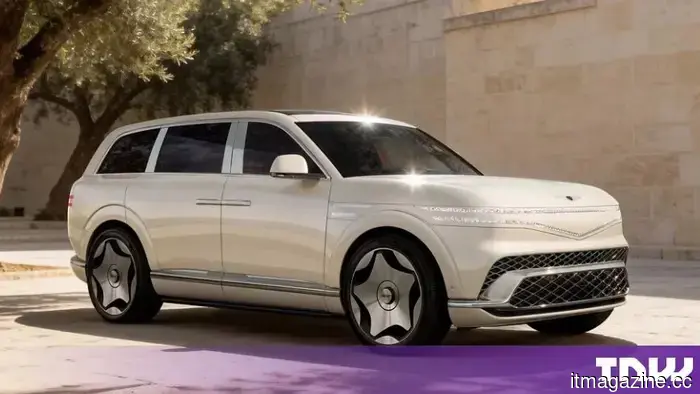 Hyundai's luxury division has introduced a new flagship electric vehicle, but there are no plans for it to be available in Europe.
The Genesis GV90 is an electric SUV boasting 490 kW of power, equipped with a 123.5 kWh battery and featuring coach doors. It will be available for purchase in the US at the beginning of next year, with no plans for a European release announced yet.
Hyundai's luxury division has introduced a new flagship electric vehicle, but there are no plans for it to be available in Europe.
The Genesis GV90 is an electric SUV boasting 490 kW of power, equipped with a 123.5 kWh battery and featuring coach doors. It will be available for purchase in the US at the beginning of next year, with no plans for a European release announced yet.
 The minimalist phone is gradually evolving back into a smartphone.
The Minimal Phone 2 addresses several of the compromises that made the original challenging to use. However, these enhancements also bring up an uncomfortable question regarding what defined its minimalism in the beginning.
The minimalist phone is gradually evolving back into a smartphone.
The Minimal Phone 2 addresses several of the compromises that made the original challenging to use. However, these enhancements also bring up an uncomfortable question regarding what defined its minimalism in the beginning.
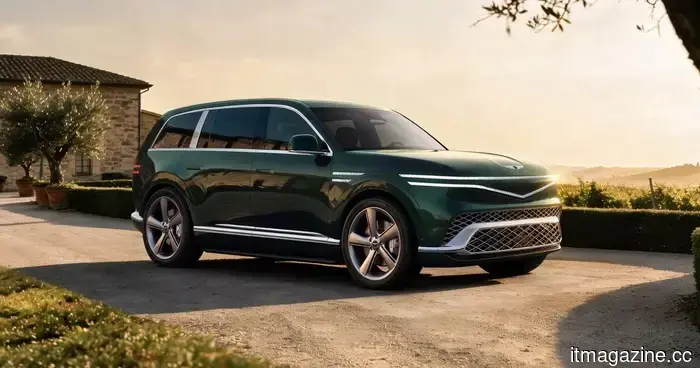 Genesis unveiled its flagship electric SUV, equipping it with greater power than the Ferrari Amalfi.
Genesis has introduced the GV90, its biggest electric SUV to date, featuring 657 horsepower, an extensive battery, luxurious lounge-style amenities, and a unique roof-mounted airbag.
Genesis unveiled its flagship electric SUV, equipping it with greater power than the Ferrari Amalfi.
Genesis has introduced the GV90, its biggest electric SUV to date, featuring 657 horsepower, an extensive battery, luxurious lounge-style amenities, and a unique roof-mounted airbag.
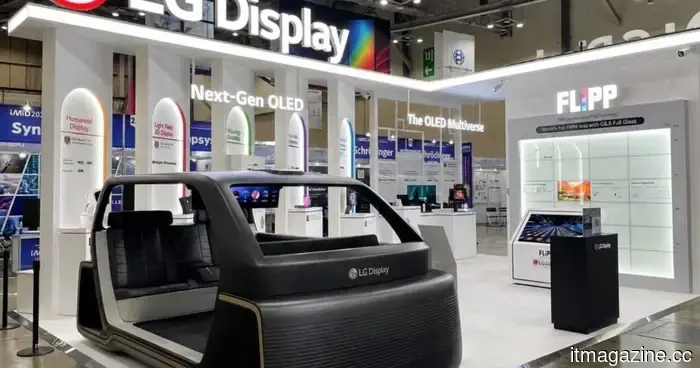 LG's latest OLED technology can endure 2.4 times longer, with monitors being the first to benefit.
LG Display's FLiPP OLED technology claims to offer a lifespan that is 2.4 times longer, increased brightness, and reduced power consumption, with monitors and tablets expected to serve as the initial testing grounds.
LG's latest OLED technology can endure 2.4 times longer, with monitors being the first to benefit.
LG Display's FLiPP OLED technology claims to offer a lifespan that is 2.4 times longer, increased brightness, and reduced power consumption, with monitors and tablets expected to serve as the initial testing grounds.
 Mark Zuckerberg purchases a 440-acre estate located in County Waterford, Ireland.
Mark Zuckerberg has purchased Strancally Castle along with 440 acres in County Waterford, marking the third significant Irish estate acquired by a tech billionaire since 2021.
Mark Zuckerberg purchases a 440-acre estate located in County Waterford, Ireland.
Mark Zuckerberg has purchased Strancally Castle along with 440 acres in County Waterford, marking the third significant Irish estate acquired by a tech billionaire since 2021.
Reasons behind Unitree becoming the first humanoid robot company to go public in China.
On Wednesday, Unitree Robotics made its debut on the STAR Market of the Shanghai Stock Exchange with the ticker symbol 688836.SH. Coinciding with this event, the 2026 World Robot