
Octopus Charge consolidates 210,000 US charging stations into a single app, excluding Tesla, Ionna, and Electrify America.
Octopus Energy has introduced Octopus Charge in the US, Canada, and Mexico, consolidating over 210,000 chargers from more than 20 networks without any markup on energy costs. Its European counterpart manages 1.5 million chargers across over 40 countries.
A British energy firm has connected more than 210,000 chargers in North America through a single login. The new Octopus Charge app by Octopus Energy serves the United States, Canada, and Mexico, allowing users to utilize one payment method across all supported networks.
The commercial offering claims to incur no additional costs. Octopus states that it passes through each operator’s per-kWh price without alteration, meaning that a charger pricing at $0.50 will also cost $0.50 in the app.
An interesting statistic comes from home: Octopus Electroverse, the original European version launched in 2020, covers approximately 1.5 million chargers across over 1,500 networks in more than 40 countries.
The American version connects to around two dozen networks. This difference does not reflect a failure in engineering, but rather illustrates the disparity between two distinct markets, one which has legislated out the chaos of charging.
In Europe, access has been established as a legal requirement rather than a commercial privilege. According to EU regulations that started in April 2024, all new public charging points must accept card or contactless payments, and prices must be clearly displayed before charging begins.
North America lacks a similar framework, allowing the largest operators to simply opt-out. Tesla Superchargers, Ionna, and Electrify America are notably absent from the app, representing much of what sustains an American road trip.
However, what is available is still considerable. Octopus has over 20 partners, including EVgo, ChargePoint, Blink, bp pulse, Shell Recharge, FLO, and Circle K.
Car manufacturers are attempting a similar approach from a narrower perspective. General Motors compiles networks within its branded apps, but only for GM vehicles, while Octopus Charge is compatible with any electric vehicle.
The company positions itself as a facilitator of smooth experiences rather than a market creator. Sebastian Blake, head of product at Octopus Energy US, states that the goal is to enable drivers to "spend less time managing charging and more time enjoying the drive."
Meanwhile, Europe is consolidating from a different angle. Electroverse registered its millionth driver in July, and smaller operators continue to secure funding to expand European networks that integrate into the same roaming system.
This comparison is essential to consider next time European charging faces criticism. A driver in Rotterdam needs only one app and a bank card, whereas a driver in Texas still requires multiple options.
Other articles
 A data center rack utilizing living neurons has recently begun operation in Singapore.
In Singapore, NUS, DayOne, and Cortical Labs have developed a 20-unit rack of biological computers. However, the assertion regarding its efficiency is made without any accompanying figures.
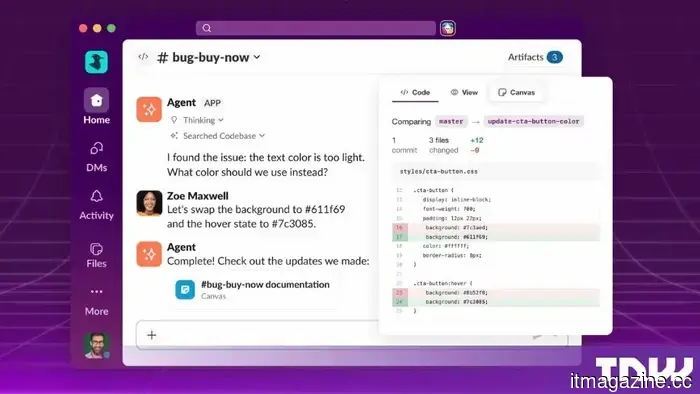 Slack unveils Slack Code, a platform where teams and AI agents collaborate.
Slack Code enables teams and AI agents to collaborate on writing, reviewing, and deploying code within a single channel. Founding partners include Claude, ChatGPT, Devin, and Copilot.
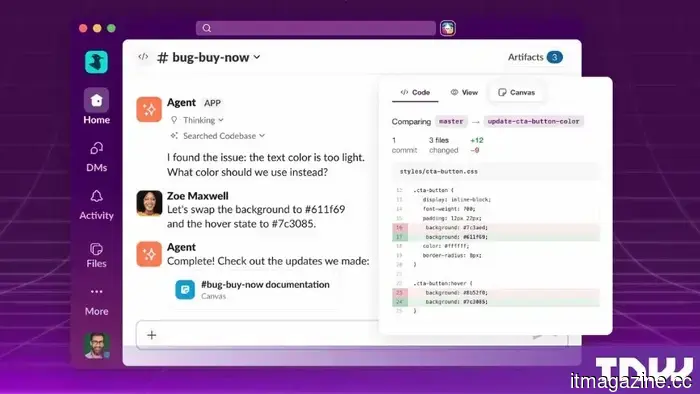 Slack introduces Slack Code, a platform for teams and AI agents to collaborate.
Slack Code enables teams and AI agents to write, review, and deploy code within a single channel. Claude, ChatGPT, Devin, and Copilot are the founding partners of this initiative.
 Windows 11 will be removing the Drag Tray feature.
Microsoft is eliminating the Drag Tray feature from Windows 11 following user feedback that the file-sharing overlay disrupted regular drag-and-drop operations.
 Android 17 prefers to slow down a single problematic app instead of affecting the performance of your entire phone.
Android 17 implements tougher memory limits for individual apps, which can either slow down or shut down apps that are using excessive memory. This provides Google with a fresh method to safeguard overall phone performance before a single memory-intensive app leads to broader issues.
 Cinemas, educational institutions, and ICE are all prohibiting the use of Meta smart glasses.
Cinemas, schools in the US, and ICE are all placing limitations on Meta smart glasses, but their motivations differ significantly. The regulation concerning cinemas has been in place since 2014.
Octopus Charge consolidates 210,000 US charging stations into a single app, excluding Tesla, Ionna, and Electrify America.
Octopus Energy has introduced Octopus Charge in North America, featuring 210,000 chargers. In Europe, the service boasts 1.5 million chargers, which is attributed to regulatory requirements.