
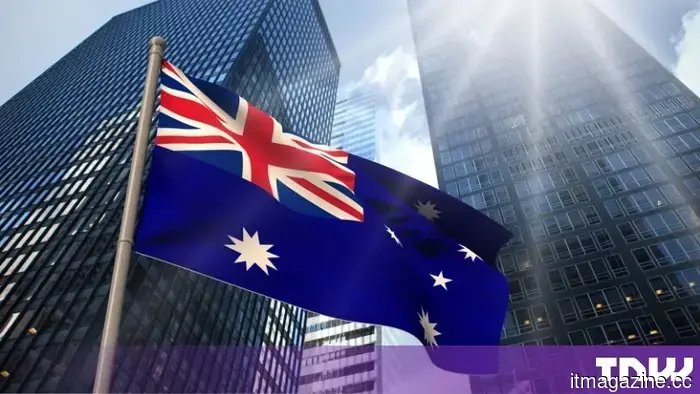
Meta, Google, TikTok, and LinkedIn are now subject to an Australian news law, regardless of whether they distribute news content or not.
On Thursday, Australia's parliament approved the News Bargaining Incentive, putting an end to a five-year dispute that began when Meta discovered it could avoid paying for news simply by not sharing it. The newly enacted law eliminates that option.
Platforms that operate a significant search or social media service in Australia and generate over A$250 million (approximately $178 million) in local advertising revenue now face a 2.5% levy on that revenue, regardless of whether they publish any news stories. Initially, the government proposed a rate of 2.25%, and the list of affected companies has since expanded.
The companies impacted include Meta, Alphabet's Google, TikTok, and Microsoft’s LinkedIn, with LinkedIn being included in early August along with the increase in the rate, which the government framed as a technical adjustment, though the industry disagreed.
This tax is not intended for actual collection; rather, it serves as a penalty for platforms that refuse to negotiate. A platform can reduce or eliminate the levy by entering into commercial agreements with at least eight Australian news organizations. These agreements can then be used to offset the bill at a favorable rate. Contracts with large publishers count for 150% of their value, while those with smaller and medium-sized outlets count for 200%. Additionally, no single agreement can reduce more than a quarter of a platform's total liability, ensuring that one significant payment to a major publisher does not cover the entire obligation.
Timing is particularly crucial for tax law in this case. Agreements must be finalized before the end of a platform's financial reporting period to count against liability for that period, which means that the negotiation schedule is now dictated by each company’s financial cycle instead of the regulator.
Unoffset funds will not contribute to the treasury's general revenue but will instead be allocated to a News Journalism Payments scheme designed to assist publishers nationwide, with the government emphasizing that the scheme favors smaller and regional outlets.
“Journalism is essential to a strong democracy, holding people, businesses, and governments accountable,” stated Anika Wells, the communications minister, upon the bill's passage. Assistant Treasurer Daniel Mulino, who has managed the tax aspects, remarked that public interest journalism in Australia “is important to diverse communities and the country.”
Mulino has consistently clarified the bill's intent. When the revised scheme was announced, he explained that the decision to tax advertising revenue instead of total revenue targeted “the part of the business that uses the news,” a concession the platforms advocated for.
He has also shown little concern regarding the possibility of companies leaving the market, arguing that Australia is a highly profitable market for them.
Meta has yet to test this assumption, although it claims that the levy violates the free trade agreement between Australia and the United States, a grievance it raised earlier this year and has not rescinded.
One type of company is completely excluded from the legislation. AI firms are not included in the scheme, even though they train on and summarize the same journalism the law aims to protect, and the government has not indicated whether it plans to address this omission.
Additionally, a grant component accompanies the payments scheme. Under the design introduced in early August, a portion of the revenue generated by the levy is reserved for small publishers and news startups—sections of the industry that never had the negotiating power to engage with a platform.
On the publisher side, they have spent two years observing the previous arrangement lapse without a replacement.
The predecessor to this scheme, the 2021 News Media Bargaining Code, was effective until it was not. It facilitated agreements valued at an estimated A$200 million annually before Meta chose not to renew them in 2024, revealing the code's primary flaw: it could only be enforced against platforms that carried news.
The effectiveness of the new design will rely on the actions of the platforms in the upcoming reporting period rather than on discussions held in Canberra this week.
Other articles
 Samsung has scheduled August 27 for the launch of its upcoming Galaxy S phone, and all indications suggest it will be the S26 FE.
Samsung will hold a Galaxy Event on August 27, and indications suggest that the Galaxy S26 FE will be featured. Here's what the company's invitation and teaser indicate, along with the information we currently have about Samsung's upcoming Fan Edition smartphone.
Samsung has scheduled August 27 for the launch of its upcoming Galaxy S phone, and all indications suggest it will be the S26 FE.
Samsung will hold a Galaxy Event on August 27, and indications suggest that the Galaxy S26 FE will be featured. Here's what the company's invitation and teaser indicate, along with the information we currently have about Samsung's upcoming Fan Edition smartphone.
 YouTube initiates direct funding for shows to prevent creators from licensing their content to Netflix.
According to reports, YouTube is providing leading creators with financing for shows, shares from brand deals, and payments for exclusive rights, while Netflix is licensing their content non-exclusively.
YouTube initiates direct funding for shows to prevent creators from licensing their content to Netflix.
According to reports, YouTube is providing leading creators with financing for shows, shares from brand deals, and payments for exclusive rights, while Netflix is licensing their content non-exclusively.
 China's robotic traffic police are capable of nearly everything except for pulling you over.
In May, Hangzhou deployed 15 humanoid robots to manage traffic. They help direct vehicles and identify violations, but the enforcement remains the responsibility of human officers.
China's robotic traffic police are capable of nearly everything except for pulling you over.
In May, Hangzhou deployed 15 humanoid robots to manage traffic. They help direct vehicles and identify violations, but the enforcement remains the responsibility of human officers.
 Samsung has scheduled August 27 for the launch of its next Galaxy S phone, with indications suggesting it will be the S26 FE.
Samsung is organizing a Galaxy Event on August 27, and all indications suggest the Galaxy S26 FE will be featured. Here's what the company's invitation and teaser disclose, along with everything we currently know about Samsung's upcoming Fan Edition smartphone.
Samsung has scheduled August 27 for the launch of its next Galaxy S phone, with indications suggesting it will be the S26 FE.
Samsung is organizing a Galaxy Event on August 27, and all indications suggest the Galaxy S26 FE will be featured. Here's what the company's invitation and teaser disclose, along with everything we currently know about Samsung's upcoming Fan Edition smartphone.
 A "private and secure" facial recognition tool has inadvertently exposed 9 million images.
ClarityCheck, a tool for searching people that claims to offer “private and secure” searches, was discovered by a security researcher to have left over 9 million image files unprotected.
A "private and secure" facial recognition tool has inadvertently exposed 9 million images.
ClarityCheck, a tool for searching people that claims to offer “private and secure” searches, was discovered by a security researcher to have left over 9 million image files unprotected.
 Google is providing students with a complimentary year of AI Pro and has launched a new Gemini Student Hub.
Google is offering qualified college students a complimentary year of AI Pro and has introduced a new Student Hub filled with study resources.
Google is providing students with a complimentary year of AI Pro and has launched a new Gemini Student Hub.
Google is offering qualified college students a complimentary year of AI Pro and has introduced a new Student Hub filled with study resources.
Meta, Google, TikTok, and LinkedIn are now subject to an Australian news law, regardless of whether they distribute news content or not.
Australia has implemented a 2.5% levy on the local advertising revenue of Meta, Google, TikTok, and LinkedIn, unless they reach agreements with eight news organizations.