

Big Tech is actively working to promote the construction of its data centers.
Big Tech is investing heavily in local public relations campaigns to gain support for the data centres it requires. Resistance to these facilities is escalating across the United States. They are organizing town halls, waiving tax demands, and sponsoring community organizations, as reported by Bloomberg and the Wall Street Journal.
The extent of opposition is significant. Local resistance has obstructed or delayed at least 75 data centre projects in the initial three months of this year, according to Bloomberg, referencing the research group Data Center Watch. These projects had an estimated value of approximately $130 billion, nearing the total worth of stalled projects throughout all of 2025.
The contention is widespread across the nation. Opposition has been most vigorous in key battleground states like Michigan and Georgia, where Bloomberg noted that 17 projects have been halted. In Michigan alone, over 50 communities have enacted or proposed moratoriums. A bipartisan coalition of lawmakers is currently working to eliminate tax incentives for these sites.
Reasons for public discontent
Much of the frustration focuses on water and energy issues, as highlighted by Bloomberg, which cited data from the firm Hamlet. The large, windowless buildings are viewed as emblematic of broader concerns regarding AI. Residents highlight rising utility costs, depleted water resources, and the potential for job losses as their main grievances.
Opposition transcends party affiliations. Residents and officials in both red states and battleground districts are advocating for halts to projects, with Bloomberg noting states such as Texas, Mississippi, and Ohio joining voices that resonate with progressive leaders like Bernie Sanders. The report positions this backlash as a risk to Silicon Valley's and President Trump's efforts to gain an edge over China in AI investment.
States are beginning to take action. In July, New York Governor Kathy Hochul issued an order pausing permits for new data centres with a capacity of at least 50 megawatts for up to a year. Following suit, Texas Governor Greg Abbott halted new projects pending an audit. Recently, Pennsylvania Governor Josh Shapiro signed an order mandating local approval before state permits can be granted.
In response to these barriers, companies are shifting their strategies, as noted by Bloomberg. Meta has invested millions in television ads showcasing local workers in its server farms in Altoona, Iowa. OpenAI’s Sam Altman told an audience in Michigan that a data centre there could potentially be the site for cancer research breakthroughs.
Microsoft has made tangible concessions, indicating it would cease seeking tax breaks from communities where it establishes operations, according to Bloomberg. Big Tech companies are earmarking hundreds of billions on AI data centres this year, increasing the stakes of any delays. The company announced a “community-first AI infrastructure” policy in January, committing to ensure that data centres do not increase local power costs.
The White House has introduced its own guidelines. Its non-binding Ratepayer Protection Pledge urges tech firms to finance their own power supply and contribute to local job creation, according to Bloomberg. By early August, over 300 companies had endorsed the pledge.
OpenAI is applying this approach in Georgia. As part of its plan for a data centre valued at over $30 billion near Savannah, it is engaging with residents and has committed to conserve water and cover its own power expenses. Chris Lehane, OpenAI's policy chief, stated the work should be conducted “with, of, for, and by the community.” The Journal reported that around 1,000 individuals participated in one open house event in Effingham County.
A case study in New Mexico
Oracle’s Project Jupiter in Doña Ana County, New Mexico, exemplifies this strategy, as stated by Bloomberg. The 2.45 gigawatt facility is central to the company's $300 billion computing partnership with OpenAI. Oracle has sent out informative mailers, contributed to a local Boys & Girls Club and a food pantry, and associated its name with a local dinosaur-dig park.
The campaign was sparked by local anger over the project's secrecy; residents only discovered Oracle and OpenAI's involvement after officials sanctioned it, according to Bloomberg. One local, Daisy Maldonado, is now running for county commissioner partially on a platform opposing the project.
Oracle has defended Project Jupiter, claiming it will bring in investment without negatively impacting the environment, asserting that its water usage will be comparable to that of an office building. The company stated that the site has already produced nearly $80 million in state and local tax revenue.
A coordinated opposition
The companies are encountering organized resistance. In Lowell Township, Michigan, residents mobilized against a project even before a developer was identified, as Bloomberg reported. After residents demanded a public hearing, Microsoft disclosed its involvement, subsequently holding town halls and retracting its non-disclosure agreements and tax incentives.
Some residents began referring to the company as “Microslop.”
National organizations are unifying the resistance. The Sierra Club disseminates model ordinances, informational sheets, and checklists, and collaborates with Earthjustice and the Natural Resources Defense Council to engage in utility matters,
Other articles
 Samsung has scheduled August 27 for the launch of its next Galaxy S phone, with indications suggesting it will be the S26 FE.
Samsung is organizing a Galaxy Event on August 27, and all indications suggest the Galaxy S26 FE will be featured. Here's what the company's invitation and teaser disclose, along with everything we currently know about Samsung's upcoming Fan Edition smartphone.
Samsung has scheduled August 27 for the launch of its next Galaxy S phone, with indications suggesting it will be the S26 FE.
Samsung is organizing a Galaxy Event on August 27, and all indications suggest the Galaxy S26 FE will be featured. Here's what the company's invitation and teaser disclose, along with everything we currently know about Samsung's upcoming Fan Edition smartphone.
 Google is providing students with a complimentary year of AI Pro and has launched a new Gemini Student Hub.
Google is offering qualified college students a complimentary year of AI Pro and has introduced a new Student Hub filled with study resources.
Google is providing students with a complimentary year of AI Pro and has launched a new Gemini Student Hub.
Google is offering qualified college students a complimentary year of AI Pro and has introduced a new Student Hub filled with study resources.
 Revolut intends to allow Nik Storonsky to borrow $250 million using his own shares as collateral.
Revolut has requested that shareholders increase Nik Storonsky's borrowing limit secured by his stake from $50 million to $250 million as part of a plan referred to as Project Shasta.
Revolut intends to allow Nik Storonsky to borrow $250 million using his own shares as collateral.
Revolut has requested that shareholders increase Nik Storonsky's borrowing limit secured by his stake from $50 million to $250 million as part of a plan referred to as Project Shasta.
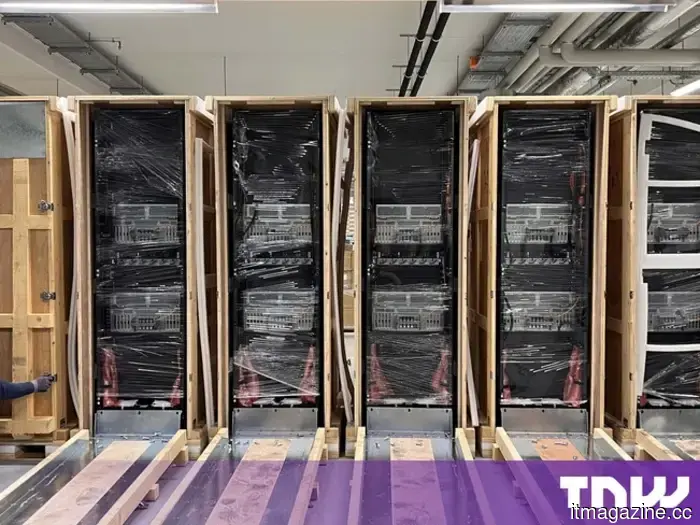 A $1.3 billion loan will assist in constructing a data center for Anthropic in Texas.
Eagle Point is providing approximately $1.3 billion in financing for a 2,900-acre data center in Texas, which is supported by Anthropic, as part of a $16 billion arrangement with Google backing the senior debt.
A $1.3 billion loan will assist in constructing a data center for Anthropic in Texas.
Eagle Point is providing approximately $1.3 billion in financing for a 2,900-acre data center in Texas, which is supported by Anthropic, as part of a $16 billion arrangement with Google backing the senior debt.
 China's robotic traffic police are capable of nearly everything except for pulling you over.
In May, Hangzhou deployed 15 humanoid robots to manage traffic. They help direct vehicles and identify violations, but the enforcement remains the responsibility of human officers.
China's robotic traffic police are capable of nearly everything except for pulling you over.
In May, Hangzhou deployed 15 humanoid robots to manage traffic. They help direct vehicles and identify violations, but the enforcement remains the responsibility of human officers.
 Google provides Gemini Live with an upgrade focused on Deep Research.
Gemini Live can now initiate Deep Research reports using voice commands, process them in the background, and allow you to discuss the results when they are completed.
Google provides Gemini Live with an upgrade focused on Deep Research.
Gemini Live can now initiate Deep Research reports using voice commands, process them in the background, and allow you to discuss the results when they are completed.
Big Tech is actively working to promote the construction of its data centers.
According to Bloomberg, local opposition has delayed $130 billion worth of US data center projects over a span of three months. Big Tech is now reaching out to the communities it requires, but the outcomes have been varied.