
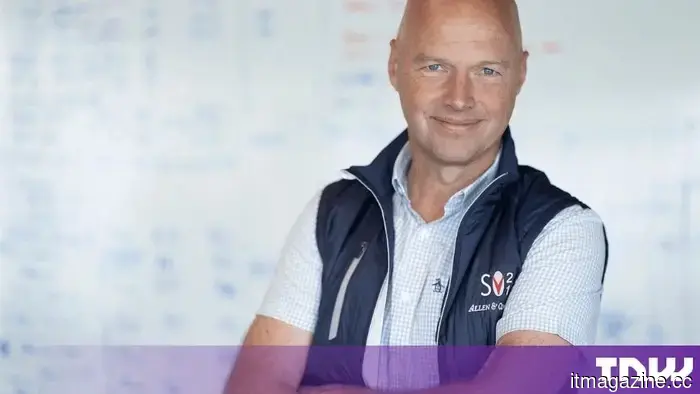
Waymo pioneer Sebastian Thrun is establishing a discreet robotics startup.
Sebastian Thrun, a pioneer in the realm of self-driving vehicles, is launching a new robotics startup called Dulo. The company is currently operating in secrecy, and Thrun has shared minimal information about it, as reported by Business Insider. Rya Jetha noted that he revealed the name of the venture towards the conclusion of a keynote speech in San Francisco.
The announcement was brief. Thrun referenced Dulo while wrapping up his address at Actuate, a robotics conference, on Tuesday. "I’m not discussing the company yet," he informed an audience made up of robotics entrepreneurs and team members. "It’s under stealth, it’s very small. But it belongs to the robotics sector." That was nearly all the information he disclosed publicly. Business Insider's report, an exclusive from its physical-AI journalist, is the only comprehensive account of the venture available to date.
The context suited the announcement. Actuate attracts robotics entrepreneurs and engineers, and Thrun chose to mention the company during the final moments of his keynote instead of giving a pitch. He did not provide details on funding, products, or expected launch dates.
What is known
Very few details about Dulo are accessible to the public. A minimal website, hosted by Stanford, indicates that the company is working on "foundation models for hardware design," according to Business Insider. The declared aim is to facilitate "manufacturing at lightspeed."
This concept addresses a specific challenge. While foundation models have dramatically changed text, images, and code, the physical design of hardware still progresses slowly. Dulo appears to be targeting similar techniques to enhance the design and manufacturing processes of machines and their components. However, the company has not clarified what this entails practically.
The team comprises the most definitive signal thus far. The website states that Dulo includes leaders from Waymo, Google Brain, and Stanford's Artificial Intelligence Laboratory, known as SAIL, which Thrun previously directed, according to Business Insider. These institutions are deeply associated with the contemporary advancements in AI and autonomy.
The focus described is situated at a different level compared to most robotics startups. A significant portion of investment in physical AI has been directed towards robots and humanoids functioning in the world. Dulo’s proposed objective is to design and manufacture hardware itself, representing an earlier stage in the workflow. If the stated mission holds true, the company would be catering to those who create machines instead of constructing the machines themselves.
Entering a robotics surge
Thrun is launching Dulo amid an influx of investment and interest. The robotics boom has been driven by declining hardware costs, labor shortages, and the push to bring manufacturing back domestically, as noted by Business Insider. Investors have taken notice.
The figures are substantial. Physical AI startups, which create machines that operate in the real world, secured a record $16.3 billion through 492 deals in the first quarter of 2026, as reported by PitchBook data cited by Business Insider. This market represents an opportunity for a founder like Thrun, who has a proven track record. The trend towards reshoring continues to be a frequent theme in this spending, as manufacturers aim to automate tasks that are challenging to fill.
The desk has observed this surge as well. The Swiss firm Gravis recently garnered a $200 million round led by SoftBank for autonomous construction machinery. Chipmakers have also made notable investments, such as Onsemi's $7 billion deal for Synaptics focusing on physical AI.
China has emerged as a leader in hardware production, manufacturing nearly every humanoid robot shipped globally, which aligns with reshoring pressures frequently highlighted by US founders. The enthusiasm among investors surrounding physical AI has also benefited established companies.
An experienced founder
Thrun is not stepping into this role for the first time. He came to the attention of Google in 2005 after his Stanford team achieved a groundbreaking win in an autonomous vehicle race, as outlined by Business Insider. The vehicle successfully navigated a 132-mile desert course with no human operator. This landmark victory demonstrated that autonomy could work beyond controlled environments, establishing Thrun as a prominent figure in the field.
That success set off a series of developments. Google co-founder Larry Page invited Thrun to spearhead the company’s self-driving car initiative, which later evolved into Waymo, Business Insider stated. Waymo is now the most recognized robotaxi service in the United States.
His experience extends beyond vehicles. Thrun co-founded Google Brain, the company’s early AI lab, along with the Google X moonshot division and the online education platform Udacity. He also led Kittyhawk, a flying car startup that has since closed down. Each of these ventures addressed significant, hardware-intensive challenges, which is the same area Dulo is now entering.
This background offers both advantages and challenges. It provides Dulo with instant credibility and potentially easier access to funding in the current market. However, it also includes at least one notable failure, serving as a reminder that having a decorated founder does
Other articles
 Spotify's latest Running Mode enhances workout playlists significantly.
Spotify's new Running Mode can create a playlist tailored to your workout, musical preferences, and even your running rhythm.
Spotify's latest Running Mode enhances workout playlists significantly.
Spotify's new Running Mode can create a playlist tailored to your workout, musical preferences, and even your running rhythm.
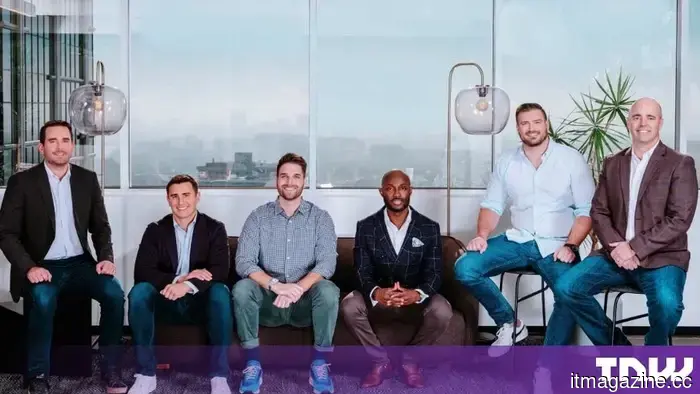 Prevalent AI secures $22 million to address the data issues contributing to unsuccessful AI initiatives.
London's Prevalent AI has secured $22 million from Integrity Growth Partners, marking its first major funding in nine years, to facilitate its expansion into the US market.
Prevalent AI secures $22 million to address the data issues contributing to unsuccessful AI initiatives.
London's Prevalent AI has secured $22 million from Integrity Growth Partners, marking its first major funding in nine years, to facilitate its expansion into the US market.
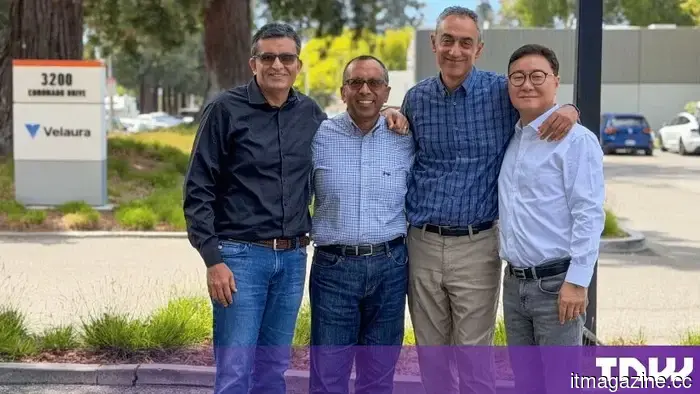 Velaura secures $110 million to market AI chips that reduce electricity costs without compromising processing speed.
Velaura AI secured $110 million at a valuation exceeding $1 billion for its silicon, which claims to reduce AI power consumption by two to four times, and is in discussions with three of the top four cloud providers.
Velaura secures $110 million to market AI chips that reduce electricity costs without compromising processing speed.
Velaura AI secured $110 million at a valuation exceeding $1 billion for its silicon, which claims to reduce AI power consumption by two to four times, and is in discussions with three of the top four cloud providers.
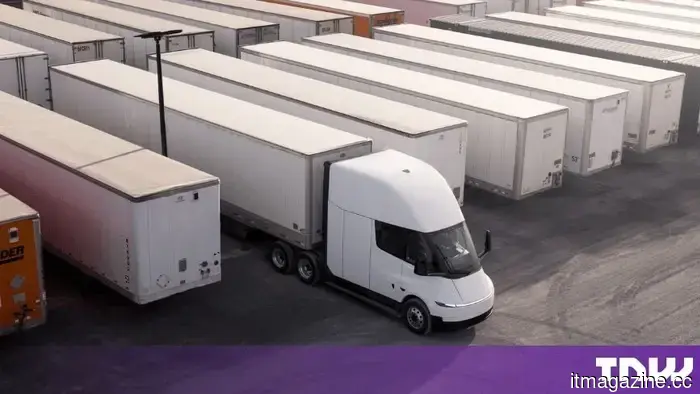 Einride erwirbt 500 Tesla Semis, und Amazon besitzt einen Anteil an dem Käufer.
Einride wird 500 Tesla Semis für Amazon und andere Unternehmen bereitstellen, was die größte Bestellung dieser Art darstellt. SEC-Unterlagen zeigen, dass Amazon Warrants für etwa 12% von Einride hält.
Einride erwirbt 500 Tesla Semis, und Amazon besitzt einen Anteil an dem Käufer.
Einride wird 500 Tesla Semis für Amazon und andere Unternehmen bereitstellen, was die größte Bestellung dieser Art darstellt. SEC-Unterlagen zeigen, dass Amazon Warrants für etwa 12% von Einride hält.
 The majority of Americans under the age of 30 are currently feeling more concern than enthusiasm regarding AI.
Pew research indicates that 55% of Americans under 30 are currently more apprehensive than enthusiastic about AI. Similarly, the European Commission has identified the same level of concern among younger employees.
The majority of Americans under the age of 30 are currently feeling more concern than enthusiasm regarding AI.
Pew research indicates that 55% of Americans under 30 are currently more apprehensive than enthusiastic about AI. Similarly, the European Commission has identified the same level of concern among younger employees.
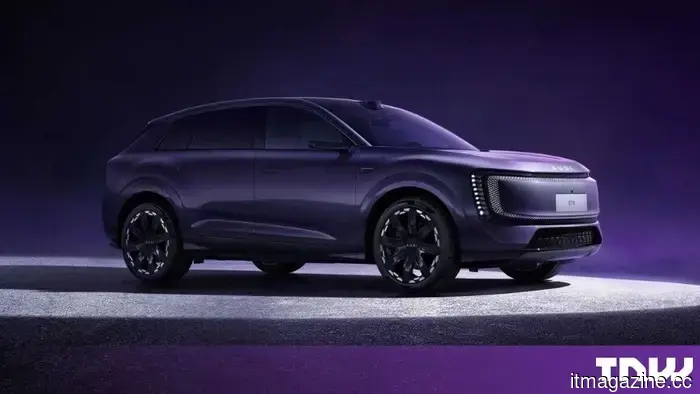 Audi's electric vehicles designed exclusively for China are making their way to Europe, and they are priced lower than the local versions.
A German importer is introducing Audi's E5 and E7X, manufactured in China, to Europe, where they are priced significantly lower than Audi's own European models by several thousand euros.
Audi's electric vehicles designed exclusively for China are making their way to Europe, and they are priced lower than the local versions.
A German importer is introducing Audi's E5 and E7X, manufactured in China, to Europe, where they are priced significantly lower than Audi's own European models by several thousand euros.
Waymo pioneer Sebastian Thrun is establishing a discreet robotics startup.
According to Business Insider, Sebastian Thrun, the founder of Google's self-driving initiative, is establishing a secretive robotics startup named Dulo. There is limited information available.