

The majority of Americans under the age of 30 are currently feeling more concern than enthusiasm regarding AI.
Pew has discovered that 55% of Americans under 30 are now more worried than excited about AI, marking the first time since 2021 that a majority feels this way, with 73% anticipating fewer jobs as a result. A survey by the European Commission indicated that fears of job displacement are strongest among younger, lower-income, and less-educated workers.
Young Americans have shifted their perspectives on AI. For the first time since Pew began its inquiries in 2021, 55% express greater concern than excitement regarding AI technology.
Regarding job prospects, nearly three-quarters of this age group, 73%, believe that AI will lead to a decrease in job opportunities over the next twenty years, an increase from 61% two years prior, while only 5% of Americans anticipate job creation from AI.
This change in attitude is significant. This age demographic was initially the most enthusiastic about the technology but has now turned into one of the most doubtful groups, aligning with an overall rise in concern from 37% in 2021 to 52%.
The situation in Europe mirrors that of the U.S. A European Commission survey of 18 member states conducted this spring found that younger, lower-income, and less-educated respondents expressed the highest levels of fear regarding job displacement due to AI.
Interestingly, these same individuals are also the most frequent users of AI technologies. Students reported saving the most time compared to any other group, averaging nine hours per month, in a demographic where half are already utilizing chatbots in personal conversations.
Although AI adoption in the EU is widespread, its application in the workplace is less profound. About 54% of EU respondents use AI in some capacity, while approximately 27% employ it in their professional roles.
Evidence supporting these sentiments is beginning to emerge. A Harvard study revealed that AI-focused startups tend to hire fewer junior employees and favor more experienced ones, echoing the concerns of younger workers.
Pew’s findings suggest a similar disparity. Workers who are already established in their careers have become more optimistic about AI, reinforcing the notion that the technology favors experience over replacement.
This situation places pressure on entry-level positions. Internships and junior roles have traditionally been the avenues through which careers begin, and both are currently being affected first.
The cause of these changes remains uncertain. The surge in AI coincided with a weakening labor market, and at least one study asserts that inadequate hiring practices are adversely impacting young workers more than AI itself.
What is clear is the prevailing sentiment, which has now evolved into a business challenge. The individuals that companies are most eager to recruit for AI-intensive positions are those who, paradoxically, harbor the greatest expectations that the technology will eliminate such roles.
Other articles
 China successfully lands a rocket booster on the ground for the first time.
China's LandSpace successfully landed the first stage of its Zhuque-3 rocket on solid ground, marking a national milestone that reduces the gap between the US and China's advancements in reusable rockets compared to SpaceX.
China successfully lands a rocket booster on the ground for the first time.
China's LandSpace successfully landed the first stage of its Zhuque-3 rocket on solid ground, marking a national milestone that reduces the gap between the US and China's advancements in reusable rockets compared to SpaceX.
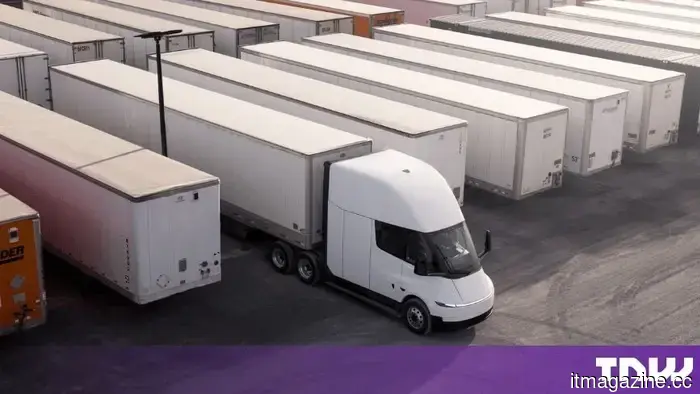 Einride erwirbt 500 Tesla Semis, und Amazon besitzt einen Anteil an dem Käufer.
Einride wird 500 Tesla Semis für Amazon und andere Unternehmen bereitstellen, was die größte Bestellung dieser Art darstellt. SEC-Unterlagen zeigen, dass Amazon Warrants für etwa 12% von Einride hält.
Einride erwirbt 500 Tesla Semis, und Amazon besitzt einen Anteil an dem Käufer.
Einride wird 500 Tesla Semis für Amazon und andere Unternehmen bereitstellen, was die größte Bestellung dieser Art darstellt. SEC-Unterlagen zeigen, dass Amazon Warrants für etwa 12% von Einride hält.
 Amazon's fleet of drones is increasing six times in the United States and is limited to 100 deliveries per day in the UK.
By the end of the year, Amazon will conduct drone deliveries in almost 500 cities across the US. However, its sole location in the UK is under investigation by the AAIB and is due for a CAA renewal in December.
Amazon's fleet of drones is increasing six times in the United States and is limited to 100 deliveries per day in the UK.
By the end of the year, Amazon will conduct drone deliveries in almost 500 cities across the US. However, its sole location in the UK is under investigation by the AAIB and is due for a CAA renewal in December.
 Rillet secures $100 million at a $1 billion valuation to integrate AI agents into the general ledger.
Rillet has secured $100 million at a $1 billion valuation, with leadership from ICONIQ, for its AI-driven accounting that operates agents within the general ledger. This marks its third funding round in 14 months.
Rillet secures $100 million at a $1 billion valuation to integrate AI agents into the general ledger.
Rillet has secured $100 million at a $1 billion valuation, with leadership from ICONIQ, for its AI-driven accounting that operates agents within the general ledger. This marks its third funding round in 14 months.
 The majority of Americans under 30 currently feel more concern than enthusiasm regarding AI.
Pew reports that 55% of Americans under 30 are currently more worried than enthusiastic about AI. The European Commission has observed similar apprehensions among younger employees.
The majority of Americans under 30 currently feel more concern than enthusiasm regarding AI.
Pew reports that 55% of Americans under 30 are currently more worried than enthusiastic about AI. The European Commission has observed similar apprehensions among younger employees.
 Anthropic's AI watermark has already led to the creation of tools designed to eliminate it.
Just days after Anthropic started watermarking Claude's text for the EU, developers introduced tools to eliminate it. One of these tools has already garnered over 14,000 stars on GitHub.
Anthropic's AI watermark has already led to the creation of tools designed to eliminate it.
Just days after Anthropic started watermarking Claude's text for the EU, developers introduced tools to eliminate it. One of these tools has already garnered over 14,000 stars on GitHub.
The majority of Americans under the age of 30 are currently feeling more concern than enthusiasm regarding AI.
Pew research indicates that 55% of Americans under 30 are currently more apprehensive than enthusiastic about AI. Similarly, the European Commission has identified the same level of concern among younger employees.