
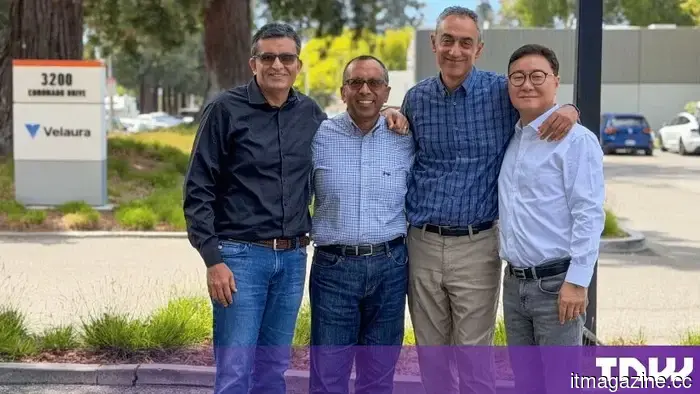
Velaura secures $110 million to market AI chips that reduce electricity costs without compromising processing speed.
A chip startup that claims to reduce the power consumption of AI has secured $110 million and achieved a valuation exceeding $1 billion. Santa Clara-based Velaura AI announced its Series A funding round on Tuesday. The company stated that it develops ultra-low-power silicon and software designed for data centers and what the industry refers to as physical AI.
The funding round was led by Seligman Ventures, with new investors Capricorn Investment Group and Prosperity7 Ventures participating, alongside existing supporters like Mayfield, Maverick Silicon, MARA, Premji Invest, the Samsung Catalyst Fund, and StepStone Group. According to Reuters, the company’s valuation is now more than $1 billion.
Velaura plans to utilize the funds to expedite the development of its chip products and to expand its team with engineering and customer-facing personnel.
The focus is on power usage, not speed
Velaura argues that the primary concern is power consumption. The company pointed out that AI is currently facing a power limitation before encountering computational limitations. While demand for computational power continues to rise, the supply of electrical power is not increasing at the same pace. Velaura noted that major players in the industry are investing hundreds of billions into AI data centers but face significant delays in securing electrical power.
This power constraint has become a recurring topic in the industry, with OpenAI even employing a power trader to manage electricity as a part of their operations. Velaura is aiming to address this same challenge, starting from the silicon level upwards.
The company’s primary offering is a chip-design platform called Titan Core, which claims to deliver a two-to-four-fold enhancement in performance per watt for mathematical operations within AI accelerators, maintaining performance levels. Velaura asserts that the technology underlying this capability is already validated, with its designs currently in over 30 million chips manufactured using advanced production processes.
The Titan Core was introduced earlier this year, emphasizing the efficiency and power savings for data center workloads, as reported by Reuters. The recent funding will facilitate the transition of this platform into commercially available products.
An Arm-esque business model
Velaura does not intend to sell its own chips. Instead, it licenses its technology, charging an upfront fee along with royalties based on the power savings achieved by customers, as per Reuters.
CEO Rajiv Khemani confirmed to Reuters that this model is similar to Arm's licensing approach prior to its chip sales. This arrangement is distinctive; Velaura only collects royalties if the customer's electricity expenses actually decrease.
Although the customer list is not publicly disclosed, Khemani indicated to Reuters that Velaura is in discussions with three of the four largest cloud-computing companies as potential clients, but he chose not to name them. Among its backers is the bitcoin mining firm MARA, which has transitioned into AI computing.
A team from major chip manufacturers
Velaura emphasizes the strength of its team. The leadership comprises executives and engineers hailing from Apple, Nvidia, Google, Qualcomm, and Marvell. Co-founders Khemani and Manu Gulati have prior experience building and selling chip companies. Collectively, the team has delivered billions of devices.
This impressive background is a significant factor in attracting investor support for this round of funding. This marks Mayfield's fourth collaboration with Khemani and second with Gulati, Quartz reported. "We prioritize investing in people first," stated Mayfield's managing partner Navin Chaddha.
Khemani articulated, "The next era of AI will not only be characterized by superior models but also by fundamentally improved computing economics." He framed their objective as scaling AI from large data centers to machines that operate in the physical environment.
A dual focus on physical AI
Velaura is targeting two markets simultaneously: the data center and physical AI, which encompasses intelligent robots, drones, and autonomous systems that must operate under stringent power and thermal limitations.
The lead investor identified the second market as particularly appealing. "Physical AI represents one of the next significant frontiers for AI, necessitating a fundamentally different computing approach centered on extreme power efficiency," remarked Umesh Padval, managing partner at Seligman Ventures.
He noted that this is the firm's inaugural investment in the physical AI space. Other startups are also pursuing this market, catering to everything from robot-training construction machines to systems requiring efficient operation on limited battery power.
Another new investor echoed this sentiment. "Velaura is tackling the issue at its source: the silicon itself, with technology that has been successfully deployed at scale," stated Dipender Saluja, managing partner at Capricorn Investment Group, citing measurable efficiency improvements and commercial validation as reasons for investment.
Prosperity7 Ventures, the venture arm associated with Saudi Aramco, also participated in the funding round, according to the company.
External analysts emphasized the same efficiency argument. Patrick Moorhead, chief analyst at Moor Insights & Strategy, stated that Velaura's approach could potentially reduce the overall cost of operating AI, alleviate thermal constraints,
Other articles
 Alphabet has raised A$5.5 billion in Australia, surpassing the record set by Apple in 2015 by more than double.
Alphabet has issued its inaugural Australian dollar bond at A$5.5 billion (US$3.9 billion), marking the largest corporate bond issuance in the history of Australia and exceeding the anticipated A$5 billion.
Alphabet has raised A$5.5 billion in Australia, surpassing the record set by Apple in 2015 by more than double.
Alphabet has issued its inaugural Australian dollar bond at A$5.5 billion (US$3.9 billion), marking the largest corporate bond issuance in the history of Australia and exceeding the anticipated A$5 billion.
 Last quarter, Anthropic's revenue exceeded that of OpenAI for the first time.
According to the WSJ, OpenAI's revenue increased by 18% to $6.7 billion last quarter, while its losses expanded to $12.3 billion. In contrast, Anthropic's revenue more than doubled to $11.6 billion, surpassing OpenAI.
Last quarter, Anthropic's revenue exceeded that of OpenAI for the first time.
According to the WSJ, OpenAI's revenue increased by 18% to $6.7 billion last quarter, while its losses expanded to $12.3 billion. In contrast, Anthropic's revenue more than doubled to $11.6 billion, surpassing OpenAI.
 Alibaba's new compact model operates on a laptop and achieves performance similar to that of a cloud-based model.
Alibaba's Qwen3.8-27B, a compact open model that operates on a laptop, achieved parity with leading cloud models on benchmarks and surpassed one million downloads within a few days.
Alibaba's new compact model operates on a laptop and achieves performance similar to that of a cloud-based model.
Alibaba's Qwen3.8-27B, a compact open model that operates on a laptop, achieved parity with leading cloud models on benchmarks and surpassed one million downloads within a few days.
 Recently leaked footage from GTA 6 features Jason playing basketball and creating mayhem on the streets.
New footage of GTA 6 has surfaced before Rockstar's scheduled announcement, featuring Jason engaging in basketball, driving, and interacting with systems that may enhance gameplay depth.
Recently leaked footage from GTA 6 features Jason playing basketball and creating mayhem on the streets.
New footage of GTA 6 has surfaced before Rockstar's scheduled announcement, featuring Jason engaging in basketball, driving, and interacting with systems that may enhance gameplay depth.
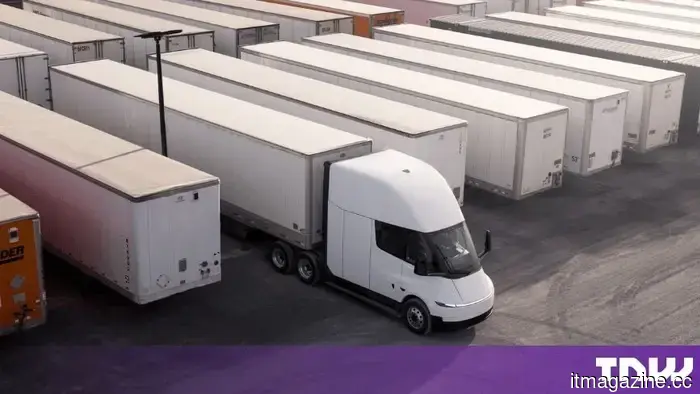 Einride erwirbt 500 Tesla Semis, und Amazon besitzt einen Anteil an dem Käufer.
Einride wird 500 Tesla Semis für Amazon und andere Unternehmen bereitstellen, was die größte Bestellung dieser Art darstellt. SEC-Unterlagen zeigen, dass Amazon Warrants für etwa 12% von Einride hält.
Einride erwirbt 500 Tesla Semis, und Amazon besitzt einen Anteil an dem Käufer.
Einride wird 500 Tesla Semis für Amazon und andere Unternehmen bereitstellen, was die größte Bestellung dieser Art darstellt. SEC-Unterlagen zeigen, dass Amazon Warrants für etwa 12% von Einride hält.
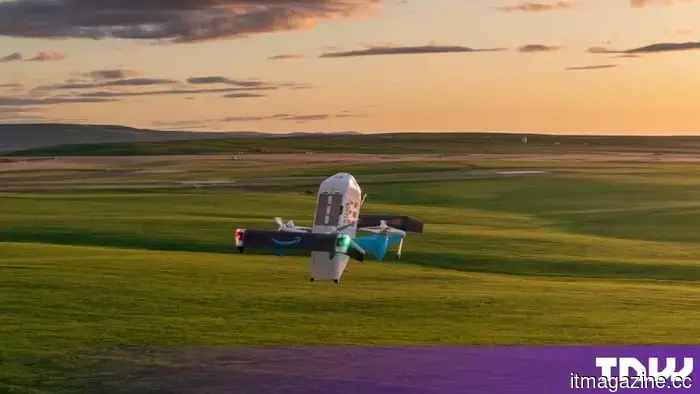 Amazon's fleet of drones is increasing six times in the United States and is limited to 100 deliveries per day in the UK.
By the end of the year, Amazon will conduct drone deliveries in almost 500 cities across the US. However, its sole location in the UK is under investigation by the AAIB and is due for a CAA renewal in December.
Amazon's fleet of drones is increasing six times in the United States and is limited to 100 deliveries per day in the UK.
By the end of the year, Amazon will conduct drone deliveries in almost 500 cities across the US. However, its sole location in the UK is under investigation by the AAIB and is due for a CAA renewal in December.
Velaura secures $110 million to market AI chips that reduce electricity costs without compromising processing speed.
Velaura AI secured $110 million at a valuation exceeding $1 billion for its silicon, which claims to reduce AI power consumption by two to four times, and is in discussions with three of the top four cloud providers.