
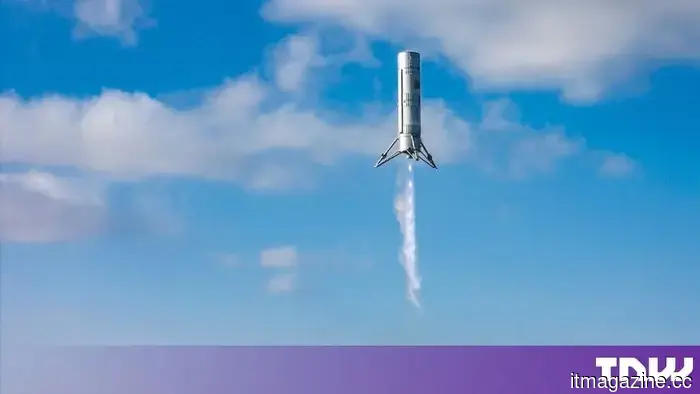
China successfully lands a rocket booster on the ground for the first time.
The Chinese startup LandSpace successfully recovered the first stage of its Zhuque-3 rocket on Wednesday. This achievement places LandSpace among a select group of private companies that have successfully landed an orbital-class booster. According to Reuters, this milestone aligns LandSpace with SpaceX and Blue Origin and reduces China’s gap with the US in the field of reusable rockets.
The booster landed upright in the northwestern province of Gansu after assisting in placing a satellite into orbit, as reported by Xinhua and cited by Bloomberg. The rocket was launched from Jiuquan, one of China’s principal launch sites, with the first stage landing approximately 390 kilometers away, according to Reuters.
This marks the first instance of China recovering a rocket booster on land. Previously, the country managed a recovery in the sea last month, employing a net on a floating platform.
The significance of landing a booster lies in its ability to facilitate lower launch costs through the return, recovery, and reuse of the first stage. This reusability of the most expensive segment of a rocket enhances the frequency of launches and transitions them from being one-off ventures. Reuters described this achievement as a move toward making space launches commercially viable, akin to the aviation industry.
LandSpace promotes the Zhuque-3 as China's counterpart to SpaceX’s Falcon 9. The rocket stands 66.1 meters tall and its first stage is equipped with nine engines, as reported by Reuters. The firm stated that the vehicle is constructed from stainless steel, which provides better heat resistance and potentially lower manufacturing costs compared to the aluminum-lithium structure of the Falcon 9.
The Zhuque-3 utilizes methane and liquid oxygen as fuel, which can combust more cleanly than the kerosene used by the Falcon 9, according to LandSpace. The rocket can transport 14.2 metric tons to low Earth orbit in a single flight, while the Falcon 9 can handle 22.8 tons.
Wednesday's mission was the second attempt to land the Zhuque-3, and the fourth attempt overall in China to recover an orbital booster. LandSpace conducted the country’s first reusable-rocket test in December 2022. Although that rocket achieved orbit as planned, its first stage did not manage a controlled landing.
A few weeks later, the state-developed Long March 12A also achieved orbit but failed in its recovery effort, according to Reuters. In July, China conducted a test of a booster-retrieval system that utilized a net on a floating platform in the sea, becoming the second nation to land an orbital-class rocket. The successful landing on Wednesday represents China’s first successful recovery of such a booster on solid ground.
The test in July employed a different method than Wednesday's; instead of deployable legs, the Long March 10B utilized four lightweight hooks to capture steel cables on the net of the platform, as per Reuters. Beijing indicated that this approach simplifies the rocket's structure, reduces its weight, and increases its payload capacity. The landing on Wednesday demonstrated China's capability to safely land a booster using legs on firm ground, which is considered the more challenging of the two approaches.
LandSpace has announced plans to reuse the recovered first stage within the next six months, which could pave the way for more cost-effective and frequent launches. The objective is to achieve up to 20 flights per booster.
However, this ambition still trails behind SpaceX, which reuses individual Falcon 9 boosters many more times and conducts significantly more launches. Thus far, LandSpace has not yet relaunched any recovered stage, making the six-month timeframe a crucial test of its design.
SpaceX remains the leader in this domain, having been recovering and reusing Falcon 9 boosters since 2017, as reported by Bloomberg. The company conducts around 150 launches annually, reusing boosters multiple times, which has enabled it to establish a near-monopoly on heavy-lift launches and deploy its Starlink satellite network. SpaceX is also working on capturing a Starship mid-air.
Eric Zhu, an analyst at Bloomberg Intelligence, referred to the recovery as a pivotal moment for China’s commercial space industry. He highlighted that LandSpace’s next challenge will be demonstrating its ability to refurbish and relaunch the hardware quickly and cost-effectively, a process that took SpaceX several years to perfect.
China has also faced setbacks, including a rocket explosion earlier this month during a launch, as noted by Bloomberg. The successful recovery contributes to broader ambitions as China aims to develop its own internet satellite network, which has so far relied on expendable rockets for orbital access.
Emerging as a leading startup since China opened its space industry to private enterprises around a decade ago, LandSpace made history in 2023 by becoming the first company globally to launch a rocket using methane as fuel, surpassing SpaceX in this regard, according to Bloomberg.
The successful landing could also benefit LandSpace’s fundraising efforts as the company seeks to list on the STAR Market in Shanghai with a
Other articles
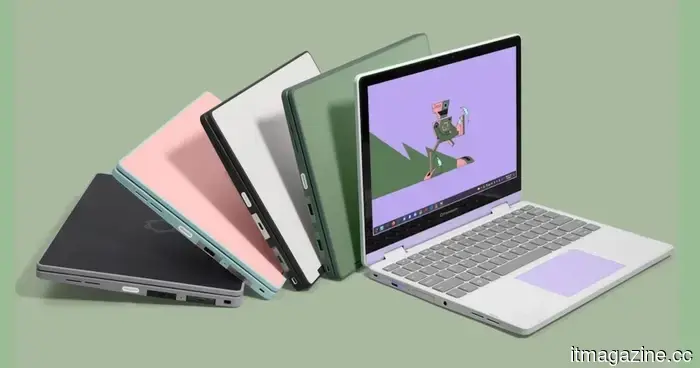 The most affordable laptop from Framework is now focused on competing with the MacBook Neo.
The modular Laptop 12 from Framework has been updated with Intel Core Series 3 processors, Thunderbolt 4, Wi-Fi 7, and enhanced battery life, with a starting price of $699 for the prebuilt model.
The most affordable laptop from Framework is now focused on competing with the MacBook Neo.
The modular Laptop 12 from Framework has been updated with Intel Core Series 3 processors, Thunderbolt 4, Wi-Fi 7, and enhanced battery life, with a starting price of $699 for the prebuilt model.
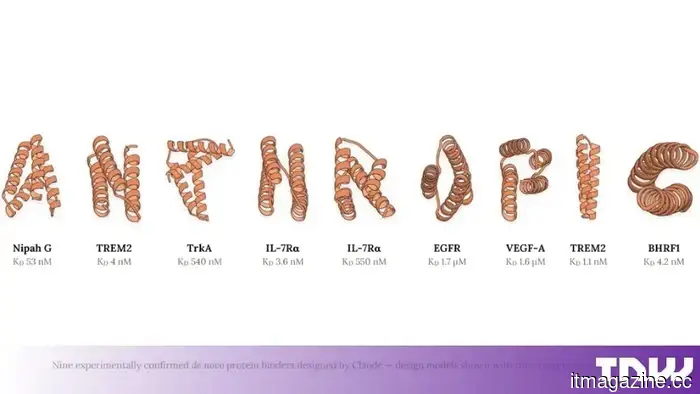 Anthropic reports that Claude has created functional protein binders and outperformed human experts in certain cases.
Anthropic reports that Claude created protein binders for 14 out of 15 targets and conducted chemical analysis in just a few minutes. The findings are self-reported.
Anthropic reports that Claude has created functional protein binders and outperformed human experts in certain cases.
Anthropic reports that Claude created protein binders for 14 out of 15 targets and conducted chemical analysis in just a few minutes. The findings are self-reported.
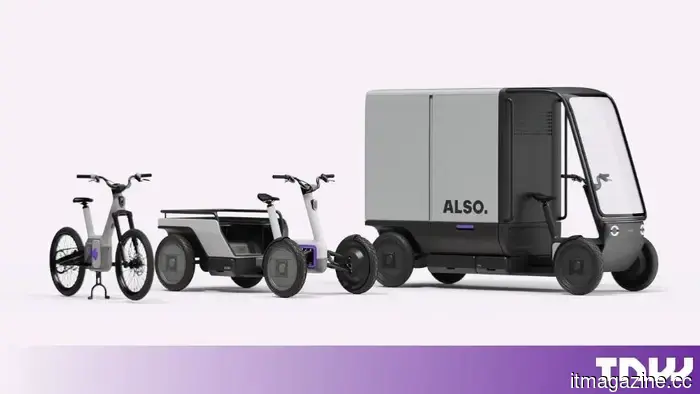 Rivian's spinout has also secured $150 million, with the e-bike serving merely as a starting point.
Rivian's spinout has secured $150 million at a valuation exceeding $1 billion. While it produces an e-bike, it states that the funds will be used for small autonomous delivery vehicles.
Rivian's spinout has also secured $150 million, with the e-bike serving merely as a starting point.
Rivian's spinout has secured $150 million at a valuation exceeding $1 billion. While it produces an e-bike, it states that the funds will be used for small autonomous delivery vehicles.
 The majority of Americans under 30 currently feel more concern than enthusiasm regarding AI.
Pew reports that 55% of Americans under 30 are currently more worried than enthusiastic about AI. The European Commission has observed similar apprehensions among younger employees.
The majority of Americans under 30 currently feel more concern than enthusiasm regarding AI.
Pew reports that 55% of Americans under 30 are currently more worried than enthusiastic about AI. The European Commission has observed similar apprehensions among younger employees.
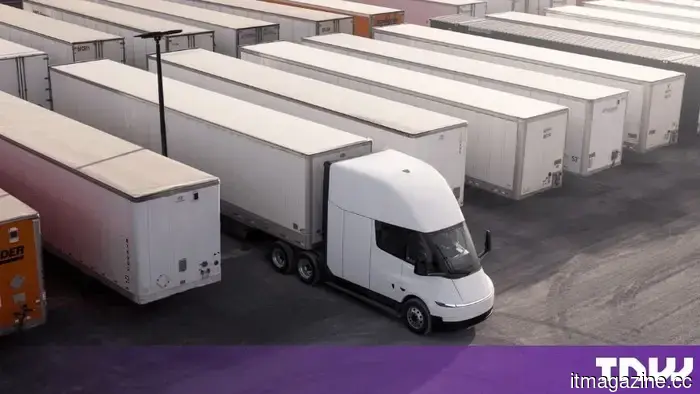 Einride erwirbt 500 Tesla Semis, und Amazon hat einen Anteil am Käufer.
Einride wird 500 Tesla Semis für Amazon und weitere Kunden bereitstellen, was die größte Bestellung dieser Art darstellt. SEC-Unterlagen zeigen, dass Amazon etwa 12% der Anteile an Einride über Warrants hält.
Einride erwirbt 500 Tesla Semis, und Amazon hat einen Anteil am Käufer.
Einride wird 500 Tesla Semis für Amazon und weitere Kunden bereitstellen, was die größte Bestellung dieser Art darstellt. SEC-Unterlagen zeigen, dass Amazon etwa 12% der Anteile an Einride über Warrants hält.
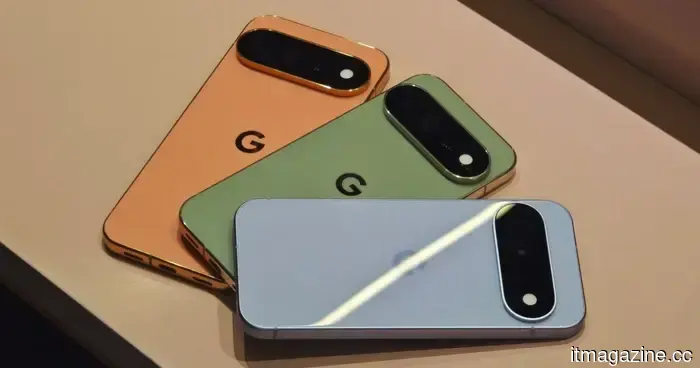 The Pixel 11's price has increased, yet Google might have discovered a solution to mitigate the losses.
According to reports, Google intends to shift all Pixel production away from China by 2027, which could provide future Pixel models with some relief as component and trade expenses increase.
The Pixel 11's price has increased, yet Google might have discovered a solution to mitigate the losses.
According to reports, Google intends to shift all Pixel production away from China by 2027, which could provide future Pixel models with some relief as component and trade expenses increase.
China successfully lands a rocket booster on the ground for the first time.
China's LandSpace successfully landed the first stage of its Zhuque-3 rocket on solid ground, marking a national milestone that reduces the gap between the US and SpaceX in the realm of reusable rockets.