
Samsung has raised foundry prices by as much as 15%, with China facing the highest increases.
According to a Reuters report, Samsung has increased prices for certain advanced contract chipmaking services by as much as 15 percent for new orders. Two individuals familiar with the situation indicated that these price hikes are a response to a surge in demand for AI chips, which is straining capacity in a sector traditionally dominated by TSMC.
The price increases took effect in July and primarily affect Samsung's 4-nanometre process, known as SF4. Customers ordering SF4 chips from China and the United States experienced price increases of 10 to 15 percent compared to the previous month, while customers in Taiwan, TSMC's base, faced smaller increases between 5 and 10 percent. Additionally, prices for Samsung's 5-nanometre SF5 wafers rose by 10 to 15 percent, and costs for its older 8-nanometre products increased by nearly 10 percent.
Foundries manufacture chips according to designs from other companies, with the process node, measured in nanometres, serving as a rough indicator of technological advancement. Smaller nodes represent newer and denser chips. SF4 is considered Samsung's primary advanced node, crucial for AI chip developers.
Chinese customers have exhibited particularly strong demand, according to the sources. Samsung has struggled to meet every order due to commitments to U.S. clients and the necessity to allocate some capacity for its own chip production. As a result, Chinese customers are among those experiencing the highest price increases.
The willingness of Chinese clients to accept these price hikes stems from trade policies. U.S. restrictions on exports of advanced chipmaking equipment to China have compelled local companies to turn to foreign foundries like Samsung. With limited options at the cutting edge, these companies are less able to resist price increases. One source noted that Chinese customers are among those facing the steepest rises, even while paying more than clients in other regions.
Samsung declined to comment, asserting that it does not discuss operational matters. The pricing information is sourced from individuals who spoke anonymously due to the commercial sensitivity of the subject.
These increases signal a change for a foundry sector that has been unprofitable since 2022, as per industry estimates. The division has faced challenges in catching up with TSMC, despite Samsung achieving record profits in other areas, largely driven by soaring memory chip prices used in AI systems.
The two parts of the business have moved in opposite directions. Samsung is the largest memory manufacturer globally, and the AI surge has greatly increased memory prices. Conversely, its foundry business, which competes for contract manufacturing with TSMC, has been the weaker segment, indicating that the recent price hikes could be an early sign of recovery.
In the first quarter of 2026, Samsung captured 7 percent of global foundry revenue, while TSMC commanded over 70 percent, according to research firm Counterpoint. However, rising AI demand has filled much of TSMC's advanced capacity, allowing Samsung more leeway to increase its prices.
This marks a significant shift in the market dynamics. For many years, Samsung's foundry has been a distant second, needing to compete on price for work that TSMC either could not or would not take. Now, a scenario where customers approach Samsung due to TSMC's full capacity and are willing to pay more represents a notable turnaround.
Lee Min-hee, an analyst at BNK Investment & Securities, connected the pricing adjustments to this shift. "As TSMC deals with tight capacity and increases its own prices, customers are moving to competitors like Samsung and Intel, prompting Samsung to follow suit," he remarked. He also identified a potential path to profitability if Samsung continues to increase its prices, with prospects of the foundry business becoming profitable as soon as next year, sooner than previously anticipated.
Samsung forecasts that advanced processes will account for over half of its foundry revenue in the current year, with AI and high-performance computing projected to represent more than 30 percent, up from 15 to 20 percent in late 2025.
Samsung's SF4 production line is located at its Pyeongtaek facility in South Korea and has operated at full capacity since late last year, according to a source familiar with its operations. This line manufactures logic chips for clients like Qualcomm and also supplies the underlying dies for Samsung's own high-bandwidth memory chips, which feed data to AI processors.
In July, the company expressed optimism about a swift return to profitability for its foundry unit, attributing this expectation to higher production levels, improved yields, and stronger pricing. It anticipates significant revenue growth in the second half of the year, with planned increases driven by rising sales to major U.S. and Chinese clients and demand for HBM base dies.
Improved yields have also enabled Samsung to secure additional contracts. Last year, Tesla and Apple revealed chip manufacturing partnerships with Samsung. In July, Samsung entered into an AI-chip production agreement with Broadcom, and Jensen
Other articles
 Smart glasses priced at $100 can now observe, hear, and translate the surroundings.
A pair of AI smart glasses priced at $99.99 features a 12MP Sony camera, visual recognition, live translation, open-ear audio, and voice assistance, all within unremarkable-looking frames.
Smart glasses priced at $100 can now observe, hear, and translate the surroundings.
A pair of AI smart glasses priced at $99.99 features a 12MP Sony camera, visual recognition, live translation, open-ear audio, and voice assistance, all within unremarkable-looking frames.
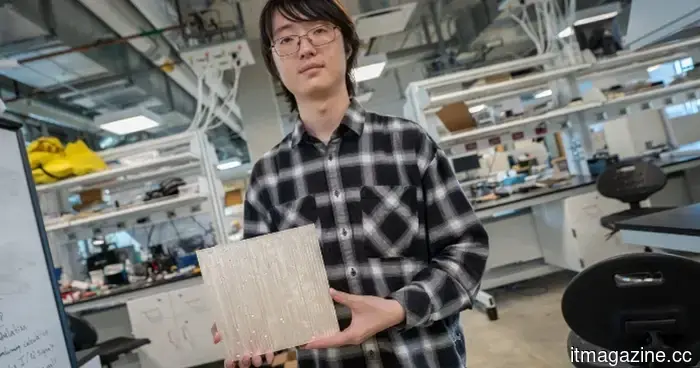 A dull tile aims to resolve the most significant issue with ultra-fast mmWave 5G connections for you.
Researchers at UC San Diego have created low-cost passive reflective tiles that may assist mmWave 5G signals in navigating around walls and other barriers without needing a power source.
A dull tile aims to resolve the most significant issue with ultra-fast mmWave 5G connections for you.
Researchers at UC San Diego have created low-cost passive reflective tiles that may assist mmWave 5G signals in navigating around walls and other barriers without needing a power source.
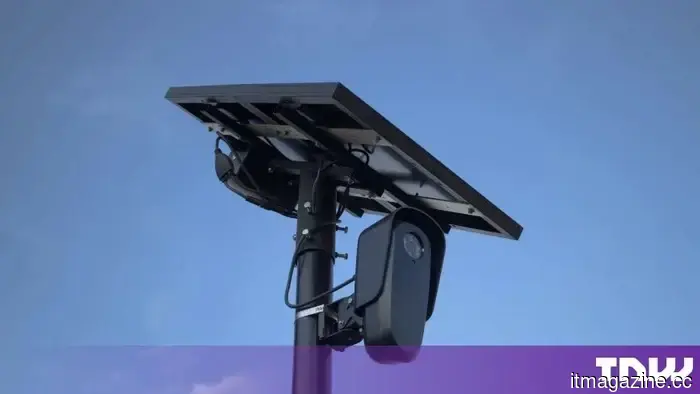 Flock developed an AI tool that enables law enforcement to locate individuals based on their driving habits.
An investigation by WIRED reveals that Flock's AI tool, OS Investigate, enables police to track individuals based on their movements without the need for a license plate, name, or any associated crime.
Flock developed an AI tool that enables law enforcement to locate individuals based on their driving habits.
An investigation by WIRED reveals that Flock's AI tool, OS Investigate, enables police to track individuals based on their movements without the need for a license plate, name, or any associated crime.
 Uber has launched its initial autonomous vehicle rides in Europe, starting in Zagreb, where a safety driver is present.
Uber has introduced autonomous rides in Europe for the first time in Zagreb, utilizing technology from Pony.ai and Verne. A safety operator remains present in the vehicle.
Uber has launched its initial autonomous vehicle rides in Europe, starting in Zagreb, where a safety driver is present.
Uber has introduced autonomous rides in Europe for the first time in Zagreb, utilizing technology from Pony.ai and Verne. A safety operator remains present in the vehicle.
 According to reports, PlayStation is revamping Horizon Hunters Gathering following unsatisfactory playtest results.
PlayStation is said to be revamping Horizon Hunters Gathering, removing its live-service model due to unsatisfactory playtests, and employees are under pressure to meet a deadline in December.
According to reports, PlayStation is revamping Horizon Hunters Gathering following unsatisfactory playtest results.
PlayStation is said to be revamping Horizon Hunters Gathering, removing its live-service model due to unsatisfactory playtests, and employees are under pressure to meet a deadline in December.
 I misjudged the Pixel 11, and now I’m regretting my previous opinion.
The Pixel 11 might seem recognizable, but after a week of experience with it, several innovative features have genuinely surprised me. Here’s what I’m already excited about regarding Google’s latest Pixel.
I misjudged the Pixel 11, and now I’m regretting my previous opinion.
The Pixel 11 might seem recognizable, but after a week of experience with it, several innovative features have genuinely surprised me. Here’s what I’m already excited about regarding Google’s latest Pixel.
Samsung has raised foundry prices by as much as 15%, with China facing the highest increases.
According to Reuters, Samsung has increased its advanced chipmaking prices by as much as 15%, driven by AI demand exceeding TSMC’s production capacity. Chinese clients are now facing the highest prices.