
Samsung increased foundry prices by as much as 15%, with China facing the highest increases.
Samsung has increased prices for some of its advanced contract chipmaking services by up to 15 percent for new orders, as reported by Reuters. Two sources familiar with the situation indicated that these price hikes are a result of a surge in demand for AI chips, which is straining capacity in a sector traditionally dominated by TSMC.
The price increases, which took effect in July, focus on Samsung’s 4-nanometre process known as SF4, according to the sources. Clients in China and the United States experienced price rises of 10 to 15 percent compared to the previous month, while those in Taiwan, TSMC's base, faced smaller increases of 5 to 10 percent. Additionally, the cost for Samsung's 5-nanometre SF5 wafers rose by 10 to 15 percent, and prices for its older 8-nanometre wafers increased by nearly 10 percent.
A foundry manufactures chips based on designs provided by other companies. The process node, measured in nanometres, serves as a rough indicator of a chip's advancement, with smaller numbers denoting newer, denser chips. SF4 is a key advanced node for Samsung and is highly sought after by AI chip designers.
Sources noted that demand from Chinese clients has been particularly robust, and Samsung has struggled to fulfill all orders while prioritizing U.S. customers and reserving some capacity for its own chip production. Consequently, Chinese clients are among those facing the steepest price increases.
The willingness of Chinese customers to accept higher prices stems from trade policy constraints. U.S. restrictions on the export of advanced chipmaking equipment to China have pushed domestic firms to seek out foreign foundries like Samsung. With limited options at the cutting edge, these companies have less leverage to resist price hikes.
Samsung declined to comment, stating it does not discuss operational details. The numbers were provided by the sources who spoke to Reuters on the condition of anonymity due to the sensitive nature of the pricing information.
These price increases indicate a shift for a foundry business that has been unprofitable since 2022, according to industry estimates. The division has faced challenges competing with TSMC, despite Samsung overall experiencing record profits from rising prices for memory chips used in AI systems.
While Samsung is the leading memory chip manufacturer benefiting from the AI surge, its foundry business, which competes for contract manufacturing against TSMC, has struggled. The recent price increase suggests that Samsung may be beginning to narrow the gap with TSMC.
According to research firm Counterpoint, Samsung accounted for 7 percent of global foundry revenue in the first quarter of 2026, while TSMC commanded over 70 percent. However, high AI demand has occupied much of TSMC’s advanced capacity, opening the door for Samsung to raise prices.
This marks a significant change, as Samsung's foundry has long been the second under TSMC. Previously, Samsung had to lower prices to attract business TSMC couldn't handle. Now, with customers approaching Samsung due to TSMC’s saturation, they are willing to accept higher prices.
Lee Min-hee, an analyst at BNK Investment & Securities, connected this move to the broader market shift. He noted that as TSMC raises its prices due to constrained capacity, customers are turning to competitors like Samsung and Intel, prompting Samsung to increase its own prices.
Lee also views this as a potential pathway to profitability. He suggested that if Samsung continues to raise prices, its foundry arm might become profitable as early as next year, earlier than previously anticipated.
Samsung forecasts that advanced processes will account for over half of its foundry revenue this year, expecting AI and high-performance computing to contribute more than 30 percent, up from 15 to 20 percent in late 2025.
The SF4 production line at Samsung’s Pyeongtaek plant in South Korea has been operating at full capacity since late last year, with the line producing logic chips for clients like Qualcomm. It also manufactures base dies for Samsung’s high-bandwidth memory chips, which are essential for data delivery to AI processors.
In July, Samsung projected its foundry unit would soon return to profitability, aided by higher factory utilization, improved yields, and more stable pricing. An increase in sales to major U.S. and Chinese clients, along with demand for HBM base dies, is expected to boost foundry revenue in the latter half of the year by over a double-digit percentage compared to the previous year.
Improved yields have helped Samsung secure additional contracts, including agreements with Tesla and Apple for chipmaking. The company reached a deal with Broadcom to produce AI chips in July, and Nvidia's Jensen Huang stated in March that Samsung would manufacture his company's new AI inference processor. Google is reportedly in discussions with Samsung regarding SF4 chip production.
These agreements highlight Samsung's expanding customer base beyond its traditional mobile chip sector. Securing orders from leading AI
Other articles
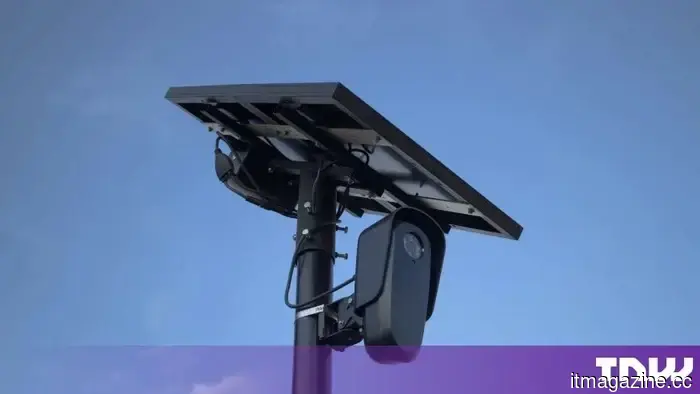 Flock developed an AI tool that enables law enforcement to locate individuals based on their driving habits.
An investigation by WIRED reveals that Flock's AI tool, OS Investigate, enables police to track individuals based on their movements without the need for a license plate, name, or any associated crime.
Flock developed an AI tool that enables law enforcement to locate individuals based on their driving habits.
An investigation by WIRED reveals that Flock's AI tool, OS Investigate, enables police to track individuals based on their movements without the need for a license plate, name, or any associated crime.
 I misjudged the Pixel 11, and now I’m regretting my previous opinion.
The Pixel 11 might seem recognizable, but after a week of experience with it, several innovative features have genuinely surprised me. Here’s what I’m already excited about regarding Google’s latest Pixel.
I misjudged the Pixel 11, and now I’m regretting my previous opinion.
The Pixel 11 might seem recognizable, but after a week of experience with it, several innovative features have genuinely surprised me. Here’s what I’m already excited about regarding Google’s latest Pixel.
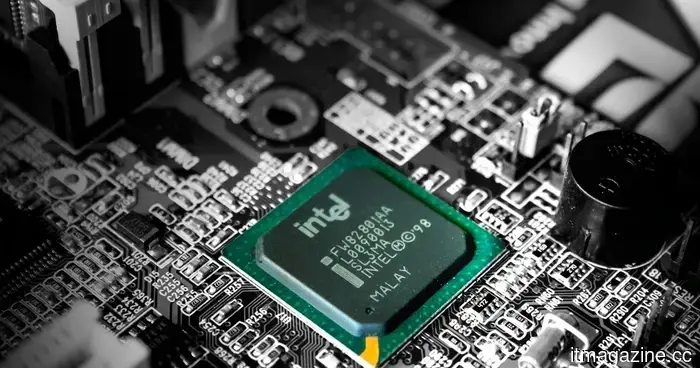 Intel's upcoming laptop CPUs may receive a significant cache enhancement with Razor Lake.
The rumored Razor Lake mobile CPUs from Intel may feature bLLC for significantly larger cache pools, while an initial manufacturing claim has changed from TSMC N2X to the somewhat less specified N2P V2.
Intel's upcoming laptop CPUs may receive a significant cache enhancement with Razor Lake.
The rumored Razor Lake mobile CPUs from Intel may feature bLLC for significantly larger cache pools, while an initial manufacturing claim has changed from TSMC N2X to the somewhat less specified N2P V2.
 TikTok may soon enable users to send money directly through direct messages.
Secret code within TikTok's iPhone application suggests the existence of a direct messaging payment feature supported by TikTok Pay, the service currently utilized for TikTok Shop transactions in certain Asian regions.
TikTok may soon enable users to send money directly through direct messages.
Secret code within TikTok's iPhone application suggests the existence of a direct messaging payment feature supported by TikTok Pay, the service currently utilized for TikTok Shop transactions in certain Asian regions.
 Marvell provides Google with a $12.2 billion share option as part of a custom-chip agreement.
Marvell granted Google a warrant to purchase as much as $12.2 billion of its stock, which will be activated as Google acquires its specialized AI chips. Marvell's stock surged, while Broadcom's declined.
Marvell provides Google with a $12.2 billion share option as part of a custom-chip agreement.
Marvell granted Google a warrant to purchase as much as $12.2 billion of its stock, which will be activated as Google acquires its specialized AI chips. Marvell's stock surged, while Broadcom's declined.
 Stripe finalizes its OpenRouter agreement for an estimated $7.5 billion or more.
Stripe has officially announced its acquisition of the AI model router OpenRouter. While the purchase price was not revealed, the New York Times reports it to be $7.5 billion, whereas Axios cites it as exceeding $8 billion.
Stripe finalizes its OpenRouter agreement for an estimated $7.5 billion or more.
Stripe has officially announced its acquisition of the AI model router OpenRouter. While the purchase price was not revealed, the New York Times reports it to be $7.5 billion, whereas Axios cites it as exceeding $8 billion.
Samsung increased foundry prices by as much as 15%, with China facing the highest increases.
According to Reuters, Samsung has increased its prices for advanced chip manufacturing by as much as 15%, driven by AI demand that is exceeding TSMC's capacity. Chinese clients are paying the highest rates.