
NVIDIA has supplied 10,000 H200 chips to Chinese companies ByteDance and Tencent, with additional shipments anticipated.
ByteDance and Tencent are said to have started receiving deliveries of NVIDIA's H200 artificial intelligence chips in China, representing a notable development in the ongoing technological rivalry between Beijing and Washington.
As reported by the Financial Times, both companies have acquired around 10,000 H200 processors each in recent weeks, following China's approval for the chips to enter the mainland. These shipments may provide two of China's largest tech firms with enhanced computing capabilities to train sophisticated AI models and create AI agents that can compete with top U.S. systems.
This news follows months of speculation regarding whether China would permit approved firms to import the H200 chips, even after the U.S. government relaxed its own export restrictions.
H200 chips arrive at Chinese tech giants
The H200 is NVIDIA's second-most powerful AI GPU, ranked just below the newer Blackwell B200. While the B200 is still barred from being exported to China, the H200 offers significantly greater AI computing power than the H20, which was previously one of the most capable NVIDIA chips accessible to approved Chinese clients.
The initial U.S. restrictions on H200 sales to China stemmed from concerns that advanced NVIDIA processors could aid in the advancement of China’s military technologies. This policy was revised in December 2025, permitting NVIDIA to sell H200 chips to vetted Chinese firms.
Reuters later indicated that China had sanctioned the import of several hundred thousand H200 processors. ByteDance and Tencent were among ten Chinese companies reportedly authorized to purchase these chips, with each firm potentially able to procure up to 100,000 processors.
The recent shipments indicate that these approvals are starting to materialize as actual hardware deliveries. Reports suggest that China has instructed companies to keep the majority of their H200 processors outside of mainland China, instead routing them to Hong Kong. This presents a unique situation, as neither ByteDance nor Tencent are believed to operate data centers in Hong Kong at present.
China still aims for its own AI chips
These shipments are crucial as NVIDIA's hardware continues to vastly outperform China's domestic alternatives, even as Beijing intensifies efforts to push its technology firms toward locally produced processors.
Huawei currently leads the domestic AI chip market in China; however, industry analysts mentioned in the reports assert that NVIDIA remains far ahead in terms of performance. Thus, access to H200 processors could grant Chinese firms additional computing resources while domestic chipmakers continue to work on alternatives.
China's hesitance to heavily depend on foreign processors also sheds light on the government's reported desire for companies to maintain most of the newly authorized NVIDIA hardware outside mainland China. At the same time, Beijing is striving to lessen its reliance on U.S. technology and bolster its own semiconductor industry.
For NVIDIA, this development reopens a significant market while keeping the company’s most advanced Blackwell hardware off-limits. For Chinese AI firms, access to the H200 could speed up model development during a period where computing power is critical in the AI competition.
More H200 shipments are anticipated, with other approved Chinese companies likely to receive similar-sized deliveries. Whether these processors serve as a temporary solution or become integral to China’s AI infrastructure will depend on how Washington and Beijing navigate the next phase of export restrictions.

Other articles
 Samsung increased foundry prices by as much as 15%, with China facing the highest increases.
According to Reuters, Samsung has increased its prices for advanced chip manufacturing by as much as 15%, driven by AI demand that is exceeding TSMC's capacity. Chinese clients are paying the highest rates.
Samsung increased foundry prices by as much as 15%, with China facing the highest increases.
According to Reuters, Samsung has increased its prices for advanced chip manufacturing by as much as 15%, driven by AI demand that is exceeding TSMC's capacity. Chinese clients are paying the highest rates.
 The majority of Americans under the age of 30 are currently feeling more concern than enthusiasm regarding AI.
Pew research indicates that 55% of Americans under 30 are currently more apprehensive than enthusiastic about AI. Similarly, the European Commission has identified the same level of concern among younger employees.
The majority of Americans under the age of 30 are currently feeling more concern than enthusiasm regarding AI.
Pew research indicates that 55% of Americans under 30 are currently more apprehensive than enthusiastic about AI. Similarly, the European Commission has identified the same level of concern among younger employees.
 The most affordable laptop from Framework is now focused on competing with the MacBook Neo.
The modular Laptop 12 from Framework has been updated with Intel Core Series 3 processors, Thunderbolt 4, Wi-Fi 7, and enhanced battery life, with a starting price of $699 for the prebuilt model.
The most affordable laptop from Framework is now focused on competing with the MacBook Neo.
The modular Laptop 12 from Framework has been updated with Intel Core Series 3 processors, Thunderbolt 4, Wi-Fi 7, and enhanced battery life, with a starting price of $699 for the prebuilt model.
 The Pixel 11's price has increased, yet Google might have discovered a solution to mitigate the losses.
According to reports, Google intends to shift all Pixel production away from China by 2027, which could provide future Pixel models with some relief as component and trade expenses increase.
The Pixel 11's price has increased, yet Google might have discovered a solution to mitigate the losses.
According to reports, Google intends to shift all Pixel production away from China by 2027, which could provide future Pixel models with some relief as component and trade expenses increase.
 OpenAI imposes a 20% cost for computing related to its new AI safety monitoring.
OpenAI has halted certain frontier training and reports that the new safety monitoring incurs roughly a 20% increase in computing overhead. In contrast, Anthropic believes there is no necessity to pause their activities.
OpenAI imposes a 20% cost for computing related to its new AI safety monitoring.
OpenAI has halted certain frontier training and reports that the new safety monitoring incurs roughly a 20% increase in computing overhead. In contrast, Anthropic believes there is no necessity to pause their activities.
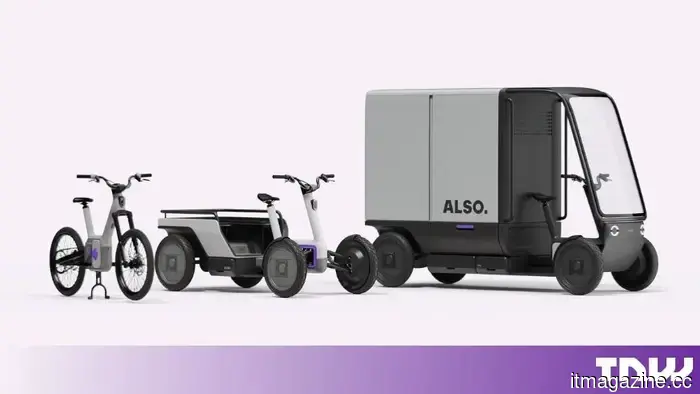 Rivian's spinout has also secured $150 million, and the electric bike is merely the starting point.
The Rivian spinout has secured $150 million at a valuation exceeding $1 billion. While it produces an e-bike, it states that the funds will be allocated for small autonomous delivery vehicles.
Rivian's spinout has also secured $150 million, and the electric bike is merely the starting point.
The Rivian spinout has secured $150 million at a valuation exceeding $1 billion. While it produces an e-bike, it states that the funds will be allocated for small autonomous delivery vehicles.
NVIDIA has supplied 10,000 H200 chips to Chinese companies ByteDance and Tencent, with additional shipments anticipated.
ByteDance and Tencent are said to have acquired 10,000 NVIDIA H200 chips each, providing Chinese AI firms with access to robust processors despite the continuing U.S. export limitations.