
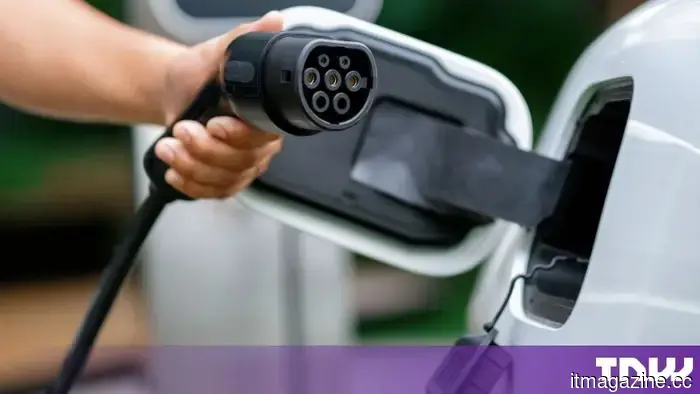
Replacing your petrol car with an electric vehicle (EV) will pay off in three years.
Research published in Science reveals that discontinuing a petrol car in its first year and replacing it with a battery electric vehicle can reduce emissions by 58% over a 16-year period, achieving carbon payback in approximately three years. This advantage does not apply to highly efficient hybrids, vehicles with very low annual mileage, or areas with the least clean electricity grids.
According to new findings in Science, retiring a petrol car early is more beneficial for the environment than continuing to drive it. By scrapping the vehicle within its first year and switching to a battery electric vehicle, emissions decrease by 58% over 16 years.
The study, conducted by Elliott Campbell at UC Santa Cruz and Roland Geyer at UC Santa Barbara, analyzed over 400 combustion and electric vehicle models, taking into account grid composition, efficiency, mileage, battery capacity, and manufacturing emissions.
The carbon payback period is around three years, which is the time required for the lower emissions from driving an electric car to outweigh the emissions from its production, including the battery.
The term "retire" refers to scrapping the car, rather than selling it. Selling passes the vehicle to another driver, simply transferring the emissions rather than eliminating them.
However, most coverage of this research fails to mention that the findings are not universally applicable. In fact, a reduction was only observed in 92% of the modeled scenarios, meaning 8% did not share this outcome.
Hybrids are the most notable exception. Standard hybrids are so efficient that, in certain cases, replacing one early with a battery electric vehicle could actually lead to higher emissions, and the same concern applies to plug-in hybrids.
The second scenario involves very low mileage. For vehicles driven less than approximately 4,383 miles annually for cars, 4,248 miles for SUVs, and 6,707 miles for trucks, the advantages of replacement do not materialize.
The third factor pertains to electricity source, which varies significantly. If the local grid produces more than 970 pounds of CO2 per megawatt hour, the benefits of switching diminish. This point has been highlighted previously regarding coal-generated electricity usage for charging.
The situation is different on the other side of the Atlantic. Electric vehicles in Europe are estimated to be about three times cleaner than their petrol counterparts based on the continent’s energy generation mix, making the case for early retirement stronger in countries such as France or Sweden as compared to Poland.
The challenging aspect lies in the policy implications. If the benefits are derived from removing cars from the roads rather than passing them on, this research advocates for scrappage policies, which involve compensating individuals to dismantle functioning vehicles.
Other articles
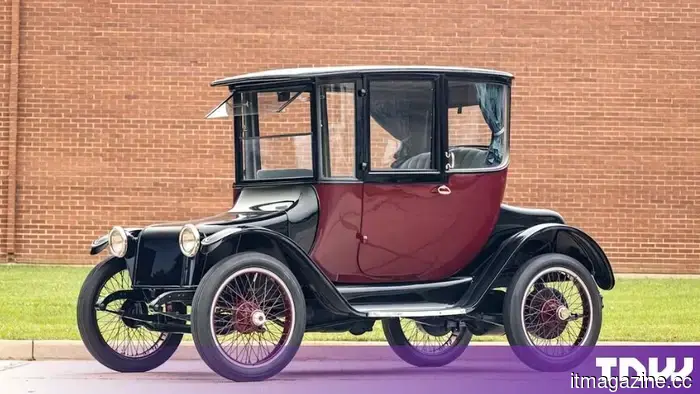 This 1918 electric vehicle was equipped with 42 batteries and offered a greater range than a 2011 Leaf.
A 1918 Detroit Electric advertised at Monterey boasted a range of 80 miles, surpassing that of the first Nissan Leaf. The factor that led to its downfall was its price, rather than its range.
This 1918 electric vehicle was equipped with 42 batteries and offered a greater range than a 2011 Leaf.
A 1918 Detroit Electric advertised at Monterey boasted a range of 80 miles, surpassing that of the first Nissan Leaf. The factor that led to its downfall was its price, rather than its range.
 Beyond GTA VI: Reasons why 2026 could be the greatest year for gaming.
With titles like GTA 6, Resident Evil Requiem, Wolverine, and Phantom Blade Zero, 2026 is poised to become one of the greatest years in gaming history.
Beyond GTA VI: Reasons why 2026 could be the greatest year for gaming.
With titles like GTA 6, Resident Evil Requiem, Wolverine, and Phantom Blade Zero, 2026 is poised to become one of the greatest years in gaming history.
 China is eliminating Microsoft’s Windows 10 from governmental departments.
China's Ministry of State Security has instructed state agencies to remove a tailored version of Windows 10, according to Bloomberg, and this action has been taken sooner than expected.
China is eliminating Microsoft’s Windows 10 from governmental departments.
China's Ministry of State Security has instructed state agencies to remove a tailored version of Windows 10, according to Bloomberg, and this action has been taken sooner than expected.
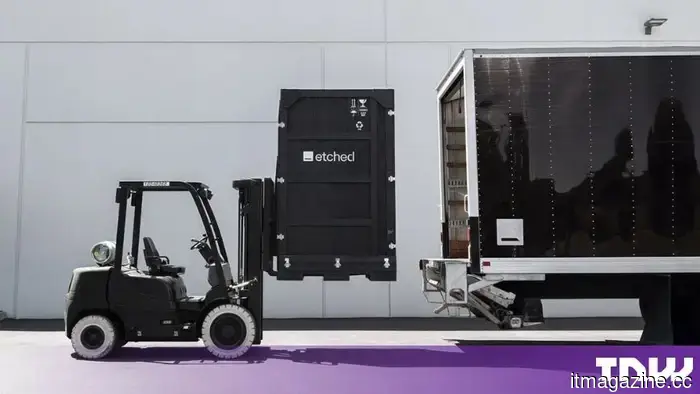 Etched secures $700 million in funding, achieving a valuation of $21 billion, with Jane Street leading the round.
Etched has secured $700 million at a $21 billion valuation, with Jane Street leading the round, just 26 days after its previous funding. The company has also sent its first rack to that investor.
Etched secures $700 million in funding, achieving a valuation of $21 billion, with Jane Street leading the round.
Etched has secured $700 million at a $21 billion valuation, with Jane Street leading the round, just 26 days after its previous funding. The company has also sent its first rack to that investor.
 ChatGPT is introducing a version for teenagers, and I have many questions.
Teenagers are currently utilizing AI for their homework and beyond. OpenAI's latest ChatGPT experience aims to ensure that they are genuinely learning from it — with significant safeguards in place.
ChatGPT is introducing a version for teenagers, and I have many questions.
Teenagers are currently utilizing AI for their homework and beyond. OpenAI's latest ChatGPT experience aims to ensure that they are genuinely learning from it — with significant safeguards in place.
 Xiaomi's inaugural electric vehicle has surpassed half a million units delivered.
Xiaomi's SU7 has achieved 500,000 deliveries in 28.5 months. However, it has seen a decline of 43.6% this year, whereas the company overall has experienced an increase of nearly 15%.
Xiaomi's inaugural electric vehicle has surpassed half a million units delivered.
Xiaomi's SU7 has achieved 500,000 deliveries in 28.5 months. However, it has seen a decline of 43.6% this year, whereas the company overall has experienced an increase of nearly 15%.
Replacing your petrol car with an electric vehicle (EV) will pay off in three years.
Recent research published in Science indicates that replacing a petrol vehicle with an electric vehicle in its first year can reduce emissions by 58% over a span of 16 years, although there are three significant exceptions.