
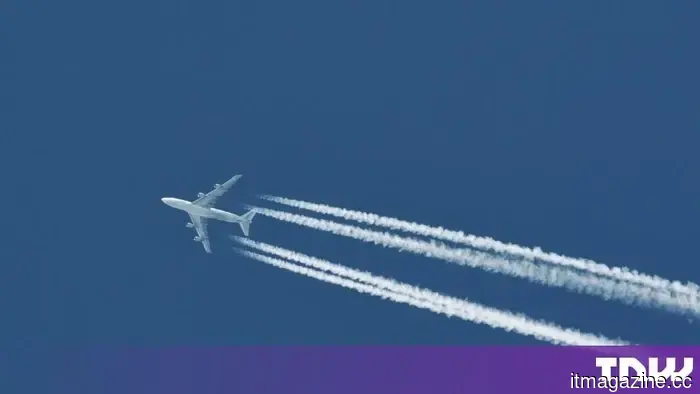
Google and the UK will guide aircraft to avoid contrails in the Atlantic.
The UK government and Google are initiating a trial aimed at directing aircraft around contrails that contribute to climate change. Google unveiled Operation Blue Skies on Tuesday, marking the first initiative of its kind to cover an entire ocean airspace. AI models will forecast contrail formation over the North Atlantic, allowing air traffic controllers to adjust flight paths to avoid these areas.
Contrails, the thin white streaks that appear behind airplanes, are formed when water vapor in jet engine exhaust freezes on soot particles, turning into ice. While many of these trails dissipate within minutes, those that persist in cold and humid conditions can expand into cirrus clouds and trap heat. According to Google and its collaborators, contrail-induced warming accounts for about one-third of the total climate impact from aviation.
Paul Hodgson, Google’s technical lead for the trial, gave the BBC a straightforward perspective on the issue. He referred to contrails as “sky graffiti,” noting that while the precise impact is hard to quantify, scientists believe it represents either a significant or a very serious concern.
Details on the trial's implementation
Operation Blue Skies will take place in Shanwick airspace, which represents the eastern section of the North Atlantic corridor and contributes to approximately 5% of global contrail warming, predominantly during winter. This statistic is provided by the Aerospace Technology Institute (ATI), which is managing the public funding for the project.
The intervention is quite minor. Google uses AI to generate forecasts from satellite images, flight data, and Met Office weather models to identify areas where persistent contrails are likely to form. These forecasts are sent to NATS, the UK air traffic control agency, allowing controllers to advise pilots on altitude changes of up to 2,000 feet to steer clear of contrail-forming layers.
This altitude change is a common practice, as controllers often reroute aircraft to avoid turbulence and adverse weather. Reports from New Scientist and the BBC indicate that the trial will focus on evening and night flights, which create the most substantial warming effects since daytime contrails reflect some sunlight back into space.
Financial aspects
The initiative is a £5 million project lasting 30 months, according to the ATI. The UK’s Department for Transport is contributing £2.65 million through the ATI Programme, with industry partners covering the remainder. Google is participating pro bono, offering £1.4 million worth of support in the form of research, engineering time, and computing resources.
The program includes two operational trials, each lasting about four months, scheduled for the winters of 2026 to 2027 and 2027 to 2028, with around 20 to 40 test days in each winter. Approximately 10,000 flights traverse Shanwick during operational hours annually, but only a small number will be rerouted, enough to yield statistically significant data.
The consortium is comprised of UK entities, with Google UK responsible for building and verifying the models. NATS oversees the airspace and controller training, while Contrails.org sets trial parameters. Independent validation comes from Imperial College London and the University of Cambridge, and the Met Office provides forecasting support. The ATI states that all government funding is allocated to academic, nonprofit, and aviation partners, not to Google.
Is avoiding contrails actually beneficial?
A key concern is fuel consumption. Altering an aircraft's altitude increases fuel usage, which in turn raises carbon dioxide emissions; therefore, the trial must demonstrate that the climate advantages outweigh this downside.
The partners assert that the benefits significantly exceed the costs. A complete reroute in Shanwick results in approximately 100kg of additional fuel burned per aircraft, according to Hodgson's comments reported by New Scientist. He estimated that the carbon emissions from this additional fuel are less than 1% of the contrail warming that would be prevented, which he described as being measured in tons or even dozens of tons.
The method has already shown promise on a smaller scale. Google previously collaborated with American Airlines, among others, and those airline-specific trials reportedly reduced contrail formation or warming by about 60% to 70%. The novel aspect of this trial is that the changes will be directed by controllers and applied to all planes in the airspace, preventing airlines from opting out.
The broader context
The trial comes at a time when Google’s environmental impact is under scrutiny. The BBC highlighted that, similar to its competitors, Google is investing billions to power data centers that support AI, which environmental advocates caution will increase emissions the company is otherwise attempting to reduce.
This tension is evident; for instance, Google’s $15 billion data center in India faced opposition over water use and wildlife concerns. Furthermore, the company has committed to paying $44 billion in rent for data center buildings it will not own.
This expansion context frames the trial's backdrop, as Google's demand for AI-related energy influences where it establishes operations, while its data centers consume large and increasing amounts of electricity. As such, the company is simultaneously reducing aviation emissions in one area while its
Other articles
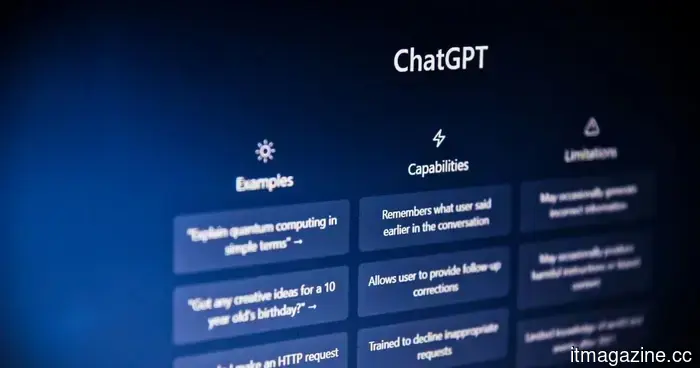 ChatGPT is introducing a version for teenagers, and I have many questions.
Teenagers are currently utilizing AI for their homework and beyond. OpenAI's latest ChatGPT experience aims to ensure that they are genuinely learning from it — with significant safeguards in place.
ChatGPT is introducing a version for teenagers, and I have many questions.
Teenagers are currently utilizing AI for their homework and beyond. OpenAI's latest ChatGPT experience aims to ensure that they are genuinely learning from it — with significant safeguards in place.
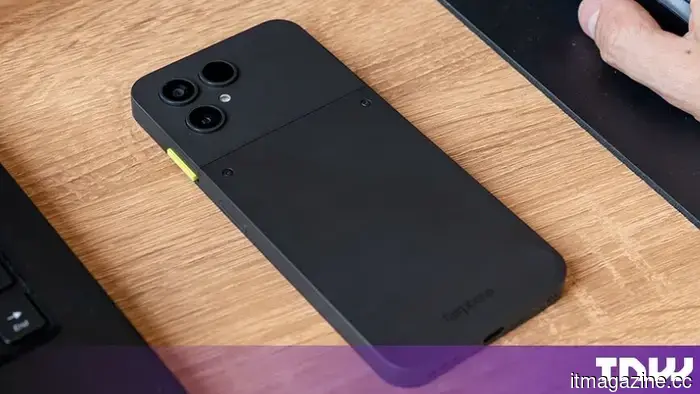 Fairphone's most repairable smartphone to date is now available in the US for $650.
Fairphone is now selling directly in the US for the first time. The Gen 6+ is priced at $650, features 12 parts that can be replaced, and offers seven years of software updates.
Fairphone's most repairable smartphone to date is now available in the US for $650.
Fairphone is now selling directly in the US for the first time. The Gen 6+ is priced at $650, features 12 parts that can be replaced, and offers seven years of software updates.
 This 1918 electric vehicle was equipped with 42 batteries and boasted a greater range than a 2011 Leaf.
A 1918 Detroit Electric showcased at Monterey boasted a range of 80 miles, surpassing that of the initial Nissan Leaf. Its downfall was attributed to its cost, not its range.
This 1918 electric vehicle was equipped with 42 batteries and boasted a greater range than a 2011 Leaf.
A 1918 Detroit Electric showcased at Monterey boasted a range of 80 miles, surpassing that of the initial Nissan Leaf. Its downfall was attributed to its cost, not its range.
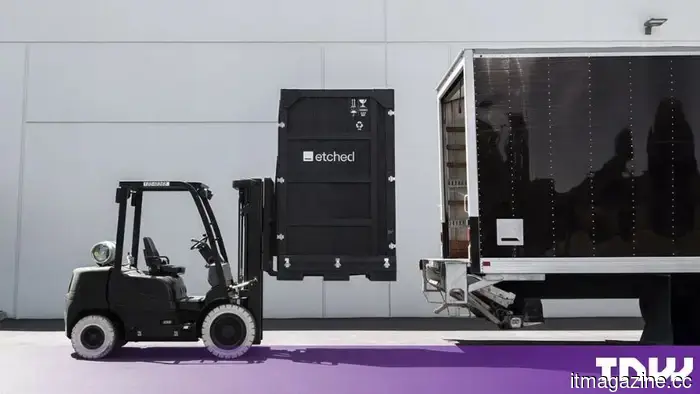 Etched secures $700 million with a valuation of $21 billion, spearheaded by Jane Street.
Etched has secured $700 million at a valuation of $21 billion, with Jane Street leading the funding, just 26 days after its previous round, and has recently sent its first rack to that investor.
Etched secures $700 million with a valuation of $21 billion, spearheaded by Jane Street.
Etched has secured $700 million at a valuation of $21 billion, with Jane Street leading the funding, just 26 days after its previous round, and has recently sent its first rack to that investor.
 The phone that you can truly fix by yourself is finally arriving in the US.
Fairphone is now offering its repairable, sustainable phone in the US, complete with a screwdriver. Here’s the price of the Gen 6+ and reasons why it could be worth skipping your next upgrade.
The phone that you can truly fix by yourself is finally arriving in the US.
Fairphone is now offering its repairable, sustainable phone in the US, complete with a screwdriver. Here’s the price of the Gen 6+ and reasons why it could be worth skipping your next upgrade.
 China is eliminating Microsoft’s Windows 10 from government agencies.
According to Bloomberg, China's Ministry of State Security has instructed state agencies to remove a customized version of Windows 10 earlier than planned.
China is eliminating Microsoft’s Windows 10 from government agencies.
According to Bloomberg, China's Ministry of State Security has instructed state agencies to remove a customized version of Windows 10 earlier than planned.
Google and the UK will guide aircraft to avoid contrails in the Atlantic.
Operation Blue Skies is a UK initiative utilizing Google's AI to navigate North Atlantic aircraft around warming contrails. It will take place over two winter seasons starting in 2026.