
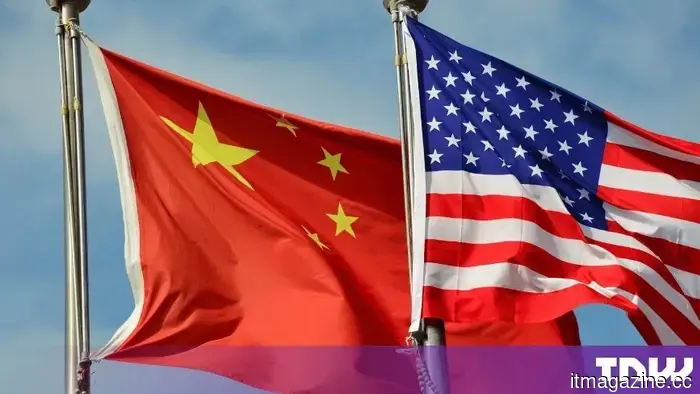
China is eliminating Microsoft’s Windows 10 from government agencies.
China is expediting the removal of a government version of Microsoft’s Windows 10 from state agencies, earlier than previously scheduled. According to a Bloomberg report citing sources familiar with the situation, the Ministry of State Security recently instructed certain state-affiliated organizations to uninstall the customized software due to data security concerns, although specific vulnerabilities were not mentioned.
This decision advances the planned retirement date of the software, which was set for February 2027. The new directive shortens that timeline by several months, as reported by Bloomberg. The timing is noteworthy, coming just weeks ahead of a scheduled meeting between U.S. President Donald Trump and Chinese leader Xi Jinping, and it has taken some state agency employees by surprise.
Microsoft stated that it had not identified any issues with the software. A spokesperson informed Bloomberg, “Microsoft is not aware of a security incident affecting this product, which continues to receive regular security updates,” adding, “We have nothing further to share.”
Bloomberg characterized this directive as part of a broader ongoing effort to eliminate the most widely used PC software and diminish China’s reliance on foreign technology. The timing of the order is significant; it was issued just weeks ahead of the Trump-Xi meeting, and the CMIT had not assigned a removal deadline for this year, catching some officials off guard.
The version in question is not the standard Windows. It is produced by C&M Information Technologies (CMIT), a joint venture between Microsoft and the state-owned China Electronics Technology Group Corporation, established in 2016 to ensure Windows 10 met Beijing’s security standards. CMIT’s edition includes customized cybersecurity features developed domestically and disables certain inherent functions to comply with national security regulations. Microsoft stopped support for the standard Windows 10 in late 2025, following the launch of Windows 11.
Bloomberg noted that China's State Council Information Office did not respond to a request for comment, nor did CMIT, which lacks publicly available contact details for the Ministry of State Security.
Domestic software companies have responded positively to the news, with shares of Hunan Kylinsec Technology and Archermind Technology soaring by the maximum daily limit of 20 percent, while China National Software & Service rose by 10 percent. Several Chinese firms, including Kylin Software and Tongxin Software Technology, already provide operating systems intended to replace Windows. Hunan Kylinsec, which reached the daily limit, is among these domestic alternatives.
This transition goes beyond just software; Beijing has instructed central government agencies to replace foreign-brand PCs. Additionally, Apple's iPhones have been banned from some sensitive state entities, making the Windows removal part of a broader strategy rather than an isolated incident.
The directive aligns with an ongoing campaign to replace foreign technology in sensitive sectors. Bloomberg reported that Beijing has been advocating for domestically produced tools in environments that handle sensitive data, such as military and state-owned enterprises. Due to restrictions, China is no longer able to access Nvidia’s most advanced chips and is increasingly relying on local firms like Huawei and Cambricon.
This shift is evident in the market as well; China Telecom awarded Huawei a $1.7 billion server contract utilizing its Kunpeng processors this summer. Foreign companies are adapting to stay in China; for example, Apple has provided its AI model to Alibaba in light of these changes.
The magnitude of a complete separation is substantial; one analysis suggests that decoupling the West from China could cost approximately $23.6 trillion. The situation with Windows is a small part of this larger picture, although it is highly visible due to the software's widespread use.
Despite the Windows removal, Microsoft is not exiting the Chinese market. The company has developed a significant business offering AI models to Chinese firms such as ByteDance and Tencent. Reports indicate that ByteDance alone is expected to spend over $1 billion annually on Microsoft AI and cloud services. This situation reflects Beijing's strategy of closing off foreign software from government use while allowing foreign AI products to continue selling to leading tech companies. The Windows directive affects state entities but not the private sector.
Globally, Windows 10 has been slow to disappear. A study from July 2026 indicated that one in six PCs still operated on it, compared to 78.8 percent on Windows 11. The report further noted that an average Windows 10 device has around 1,903 active security vulnerabilities, compared to 652 on a Windows 11 device. Microsoft has extended paid security updates for Windows 10 until October 2027, suggesting that devices still running it are not yet left unprotected.
The key detail that remains unclear is the specific security issue that prompted the directive from Beijing; sources did not clarify this, and Microsoft has stated that there are no known incidents concerning the product. Three factors could indicate the extent of these changes: whether the directive will expand from state-linked entities to the wider public sector, if other foreign software will follow Windows in being removed, and what Beijing eventually discloses as the reason for the security
Other articles
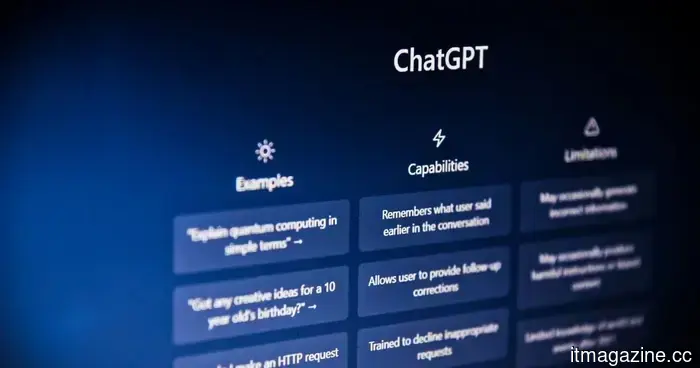 ChatGPT is introducing a version for teenagers, and I have many inquiries.
Teenagers are increasingly utilizing AI for their homework and beyond. OpenAI’s latest ChatGPT experience aims to ensure that they are genuinely learning from it, incorporating some significant safeguards in the process.
ChatGPT is introducing a version for teenagers, and I have many inquiries.
Teenagers are increasingly utilizing AI for their homework and beyond. OpenAI’s latest ChatGPT experience aims to ensure that they are genuinely learning from it, incorporating some significant safeguards in the process.
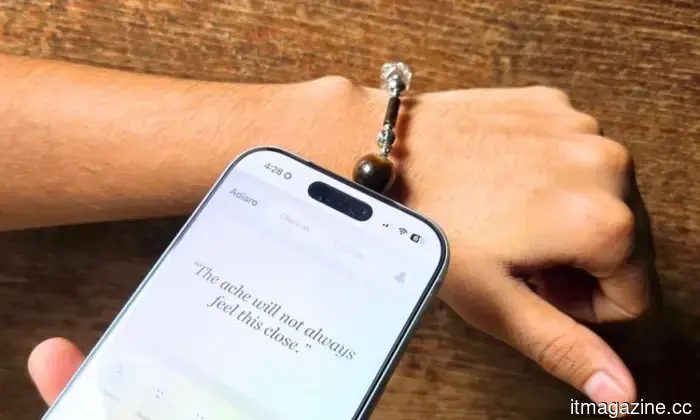 Apple's camera AirPods might actually inform you when your hair is obstructing the view.
Recently revealed information from macOS Tahoe 26.7 outlines Apple's strategy for addressing bad hair days and ensuring secure pairing for the AirPods camera.
Apple's camera AirPods might actually inform you when your hair is obstructing the view.
Recently revealed information from macOS Tahoe 26.7 outlines Apple's strategy for addressing bad hair days and ensuring secure pairing for the AirPods camera.
 LG's $2 billion battery plant in Lansing has begun producing cells.
LG Energy Solution has commenced production in Lansing, Michigan, at a facility that GM designed, partially financed, and sold. Its customers now include Toyota and Tesla.
LG's $2 billion battery plant in Lansing has begun producing cells.
LG Energy Solution has commenced production in Lansing, Michigan, at a facility that GM designed, partially financed, and sold. Its customers now include Toyota and Tesla.
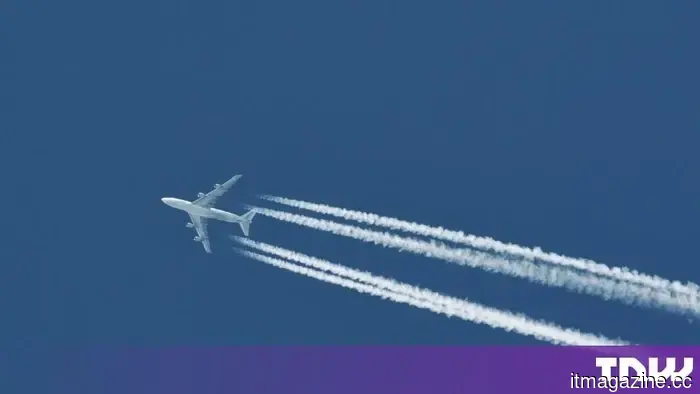 Google and the UK will guide aircraft to avoid contrails in the Atlantic.
Operation Blue Skies is a UK initiative utilizing Google's AI to navigate North Atlantic aircraft around warming contrails. It will take place over two winter seasons starting in 2026.
Google and the UK will guide aircraft to avoid contrails in the Atlantic.
Operation Blue Skies is a UK initiative utilizing Google's AI to navigate North Atlantic aircraft around warming contrails. It will take place over two winter seasons starting in 2026.
 This 1918 electric vehicle was equipped with 42 batteries and boasted a greater range than a 2011 Leaf.
A 1918 Detroit Electric showcased at Monterey boasted a range of 80 miles, surpassing that of the initial Nissan Leaf. Its downfall was attributed to its cost, not its range.
This 1918 electric vehicle was equipped with 42 batteries and boasted a greater range than a 2011 Leaf.
A 1918 Detroit Electric showcased at Monterey boasted a range of 80 miles, surpassing that of the initial Nissan Leaf. Its downfall was attributed to its cost, not its range.
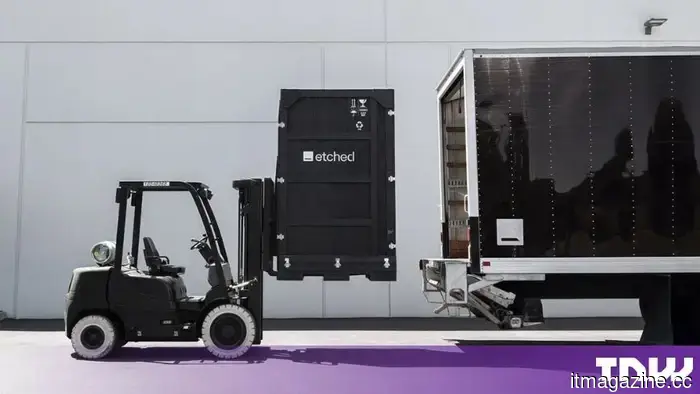 Etched secures $700 million in funding, achieving a valuation of $21 billion, with Jane Street leading the round.
Etched has secured $700 million at a $21 billion valuation, with Jane Street leading the round, just 26 days after its previous funding. The company has also sent its first rack to that investor.
Etched secures $700 million in funding, achieving a valuation of $21 billion, with Jane Street leading the round.
Etched has secured $700 million at a $21 billion valuation, with Jane Street leading the round, just 26 days after its previous funding. The company has also sent its first rack to that investor.
China is eliminating Microsoft’s Windows 10 from government agencies.
According to Bloomberg, China's Ministry of State Security has instructed state agencies to remove a customized version of Windows 10 earlier than planned.