
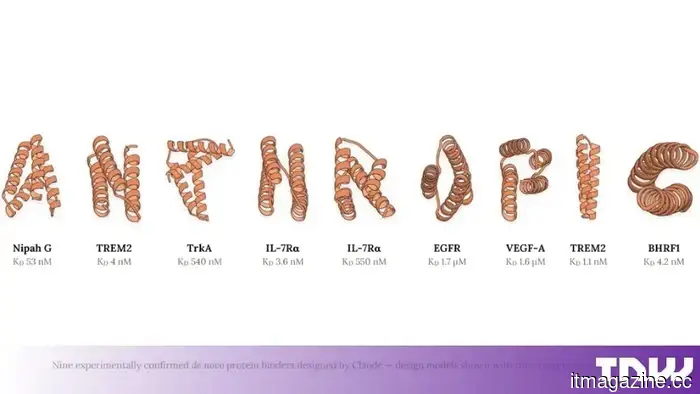
Anthropic reports that Claude has created functional protein binders and outperformed human experts in certain cases.
Anthropic announced that its Claude models successfully designed working protein binders and completed a chemical-analysis task within minutes. The company released details of these two experiments on Tuesday, framing them as preliminary evidence that Claude can accelerate certain aspects of drug development. This information was shared on its research blog.
According to Anthropic's findings, Claude designed protein binders targeting 15 different proteins and achieved success with 14 of them. The success rate of binding to their targets ranged between 22 and 35 percent, depending on the experimental setup, whereas a typical success rate in the field currently stands at around 10 to 15 percent. Some of the strongest designs bound significantly more tightly than the best previously published results.
The validation experiments were conducted externally by two independent firms, Adaptyv Bio and Twist Bioscience, which produced and tested the designs created by Claude. Anthropic noted that physical validation remains a lengthy process, regardless of the software used.
A binder is a small protein designed to attach tightly to a target, which is a mechanism used by many modern drugs. Historically, creating a new binder from scratch, known as de novo design, has taken protein engineers months for each target. This work intersects with the broader realm of AI in drug discovery.
Anthropic utilized two models, Opus 4.8 and a preview of its Mythos model, operating them within Claude Science, its research platform. The models were equipped with a comprehensive prompt, internet access, connectors, and a substantial pool of GPUs. The company allowed the models to function autonomously, directing them on where to bind on each target. Claude coordinated existing open-source design and folding models and screened the resulting candidates.
The computational resources used were significant. Anthropic allocated up to 12,500 Nvidia H100 hours over a 48-hour session in one mode, while a second mode utilized up to 2,500 H100 hours per target. The best results came from designing against one target at a time.
The Mythos preview achieved a 35.1 percent success rate in this manner, resulting in a total of 354 confirmed binders from 1,320 designs.
Some results were particularly notable. For the target RBX1, the Mythos preview achieved a 40 percent success rate, compared to just 3.7 percent for human participants in an Adaptyv Bio competition. Claude’s leading design outperformed the winning entry. Another example is TNFα, a protein targeted by anti-inflammatory drugs such as Humira.
Opus 4.8 was able to create binders effective on human, monkey, and mouse versions, but interestingly, the Mythos preview did not succeed with that target. Anthropic expressed uncertainty about why the less advanced model succeeded where the more powerful one did not.
However, not all outcomes were successful; in testing against maltose-binding protein, which is known to be a challenging target, none of the 90 designs confirmed binding. Results were also modest against BBF-14, a synthetic protein serving as a difficult benchmark. The company plans further investigations to substantiate its hit rates and binding measurements and has made its prompts and data available.
The second experiment involved Claude Opus 5, the most advanced model Anthropic makes available to the public, which was tasked with chemical analysis—specifically, determining the identity and purity of a compound. Chemists typically use two techniques, NMR and LC-MS, with the time-consuming aspect being the interpretation of raw data from the instruments.
Anthropic provided Opus 5 with raw data from a contract lab and a brief prompt, without any vendor software or operator assistance. Within Claude Science, the model processed the results in 23 and 19 minutes, running both analyses simultaneously. The output matched the lab’s findings, with purity calculated at 96.4 percent in comparison to the lab’s 96.33 percent, and hydrogen counts fell within a negligible margin.
Two noteworthy points emerged: Claude identified and corrected its own initial error, which had overstated the number of peaks shifted in a follow-up reading, and it proposed the same confirmatory test that the lab conducted independently three days prior. For the LC-MS data, which was in an undocumented vendor format, the model deciphered the encoding and verified its reading against the instrument’s totals prior to any further analysis.
Anthropic emphasized the time savings, noting that a chemist conducting this analysis manually typically takes around 30 minutes to an hour per sample, and the lab's complete report for this specific analysis was delivered four days after the first measurement, while Claude generated its report in just 25 minutes.
These findings are self-reported from Anthropic regarding its models and have not undergone external peer review, although the two external laboratories did test the protein binders. The company stated it evaluated its models "holistically" and intends to publish further characterizations to validate its figures.
Additionally, Anthropic acknowledged the potential risks associated with its work.
Other articles
 A watchdog organization claims that Meta is compensating influencers to oppose global restrictions on teenagers.
A report from the Tech Transparency Project indicates that Meta compensates influencers globally to support the argument that its Teen Accounts render social media bans for adolescents unnecessary.
A watchdog organization claims that Meta is compensating influencers to oppose global restrictions on teenagers.
A report from the Tech Transparency Project indicates that Meta compensates influencers globally to support the argument that its Teen Accounts render social media bans for adolescents unnecessary.
 A watchdog organization reports that Meta is compensating influencers to oppose teen bans globally.
A report from the Tech Transparency Project indicates that Meta compensates influencers globally to promote the idea that its Teen Accounts render social media restrictions for teenagers unnecessary.
A watchdog organization reports that Meta is compensating influencers to oppose teen bans globally.
A report from the Tech Transparency Project indicates that Meta compensates influencers globally to promote the idea that its Teen Accounts render social media restrictions for teenagers unnecessary.
 China successfully lands a rocket booster on the ground for the first time.
China's LandSpace successfully landed the first stage of its Zhuque-3 rocket on solid ground, marking a national milestone that reduces the gap between the US and SpaceX in the realm of reusable rockets.
China successfully lands a rocket booster on the ground for the first time.
China's LandSpace successfully landed the first stage of its Zhuque-3 rocket on solid ground, marking a national milestone that reduces the gap between the US and SpaceX in the realm of reusable rockets.
 India's Murf AI introduces Falcon 2 to compete with leaders in voice AI.
Bangalore's Murf AI has introduced Falcon 2, priced at $0.01 for each generated minute, which is one-fifth the cost of ElevenLabs, and asserts that its benchmark scores surpass those of certain OpenAI models.
India's Murf AI introduces Falcon 2 to compete with leaders in voice AI.
Bangalore's Murf AI has introduced Falcon 2, priced at $0.01 for each generated minute, which is one-fifth the cost of ElevenLabs, and asserts that its benchmark scores surpass those of certain OpenAI models.
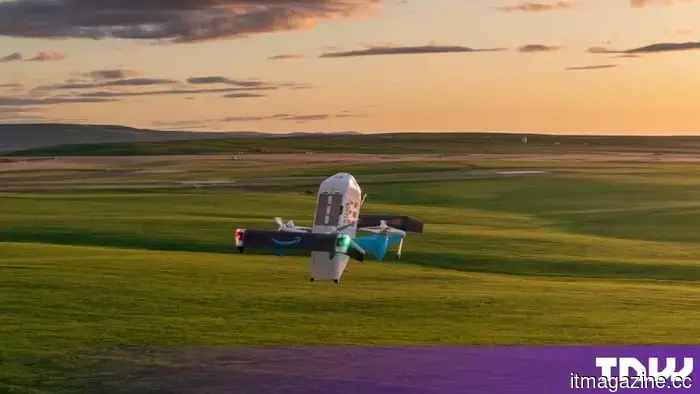 Amazon's fleet of drones is increasing six times in the United States and is limited to 100 deliveries per day in the UK.
By the end of the year, Amazon will conduct drone deliveries in almost 500 cities across the US. However, its sole location in the UK is under investigation by the AAIB and is due for a CAA renewal in December.
Amazon's fleet of drones is increasing six times in the United States and is limited to 100 deliveries per day in the UK.
By the end of the year, Amazon will conduct drone deliveries in almost 500 cities across the US. However, its sole location in the UK is under investigation by the AAIB and is due for a CAA renewal in December.
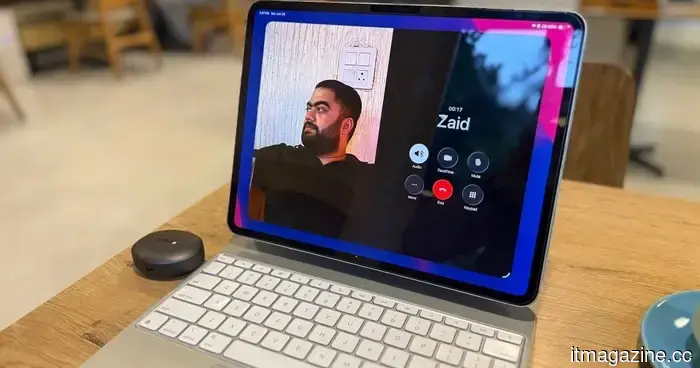 iPad photographers might receive a camera button they never anticipated.
A recently awarded Apple patent illustrates tablets featuring a pressure-sensitive control similar to the iPhone’s Camera Control, which is capable of recognizing taps, swipes, presses, and haptic feedback.
iPad photographers might receive a camera button they never anticipated.
A recently awarded Apple patent illustrates tablets featuring a pressure-sensitive control similar to the iPhone’s Camera Control, which is capable of recognizing taps, swipes, presses, and haptic feedback.
Anthropic reports that Claude has created functional protein binders and outperformed human experts in certain cases.
Anthropic reports that Claude created protein binders for 14 out of 15 targets and conducted chemical analysis in just a few minutes. The findings are self-reported.