
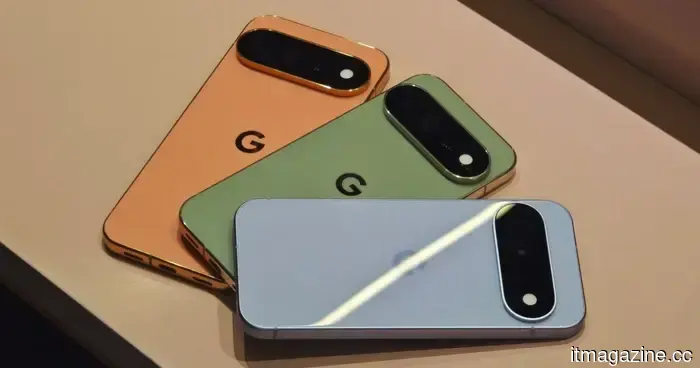
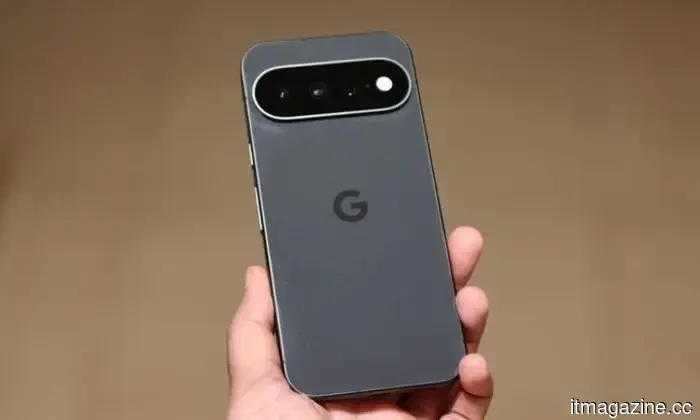
The Pixel 11's price has increased, yet Google might have discovered a solution to mitigate the losses.
Google's significant manufacturing revamp could prevent the Pixel 12 from becoming even more expensive.
Nadeem Sarwar / Digital Trends
Google has recently increased the prices for the entire Pixel 11 series. These increases were anticipated, especially given the rising costs of components and the ongoing RAM supply issues. However, a new report suggests that a solution may be on the horizon.
According to Nikkei Asia, Google intends to cease the production of all Pixel devices in China starting in 2027, shifting its manufacturing focus to India and Vietnam. This transition involves Pixel phones, watches, and earbuds, as Google seeks to reduce its dependence on Chinese manufacturing. There is no certainty that any potential savings will be passed on to consumers. However, decreasing reliance on China during a time of unstable trade policies and escalating component costs could provide the company with more pricing flexibility for future Pixels.
Is Google seriously considering leaving China?
Nadeem Sarwar / Digital Trends
Google already has manufacturing capabilities for Pixels established in India. In January, Reuters reported that the company would relocate the development and production of its high-end Pixel models to Vietnam by 2026. This transition reportedly includes the Pixel, Pixel Pro, and Pixel Fold families, while development of the more affordable A-series was still occurring in China at that time.
The latest Nikkei report states that Google has informed suppliers that all Pixel production will be moved out of China by 2027, bolstered by successful development and manufacturing of premium Pixels in Vietnam. India is also becoming an increasingly significant location as Google and its manufacturing partners aim to expand Pixel production in the area.
A more affordable Pixel would be quite welcome at this time.
Nadeem Sarwar / Digital Trends
The new Pixel 11 starts at $899, which is $100 more than the Pixel 10's launch price of $799. Google has increased the base storage from 128GB to 256GB, which mitigates the impact of the price hike, although rising memory costs are putting pressure on smartphone prices industry-wide.
Simply relocating production won't eliminate these challenges. Establishing and validating new manufacturing lines incurs its own costs, and PhoneArena reasonably notes that stable prices might be a more achievable outcome than a decrease. Another factor to take into account is the current tariff situation.
Given the Pixel's entry price has risen from $799 to $899 this generation, I'd be satisfied if Google's major manufacturing overhaul keeps prices stable. I just hope the Pixel 12 doesn’t become a $999 phone.
Vikhyaat Vivek is a tech journalist and reviewer with seven years of experience covering consumer hardware, focusing on…
I underestimated the Pixel 11, and now I’m changing my opinion.
It's only been a week since Google introduced the Pixel 11 series globally, and I've already started testing the Pixel 11 extensively. This is the standard model of the range, and on first glance, Google hasn't altered the design or attempted to reinvent what worked well last year. And you know what? I'm completely okay with that.
I’ve always subscribed to the idea of “if it ain’t broke, don’t fix it,” and it seems Google has embraced this philosophy with the Pixel 11. Much of what made the Pixel 10 successful is still present, with just a few enhancements added. That may not sound particularly thrilling, but after spending a few days with the phone, I find myself enjoying it more than I anticipated. So, rather than dismissing it for looking too similar, I’ve given it a fair chance. While I am still conducting numerous tests, there are already aspects of the Pixel 11 that I have come to appreciate.
Read more
Google is finally rolling out the advanced sideloading flow it first teased back in March, providing power users with a way to install apps from unverified developers on certified devices without needing to use ADB.
Back then, Google began asking developers to verify their identities before their apps could be placed on certified Android devices, whether downloaded from the Play Store, a third-party store, or sideloaded directly. The aim is to link every app to a legitimate developer ID to prevent scammers from easily injecting malware onto your device.
A phone designed for self-repair is finally available in the US.
Most US smartphone consumers tend to favor well-known brands like Apple, Samsung, and Google. While these companies undeniably produce excellent smartphones, they generally lack in terms of repairability.
If you break the display, you could face repair costs exceeding $300. Need a new battery? Expect to pay at least $100, and even if you're willing to pay, it’s not possible to make the repair yourself.
Read more



Other articles
 According to reports, PlayStation is revamping Horizon Hunters Gathering following unsatisfactory playtest results.
PlayStation is said to be revamping Horizon Hunters Gathering, removing its live-service model due to unsatisfactory playtests, and employees are under pressure to meet a deadline in December.
According to reports, PlayStation is revamping Horizon Hunters Gathering following unsatisfactory playtest results.
PlayStation is said to be revamping Horizon Hunters Gathering, removing its live-service model due to unsatisfactory playtests, and employees are under pressure to meet a deadline in December.
 Nebius is seeking to raise $4.5 billion through convertible bonds to construct AI data centers.
Nebius is seeking to raise $4.5 billion through convertible bonds to finance AI data centers, marking its second sale of this kind in 2026. According to Bloomberg, the offering will be priced on Wednesday.
Nebius is seeking to raise $4.5 billion through convertible bonds to construct AI data centers.
Nebius is seeking to raise $4.5 billion through convertible bonds to finance AI data centers, marking its second sale of this kind in 2026. According to Bloomberg, the offering will be priced on Wednesday.
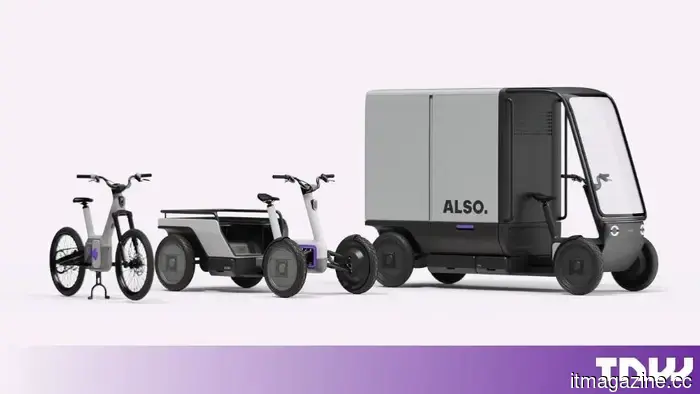 Rivian's spinout has also secured $150 million, with the e-bike serving merely as a starting point.
Rivian's spinout has secured $150 million at a valuation exceeding $1 billion. While it produces an e-bike, it states that the funds will be used for small autonomous delivery vehicles.
Rivian's spinout has also secured $150 million, with the e-bike serving merely as a starting point.
Rivian's spinout has secured $150 million at a valuation exceeding $1 billion. While it produces an e-bike, it states that the funds will be used for small autonomous delivery vehicles.
 Marvell provides Google with a $12.2 billion share option as part of a custom-chip agreement.
Marvell issued Google a warrant to purchase as much as $12.2 billion in its shares, which will become available as Google acquires its custom AI chips. Marvell's stock surged, while Broadcom's declined.
Marvell provides Google with a $12.2 billion share option as part of a custom-chip agreement.
Marvell issued Google a warrant to purchase as much as $12.2 billion in its shares, which will become available as Google acquires its custom AI chips. Marvell's stock surged, while Broadcom's declined.
 Google is offering college students a complimentary year of AI Pro along with a variety of study tools.
Google is offering qualifying US college students a complimentary year of AI Pro and introducing new study tools on Search and Gemini for the back-to-school season.
Google is offering college students a complimentary year of AI Pro along with a variety of study tools.
Google is offering qualifying US college students a complimentary year of AI Pro and introducing new study tools on Search and Gemini for the back-to-school season.
 TikTok may soon enable users to send money directly through direct messages.
Secret code within TikTok's iPhone application suggests the existence of a direct messaging payment feature supported by TikTok Pay, the service currently utilized for TikTok Shop transactions in certain Asian regions.
TikTok may soon enable users to send money directly through direct messages.
Secret code within TikTok's iPhone application suggests the existence of a direct messaging payment feature supported by TikTok Pay, the service currently utilized for TikTok Shop transactions in certain Asian regions.
The Pixel 11's price has increased, yet Google might have discovered a solution to mitigate the losses.
According to reports, Google intends to shift all Pixel production away from China by 2027, which could provide future Pixel models with some relief as component and trade expenses increase.