

ADAC evaluated five electric vehicles for charging losses, revealing that one of them squandered a quarter of its energy.
Germany's ADAC evaluated charging inefficiencies across five electric vehicles (EVs) and found that a household outlet wastes between 12.7% and 24.2% of the electricity used. In contrast, an 11 kW wallbox reduced losses for all vehicles to a range of 5.1% to 7%.
Some of the electricity you pay for to charge an electric vehicle does not reach the battery. ADAC measured these losses, revealing that the new Mercedes CLA lost 24.2% when charged via a household socket.
The electricity meter doesn't account for where the energy ends up; if a socket delivers 30 kWh and the battery only receives 27 kWh, you are still billed for the full 30 kWh.
The type of charger is more critical than the vehicle itself. Every model tested by ADAC significantly reduced losses when using an 11 kW wallbox, with the Mercedes loss dropping from 24.2% to 6.9%.
When charging on a 2.3 kW household socket, other models showed similar losses. The Tesla Model Y lost 12.7%, the Renault 5 lost 13.7%, the Volvo EX30 lost 14.2%, and the Volkswagen ID.7 lost 15.3%.
With an 11 kW wallbox, the differences in losses became minimal. The Renault 5 had the lowest at 5.1%, followed by the Model Y at 6.1%, with the CLA and ID.7 each at 6.9%, and the EX30 at 7%.
The specific cause of the Mercedes's results is clear. ADAC discovered that the CLA’s onboard charger draws only 8 amps from a household socket, which is below the 10 amps that such outlets typically limit you to.
The losses occur during conversion. Mains electricity is delivered as alternating current, while the battery requires direct current, meaning the onboard charger manages the conversion. Heating and cooling also consume some of this energy, which is why kW and kWh are not interchangeable.
Financially, this discrepancy is significant. At the reported rate of 37 cents per kWh in German households this year, a driver traveling 15,000 km would spend approximately €231 more per year charging that Mercedes from a socket compared to a wallbox, while the other four models would cost between €76 and €101 more.
This highlights the advantage of a wallbox, beyond the potential for energy to be sent back. A wallbox is a worthwhile investment as it prevents wasted electricity.
Fast charging is not immune to losses either. ADAC estimates DC losses to be between 5% and 15%, dropping to 1% to 4% if the battery is preconditioned and warm, and rising to 6% to 10% at 0°C when it is not.
The takeaway is to consider where the measurement is taken. Manufacturers report consumption at the battery level, while consumers are billed based on the wall socket measurements, and these two figures can be further apart than most owners realize.
Other articles
 Velaura secures $110 million to market AI chips that reduce electricity costs without compromising processing speed.
Velaura AI secured $110 million at a valuation exceeding $1 billion for its silicon, which claims to reduce AI power consumption by two to four times, and is in discussions with three of the top four cloud providers.
Velaura secures $110 million to market AI chips that reduce electricity costs without compromising processing speed.
Velaura AI secured $110 million at a valuation exceeding $1 billion for its silicon, which claims to reduce AI power consumption by two to four times, and is in discussions with three of the top four cloud providers.
 Anthropic is arranging supervoting shares for its founders prior to the IPO.
According to The Information, Anthropic is getting ready to issue supervoting shares for Dario Amodei and its founders ahead of its IPO. Amodei currently holds approximately 2% of the company.
Anthropic is arranging supervoting shares for its founders prior to the IPO.
According to The Information, Anthropic is getting ready to issue supervoting shares for Dario Amodei and its founders ahead of its IPO. Amodei currently holds approximately 2% of the company.
 A recent report indicates that Meta compensates influencers to advocate against social media restrictions on teenage accounts globally.
As nations seek to prohibit teenagers from using social media, Meta is compensating actors, psychologists, and parenting influencers in over a dozen countries to advocate against a universal ban on teen accounts.
A recent report indicates that Meta compensates influencers to advocate against social media restrictions on teenage accounts globally.
As nations seek to prohibit teenagers from using social media, Meta is compensating actors, psychologists, and parenting influencers in over a dozen countries to advocate against a universal ban on teen accounts.
 The majority of Americans under the age of 30 are currently feeling more concern than enthusiasm regarding AI.
Pew research indicates that 55% of Americans under 30 are currently more apprehensive than enthusiastic about AI. Similarly, the European Commission has identified the same level of concern among younger employees.
The majority of Americans under the age of 30 are currently feeling more concern than enthusiasm regarding AI.
Pew research indicates that 55% of Americans under 30 are currently more apprehensive than enthusiastic about AI. Similarly, the European Commission has identified the same level of concern among younger employees.
 Recently leaked footage of GTA 6 reveals Jason shooting basketball and creating havoc on the streets.
New footage of GTA 6 has surfaced before Rockstar's scheduled announcement, displaying Jason engaging in activities like playing basketball, driving, and interacting with systems that may enhance gameplay depth.
Recently leaked footage of GTA 6 reveals Jason shooting basketball and creating havoc on the streets.
New footage of GTA 6 has surfaced before Rockstar's scheduled announcement, displaying Jason engaging in activities like playing basketball, driving, and interacting with systems that may enhance gameplay depth.
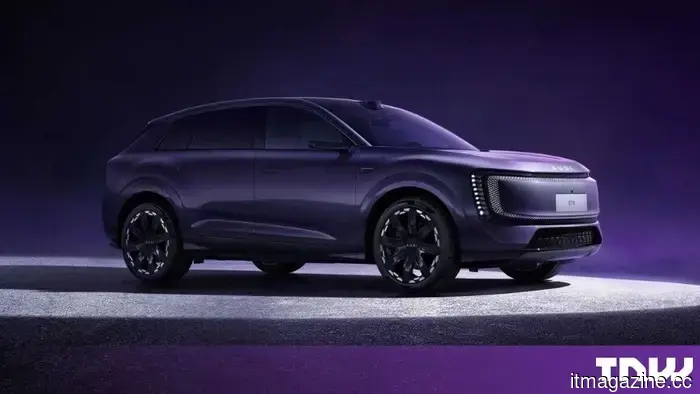 Audi's electric vehicles designed exclusively for China are making their way to Europe, and they are priced lower than the local versions.
A German importer is introducing Audi's E5 and E7X, manufactured in China, to Europe, where they are priced significantly lower than Audi's own European models by several thousand euros.
Audi's electric vehicles designed exclusively for China are making their way to Europe, and they are priced lower than the local versions.
A German importer is introducing Audi's E5 and E7X, manufactured in China, to Europe, where they are priced significantly lower than Audi's own European models by several thousand euros.
ADAC evaluated five electric vehicles for charging losses, revealing that one of them squandered a quarter of its energy.
ADAC assessed the amount of electricity that fails to reach an EV battery. When using a household socket, the Mercedes CLA experienced a loss of 24.2%, while with an 11 kW wallbox, the loss was 6.9%.