

A recent report indicates that Meta compensates influencers to advocate against social media restrictions on teenage accounts globally.
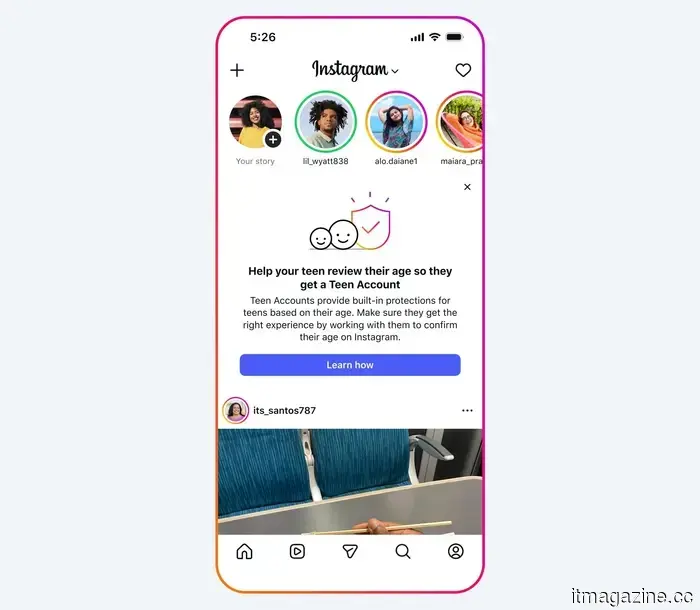
Meta is reportedly hiring paid influencers to advocate for Teen Accounts in regions where governments are contemplating restrictions on adolescent social media use.
Imagine this scenario: Meta organizes an event for parenting influencers at a scenic location by Sydney Harbour, gives out customized scout badges and gourmet s’mores, and encourages them to convey to their audiences that broad bans on teen social media usage are misguided.
This event took place, according to a new investigation by the Tech Transparency Project (TTP), which revealed that Meta held the Sydney gathering in July 2025, just five months before Australia's significant ban on under-16 users was enforced. TTP's report indicates that this strategy has now been implemented in over a dozen countries considering similar policies.
How Meta’s influencer strategy operates
The TTP findings show a consistent pattern across various locations. Meta organizes well-crafted branded events, often termed Instagram Safety Camp or Screen Smart, and then brings in actors, radio hosts, psychologists, and parenting influencers to endorse its Teen Accounts as evidence that such bans are not necessary.
In Indonesia, actor Darius Sinathrya urged his 1.8 million followers to explore the safety features. In India, actress Juhi Parmar reassured parents that their teens would be safer online, just months after Instagram had been discovered approving ads for child exploitation in the region. Likewise, in Brazil, actor Douglas Silva, who has three million followers, shared similar messages.
Many influencer posts utilize vague hashtags like #instagrampartner instead of clear advertising disclosures. Meta also finances youth safety NGOs and think tanks that promote its anti-ban messages without consistently revealing their funding sources.
Why is this significant?
Independent evaluations present a contrasting narrative compared to the influencers' messages. The Washington Post previously found that Teen Accounts do not adequately shield children from harmful content, and TTP corroborated these findings, aligning with another investigation that revealed Instagram was supplying sexual content directly to Teen accounts despite Meta's stated safety assurances.
Meta spokesperson Edward Patterson contested the notion that its promotional activities are misleading, arguing that total bans merely redirect teens toward less secure, unregulated areas of the internet. However, TTP director Katie Paul interprets this differently, stating to The Guardian that Meta's dependency on paid advocates indicates that the company recognizes, as she puts it, “the brand has become a problem.”
Manisha Priyadarshini is a writer specializing in technology and entertainment, possessing over nine years of editorial experience.
TikTok may soon enable users to transfer money directly through DMs
TikTok seems to be adding yet another feature that allows users to interact without exiting the app.
According to Bloomberg, TikTok is developing a function that would allow users to send money to one another through direct messages. If implemented, this would further integrate the app into financial services, similar to platforms like PayPal and Venmo. The feature was discovered within the code of TikTok's US iPhone application and reportedly utilizes TikTok Pay, which is already operational in Vietnam, Malaysia, and Thailand for TikTok Shop transactions.
A random TikTok video led scientists to a rare underground eel in India
What started as a seemingly ordinary borewell video has resulted in an unexpected scientific discovery.
Typically, TikTok videos lead to new recipes or dance crazes, but one video led researchers to a new species of fish. Scientists have identified a new genus and species of subterranean earthworm eel residing beneath the Indo-Gangetic Plain in Bihar, northern India. Named Gangaichthys indonepalicus, it marks the first underground eel ever documented from the Gangetic Basin, all stemming from a casual borewell video.
Forget doomscrolling; Gen Z is now birdwatching on TikTok
Birdwatching is gaining unexpected popularity among Gen Z on TikTok, with users engaging in bird identification, wildlife photography, and even traditional bird ringing as social media content. This is according to a report by The Guardian.
The Guardian reports that posts using #birdwatching and #birdtok have surged by a third over the past three months, while #birding posts have seen a 40% increase in the UK. Worldwide, posts containing one of these hashtags have now surpassed 1 million. One particular video featuring a seagull being fed raw salmon has garnered over 52 million views.






Other articles
 Cerebras has introduced the CS-4, its inaugural multi-wafer system, although the chip it contains is not novel.
Cerebras' CS-4 combines three wafers into a single rack and boasts a performance that is 30 times faster than a GPU. However, the processor it contains is the WSE-3, which operates at a higher clock speed.
Cerebras has introduced the CS-4, its inaugural multi-wafer system, although the chip it contains is not novel.
Cerebras' CS-4 combines three wafers into a single rack and boasts a performance that is 30 times faster than a GPU. However, the processor it contains is the WSE-3, which operates at a higher clock speed.
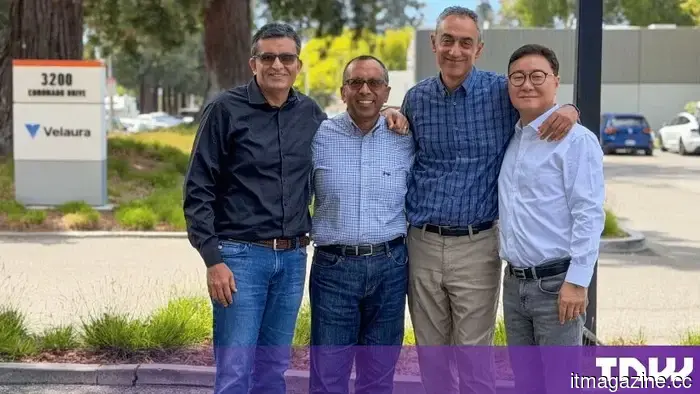 Velaura secures $110 million to market AI chips that reduce electricity costs without compromising processing speed.
Velaura AI secured $110 million at a valuation exceeding $1 billion for its silicon, which claims to reduce AI power consumption by two to four times, and is in discussions with three of the top four cloud providers.
Velaura secures $110 million to market AI chips that reduce electricity costs without compromising processing speed.
Velaura AI secured $110 million at a valuation exceeding $1 billion for its silicon, which claims to reduce AI power consumption by two to four times, and is in discussions with three of the top four cloud providers.
 Alibaba's new compact model operates on a laptop and achieves performance similar to that of a cloud-based model.
Alibaba's Qwen3.8-27B, a compact open model that operates on a laptop, achieved parity with leading cloud models on benchmarks and surpassed one million downloads within a few days.
Alibaba's new compact model operates on a laptop and achieves performance similar to that of a cloud-based model.
Alibaba's Qwen3.8-27B, a compact open model that operates on a laptop, achieved parity with leading cloud models on benchmarks and surpassed one million downloads within a few days.
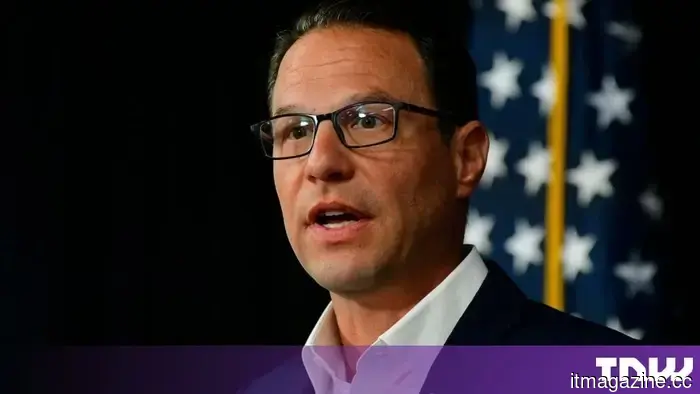 Pennsylvania has recently become one of the most challenging states in the US for constructing a data center.
Governor Josh Shapiro's executive order removes AI data centers from Pennsylvania's expedited permitting process and requires developers to cover their own energy expenses.
Pennsylvania has recently become one of the most challenging states in the US for constructing a data center.
Governor Josh Shapiro's executive order removes AI data centers from Pennsylvania's expedited permitting process and requires developers to cover their own energy expenses.
 Recently leaked footage from GTA 6 features Jason playing basketball and creating mayhem on the streets.
New footage of GTA 6 has surfaced before Rockstar's scheduled announcement, featuring Jason engaging in basketball, driving, and interacting with systems that may enhance gameplay depth.
Recently leaked footage from GTA 6 features Jason playing basketball and creating mayhem on the streets.
New footage of GTA 6 has surfaced before Rockstar's scheduled announcement, featuring Jason engaging in basketball, driving, and interacting with systems that may enhance gameplay depth.
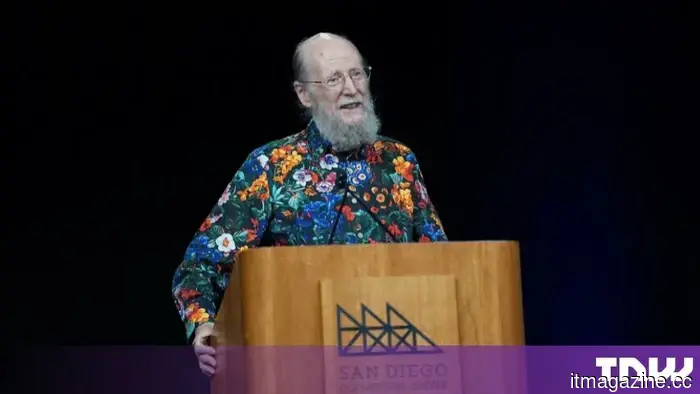 A Turing Award recipient asserts that the industry's solution to the data scarcity issue is "a major error."
Richard Sutton describes the industry's shift towards synthetic data as "a significant error." His concern is more specific and intriguing than what the headline implies.
A Turing Award recipient asserts that the industry's solution to the data scarcity issue is "a major error."
Richard Sutton describes the industry's shift towards synthetic data as "a significant error." His concern is more specific and intriguing than what the headline implies.
A recent report indicates that Meta compensates influencers to advocate against social media restrictions on teenage accounts globally.
As nations seek to prohibit teenagers from using social media, Meta is compensating actors, psychologists, and parenting influencers in over a dozen countries to advocate against a universal ban on teen accounts.