

The concept of Meta's facial recognition smart glasses has reemerged in a recent patent.
Months of criticism have not deterred Meta from its facial recognition initiative.
Meta has devoted a significant part of this year to addressing worries regarding facial recognition on its smart glasses. However, the company seems unwilling to abandon the concept, as a recently published patent application indicates its ongoing commitment to the technology.
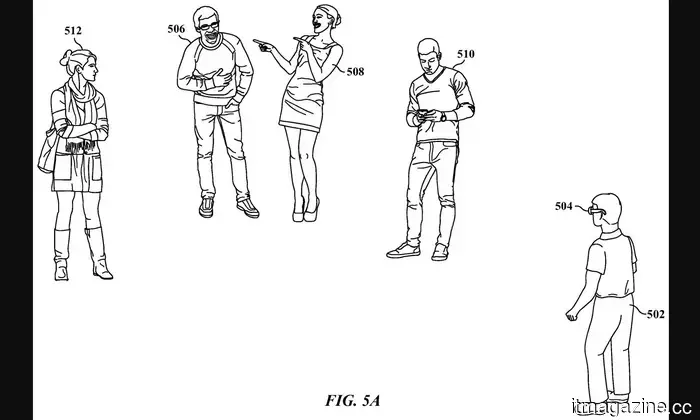
Reported first by Patentlyze, the application, filed by Meta in February, outlines the use of AI-driven facial recognition in conjunction with smart glasses to recognize individuals and utilize associated information while creating media.
A patent application does not guarantee that the described features will be available to consumers. Nevertheless, it comes after months of indications that Meta has consistently investigated facial recognition for its wearable devices.
This is increasingly appearing to be more than just a trial.
In February, reports highlighted an internal feature called “Name Tag,” which could enable Meta's smart glasses to identify individuals in real-time.
The situation took a stranger turn in June, when researchers discovered inactive facial recognition components within the Meta AI app, including systems capable of detecting faces and converting them into biometric data. Meta subsequently removed the code and insisted that no facial recognition feature had been implemented.
Simultaneously, it was revealed that Meta had acquired facial recognition technology from Rank One Computing, a company serving U.S. military and law enforcement. This software was also found dormant within the Meta AI app.
At this stage, it is evident that Meta has investigated facial recognition for its glasses. However, it remains uncertain whether any of this effort will ultimately translate into a marketable product.
The privacy issue remains unchanged.
The patent has already faced criticism. In a statement referenced by CNET, the Center for Democracy and Technology cautioned that the technology could be misused in ways that endanger vulnerable individuals, including victims of stalking and domestic violence.
This concern has shadowed Name Tag since its inception. Smart glasses are fundamentally different from facial recognition hidden within a photo library; they are cameras worn on a user's face while navigating public areas.
Meta's glasses already resemble standard eyewear significantly. If facial recognition is added, someone nearby may not be able to tell if they are merely being gazed at or discreetly identified.




Other articles
 CISA mandates a three-day patch following an active attack on a vulnerability in the Ray AI framework.
CISA has included CVE-2025-62593, a code-injection vulnerability found in the open-source Ray AI framework, in its Known Exploited Vulnerabilities catalog.
CISA mandates a three-day patch following an active attack on a vulnerability in the Ray AI framework.
CISA has included CVE-2025-62593, a code-injection vulnerability found in the open-source Ray AI framework, in its Known Exploited Vulnerabilities catalog.
 Beyond Venture Capital: The Growing Influence of Family Offices as Key Investors in AI
Family offices are emerging as significant players in AI investment, supporting a wide range of initiatives including advanced models, physical AI, as well as infrastructure and industrial applications.
Beyond Venture Capital: The Growing Influence of Family Offices as Key Investors in AI
Family offices are emerging as significant players in AI investment, supporting a wide range of initiatives including advanced models, physical AI, as well as infrastructure and industrial applications.
 Alina Kukarina discusses the importance of initiating AI transformation prior to selecting the technology.
Alina Kukarina contends that AI projects are likely to fail when companies overlook the critical thought process between their ambitions and actual execution, beginning with technology rather than with their intended purpose.
Alina Kukarina discusses the importance of initiating AI transformation prior to selecting the technology.
Alina Kukarina contends that AI projects are likely to fail when companies overlook the critical thought process between their ambitions and actual execution, beginning with technology rather than with their intended purpose.
 YouTube view counts are set to increase on August 24, while creator earnings will remain unchanged.
Starting from 24 August, the YouTube view count begins with the first frame and has no required minimum watch time. Earnings will continue to be based on the previously established criteria, now called Engaged views.
YouTube view counts are set to increase on August 24, while creator earnings will remain unchanged.
Starting from 24 August, the YouTube view count begins with the first frame and has no required minimum watch time. Earnings will continue to be based on the previously established criteria, now called Engaged views.
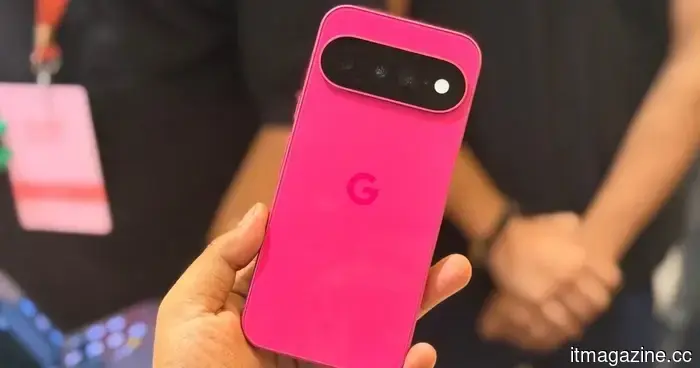 The Pixel 11 provides me with three compelling reasons to switch from my iPhone 17, and I'm worried they might convince me.
The Pixel 11 features a specialized telephoto lens, enhanced AI capabilities, and a significantly larger battery, providing it with an interesting advantage over the iPhone 17.
The Pixel 11 provides me with three compelling reasons to switch from my iPhone 17, and I'm worried they might convince me.
The Pixel 11 features a specialized telephoto lens, enhanced AI capabilities, and a significantly larger battery, providing it with an interesting advantage over the iPhone 17.
 Driver’s licenses in Apple Wallet will soon be available in North Carolina, but there is a caveat.
North Carolina is set to introduce digital driver's licenses, with support for Apple Wallet anticipated in early 2027 following an initial launch via the state's NC Wallet app.
Driver’s licenses in Apple Wallet will soon be available in North Carolina, but there is a caveat.
North Carolina is set to introduce digital driver's licenses, with support for Apple Wallet anticipated in early 2027 following an initial launch via the state's NC Wallet app.
The concept of Meta's facial recognition smart glasses has reemerged in a recent patent.
A recently published Meta patent outlines how its smart glasses might utilize AI facial recognition to recognize individuals and incorporate that information into media creation.