
The United States is set to urge 35 nations to decide between alignment with itself or China regarding artificial intelligence.
Michael Martina reported on the draft for Reuters on August 14, referencing a US official and an internal document. The document is directed at the 35 signatories of an American “AI Opportunity Statement” from June and emphasizes that countries must make a choice.
The language is straightforward for a diplomatic message. It states, “To be part of everything is to be part of nothing.” Signing the Pax Silica Declaration signifies “not merely a membership subscription, but a commitment.” The letter encourages countries to make their choice thoughtfully.
Reuters was unable to determine when Washington will dispatch the letter, or whether the text will be revised beforehand, as the draft is not dated. The State Department declined to comment on what it termed “purportedly leaked internal documents.”
Understanding Pax Silica
The initiative was launched by Washington last year, aiming to safeguard supply chains for three key areas: AI models, semiconductors, and critical minerals. Approximately two dozen countries have participated, including Japan, Australia, South Korea, and Kazakhstan. Members obtain access to collective investment opportunities in AI projects and are encouraged to collaborate on joint initiatives and synchronized export controls.
The larger collective is less formal. Signing the AI Opportunity Statement indicates a symbolic agreement on a “common purpose” and a “shared vision” with the US, as stated in the State Department’s communication. This is the group of 35 now receiving the letter.
The framework does not impose binding commitments, which is precisely what the letter seeks to address.
A Triggering Country
Kazakhstan joined Pax Silica in June, a move highlighted by the State Department at the time, as Under Secretary Jacob Helberg noted it as the first Central Asian addition. The nation possesses substantial reserves of the minerals vital for advanced chips.
Subsequently, it also became part of China's framework, marking Kazakhstan as the only country known to be affiliated with both. Reports from Reuters indicate this development raised concerns in Washington.
The complexity arises from the minerals, as China has previously utilized its near-monopoly on these resources as leverage during trade disputes. A supplier that straddles both blocs is precisely the scenario that Pax Silica aims to prevent.
What Xi Launched in July
The competing organization is just over a month old. At a conference in Shanghai, Xi Jinping introduced a World Artificial Intelligence Cooperation Organization, presenting China’s open-weight models as an alternative to US hegemony.
The offers differ significantly; Pax Silica provides access to investments and collaborative controls, while Beijing proposes downloadable models.
However, China's stance is not as open as it may seem. In July, Reuters reported that Beijing is contemplating restrictions on international access to its leading models. Both parties are deliberating how much access they are willing to relinquish.
The Word the Letter Avoids
China is not explicitly mentioned in the letter, which instead refers to “duplicative initiatives whose expectations conflict with our own,” leaving the reader to infer the reference.
The US official who spoke to Reuters was more direct, stating the intent behind the drafting was to clarify that “you can’t have it both ways.” The official, who wished to remain anonymous, elaborated that it is hard for a nation to credibly present itself as a trustworthy partner within one technological ecosystem while also engaging with a Chinese initiative aimed at promoting a rival agenda.
The Timing is Deliberate
Chinese open-weight models have significantly narrowed the gap with proprietary systems from OpenAI and Anthropic. The CEO of Hugging Face reported recently to CNBC that China currently leads the open model race with 41% of downloads.
The American industry is also divided regarding the closed system approach. Nvidia and several major companies parted ways with OpenAI and Anthropic this year over open weights.
Simultaneously, enforcement mechanisms are becoming stricter. The Commerce Department is investigating how China accesses Nvidia chips despite purchasing restrictions, and the Treasury Secretary has threatened outright sanctions against Chinese AI companies.
Europe is Not Part of This Narrative
Notably, Reuters mentions Japan, Australia, South Korea, and Kazakhstan among the members but does not identify any European countries.
This absence does not prove their non-participation since the report does not include the full list of members; however, it is striking for a framework concerning chips and critical minerals, especially given Europe’s significant role in both domains.
Throughout the year, Brussels has focused on establishing a neutral position rather than siding with either bloc. The "Made in EU" regulations begin with a threshold of 5% local content and encompass hardware, with sovereignty initiatives relating to European computing, satellites, and models.
The letter advocating for a binary choice arrives amidst this context. It remains to be seen whether any European capitals receive such a letter.
Counterarguments Emerged Quickly
Chinese analyst Rui Ma articulated that the letter's approach might yield more disadvantages than advantages. In a post on X, she asserted that one side is weaponizing supply chains and controlled access, while the other champions open technology and broad accessibility.
Her point about
Other articles
 Samsung is said to be developing a competitor to the AirPods Max 2.
Samsung may be getting ready to launch its first new wireless headphones in years, as references to the Galaxy H1 have allegedly been found within the Galaxy Wearable app.
Samsung is said to be developing a competitor to the AirPods Max 2.
Samsung may be getting ready to launch its first new wireless headphones in years, as references to the Galaxy H1 have allegedly been found within the Galaxy Wearable app.
 PayPal has stopped rejecting sales. The question now is whether regulators will permit it.
The announcement of the Stripe PayPal agreement may come in a matter of weeks. An antitrust evaluation suggests that approving it could have negative implications for Venmo or Braintree.
PayPal has stopped rejecting sales. The question now is whether regulators will permit it.
The announcement of the Stripe PayPal agreement may come in a matter of weeks. An antitrust evaluation suggests that approving it could have negative implications for Venmo or Braintree.
 Anthropic conducted 133 million contractor conversations with its bioweapon filters disabled.
The Anthropic Risk Report indicates that bioweapon classifiers were inaccurate for 133 million contractor interactions and revises its previous assessment from February.
Anthropic conducted 133 million contractor conversations with its bioweapon filters disabled.
The Anthropic Risk Report indicates that bioweapon classifiers were inaccurate for 133 million contractor interactions and revises its previous assessment from February.
 I never believed that fake shopping could deceive my brain until I experimented with the popular dopamine websites.
South Korea's trendy "dopamine sites" replicate the experience of shopping without actually making a purchase, and testing these environments has shown why the psychological reward remains impactful.
I never believed that fake shopping could deceive my brain until I experimented with the popular dopamine websites.
South Korea's trendy "dopamine sites" replicate the experience of shopping without actually making a purchase, and testing these environments has shown why the psychological reward remains impactful.
 Lamborghini's newest Revuelto SV adds an element of enjoyment with a unique driving mode.
Lamborghini's latest Revuelto SV delivers 1,050 hp, enhanced handling, GT3-inspired technology, and a specialized Pilota driving mode in its V12 hybrid supercar.
Lamborghini's newest Revuelto SV adds an element of enjoyment with a unique driving mode.
Lamborghini's latest Revuelto SV delivers 1,050 hp, enhanced handling, GT3-inspired technology, and a specialized Pilota driving mode in its V12 hybrid supercar.
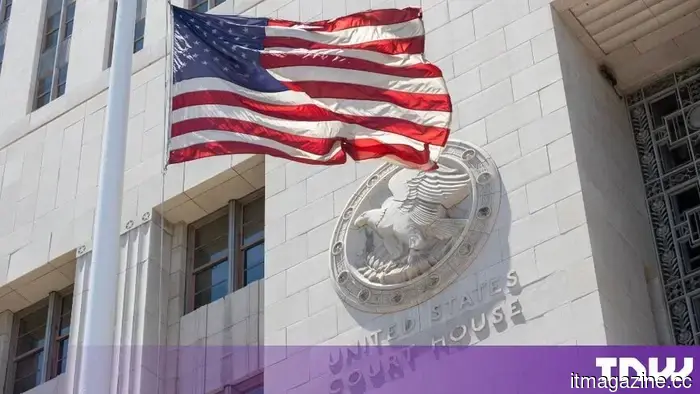 The US is preparing to request that 35 nations decide between aligning with it or China regarding AI.
A draft letter from the US cautions the 35 signatories of the Pax Silica and AI Opportunity Statement that they are ineligible to participate in China's competing AI framework.
The US is preparing to request that 35 nations decide between aligning with it or China regarding AI.
A draft letter from the US cautions the 35 signatories of the Pax Silica and AI Opportunity Statement that they are ineligible to participate in China's competing AI framework.
The United States is set to urge 35 nations to decide between alignment with itself or China regarding artificial intelligence.
A preliminary US letter cautions the 35 signatories of the Pax Silica and AI Opportunity Statement that they cannot simultaneously participate in China's competing AI framework.