

Heart X1 takes to the skies for the first time as the largest electric aircraft in the world, with a flight cost of only $5 in electricity.
**Heart Aerospace**
Electric vehicles have become a common sight on the roads, but substituting jet fuel with batteries is significantly more complex when it involves lifting heavy loads into the air. Heart Aerospace has recently demonstrated that this can be accomplished on a surprisingly large scale.
The company's X1 demonstrator has successfully completed its first flight, which Heart claims is the largest battery-electric aircraft to have ever flown. The X1 boasts a wingspan of 106 feet, measures 76 feet from nose to tail, and weighs over 25,000 pounds at launch. This piloted flight took place on August 12 at Plattsburgh International Airport in New York and lasted 27 minutes. During this flight, the X1 ascended to 1,100 feet above ground level, with its battery-powered propulsion system providing over one megawatt of power.
Perhaps the most surprising figure is $5.
Another statistic from the flight that really caught my eye is the electricity usage. Heart reports that the X1 consumed approximately $5 worth of electricity during the entire 27-minute test. Naturally, this doesn't mean airlines will start selling $10 tickets. Numerous other expenses are linked to operating an aircraft, and the X1 remains a technology demonstrator rather than a model available for passengers.
However, this highlights the appeal of electric aircraft, particularly for shorter regional flights. Jet fuel prices can fluctuate significantly, whereas electric propulsion may eventually offer airlines an alternative means to lower their energy and maintenance expenses. The initial flight wasn't merely a test of getting the X1 airborne. Conducted under an experimental certificate from the FAA, the test included fundamental maneuvers expected from an aircraft, such as taxiing, takeoff, climbing, maneuvering, and landing. More importantly, Heart constructed the X1 at full scale to evaluate technology intended for a product the company actually plans to market.
This effort is leading to a 30-seat electric airliner.
That plane is the ES-30, a 30-seat regional aircraft the company hopes to bring into commercial operation by 2031. Unlike the fully electric X1 demonstrator, the ES-30 is being designed with a hybrid-electric propulsion system, providing enhanced flexibility for real-world airline operations. Heart believes the ES-30 could reduce operating costs by over 40% compared to older regional models, partly due to cheaper energy and simpler electric systems that may require less maintenance.
There is already significant interest in the project. Carriers such as United Airlines, Air Canada, and JSX have committed to the ES-30. However, there is still a considerable journey from last week's test flight to boarding passengers. Heart is in the process of manufacturing its first pre-production ES-30 at its facility in Los Angeles, with flight tests anticipated to commence in 2028. For now, the X1's inaugural flight serves to demonstrate that electric aviation can indeed function on a much larger scale. Flying a 25,000-pound aircraft entirely on batteries for 27 minutes is a compelling starting point.
**Shimul** is a contributor at Digital Trends, with over five years of experience in the tech industry.
An AI company compensated individuals to reach climax with a bot, claiming significant stress relief and focus benefits. The Masturbation Lab Report indicates that 37% of adults are receptive to AI-assisted masturbation and that this method can yield notable advantages.
I recently conversed with some college students and discovered intriguing ways they are utilizing AI. From aiding in research to serving as a last-minute cheating tool, the applications are varied. However, what truly grabbed my attention was when one student mentioned occasionally asking ChatGPT to roleplay as her boyfriend. This trend isn't entirely new or shocking.
A community exists that finds companionship or comfort in virtual characters that fulfill roles such as companion, partner, friend, mentor, or whatever they seek. While the concept is controversial, it appears to be a lasting one. Joi AI, a company providing AI companions, recently ran an experiment to explore whether AI-guided erotic sessions could be as satisfying as traditional methods of self-pleasure such as pornography or fantasy.
**Read more**
Google Sheets can now transform your mundane spreadsheets into mini-apps. I spend a considerable amount of time with spreadsheets and know how quickly they can become overwhelming. What begins as a tidy table can evolve into extensive rows, endless columns, and a lot of scrolling to locate what you need. Google believes Gemini can alleviate this issue.
The company is unveiling Sheets canvas, a new Gemini-powered feature designed to convert data from a Google Sheets spreadsheet into something resembling a custom mini-app. Instead of manually creating charts, formatting cells, or deciphering complex formulas, you can simply instruct Gemini on what to create. For instance, you could request it to transform a spreadsheet filled with assignments into a visual study tracker. Gemini will then utilize the data already present to construct an interactive interface.
**AI’s new cancer-screening partner has four legs and a






Other articles
 Mark Rober's latest CrunchLabs mysteries transform reading into an engaging hands-on STEM experience.
The CrunchLabs Mysteries book series, created by scientist and inventor Mark Rober, features illustrated detective stories designed to inspire young readers and enhance their problem-solving abilities.
Mark Rober's latest CrunchLabs mysteries transform reading into an engaging hands-on STEM experience.
The CrunchLabs Mysteries book series, created by scientist and inventor Mark Rober, features illustrated detective stories designed to inspire young readers and enhance their problem-solving abilities.
 Mark Rober's latest CrunchLabs mysteries transform reading into an interactive STEM experience.
The CrunchLabs Mysteries book series, created by scientist and inventor Mark Rober, merges illustrated detective stories designed to inspire young thinkers and enhance their problem-solving abilities.
Mark Rober's latest CrunchLabs mysteries transform reading into an interactive STEM experience.
The CrunchLabs Mysteries book series, created by scientist and inventor Mark Rober, merges illustrated detective stories designed to inspire young thinkers and enhance their problem-solving abilities.
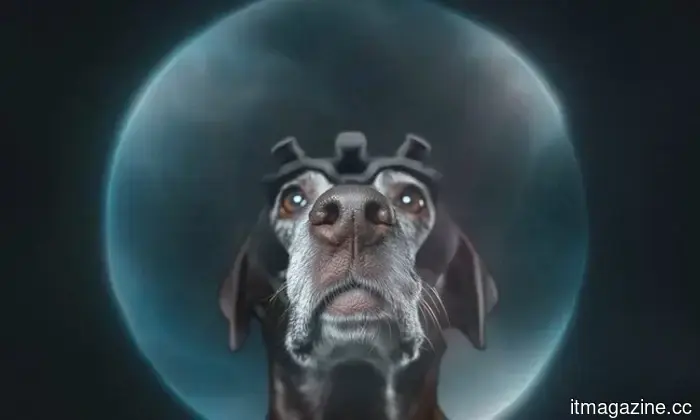
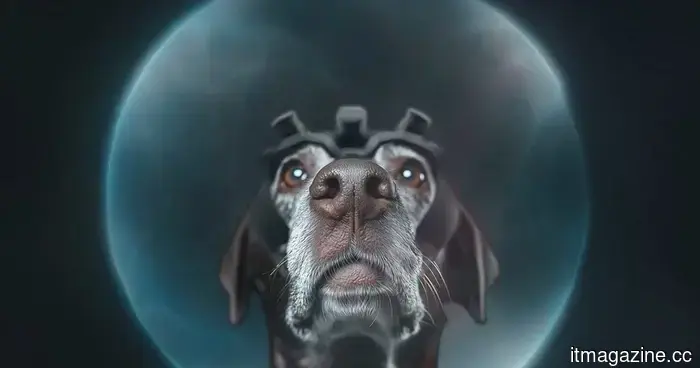 AI's new partner in cancer screening has four legs and an excellent sense of smell.
Indian startup Dognosis integrates trained detection dogs with sensors and artificial intelligence to identify cancer-related signals from breath, and is currently conducting a Phase 3 trial involving 10,000 participants.
AI's new partner in cancer screening has four legs and an excellent sense of smell.
Indian startup Dognosis integrates trained detection dogs with sensors and artificial intelligence to identify cancer-related signals from breath, and is currently conducting a Phase 3 trial involving 10,000 participants.
 The CFO of OpenAI informs shareholders that revenue from enterprise has surpassed that of ChatGPT.
OpenAI's enterprise revenue has surpassed that of consumer revenue ahead of expectations, according to its finance chief, with the run rate hitting $40 billion.
The CFO of OpenAI informs shareholders that revenue from enterprise has surpassed that of ChatGPT.
OpenAI's enterprise revenue has surpassed that of consumer revenue ahead of expectations, according to its finance chief, with the run rate hitting $40 billion.
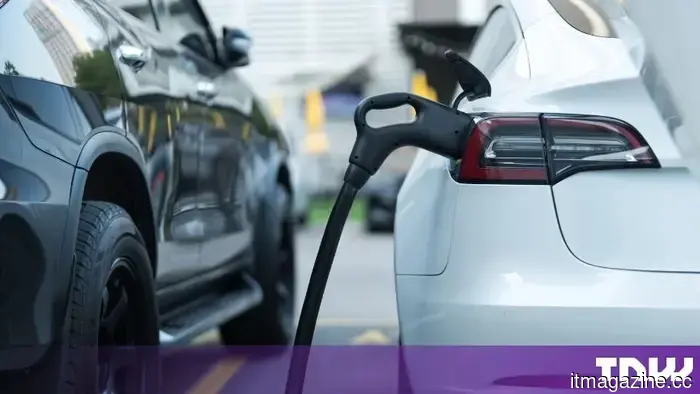 EV prices increased for the first time in 2026, and the reasons can be attributed to the discounts.
In July, the average price of electric cars sold in the US was $56,126, marking the first increase since 2026, following a nearly 25% reduction in EV incentives by manufacturers over the course of a year.
EV prices increased for the first time in 2026, and the reasons can be attributed to the discounts.
In July, the average price of electric cars sold in the US was $56,126, marking the first increase since 2026, following a nearly 25% reduction in EV incentives by manufacturers over the course of a year.
 Samsung may finally introduce a fundamental privacy feature that was overlooked in Galaxy phones.
A leaked build of One UI 9.5 shows that Galaxy phones will feature a dedicated App Lock, which secures specific apps using biometrics and conceals their notifications, widgets, and shortcuts.
Samsung may finally introduce a fundamental privacy feature that was overlooked in Galaxy phones.
A leaked build of One UI 9.5 shows that Galaxy phones will feature a dedicated App Lock, which secures specific apps using biometrics and conceals their notifications, widgets, and shortcuts.
Heart X1 takes to the skies for the first time as the largest electric aircraft in the world, with a flight cost of only $5 in electricity.
Heart Aerospace's large X1 demonstrator has successfully completed its inaugural flight, providing an initial look at the future of battery-powered regional air travel.