

AI's new partner in cancer screening has four legs and an excellent sense of smell.
A 10-minute breath sample may provide valuable insights for cancer-detecting dogs.
Dognosis
It appears AI doesn't need to completely replace all biological systems. For the time being, dogs are maintaining their roles. An Indian startup based in Bengaluru, Karnataka, is training canines using sensors and machine learning technology. Patients exhale normally into a face mask for around 10 minutes, send the sealed sample to a lab, and allow the dogs to begin their analysis.
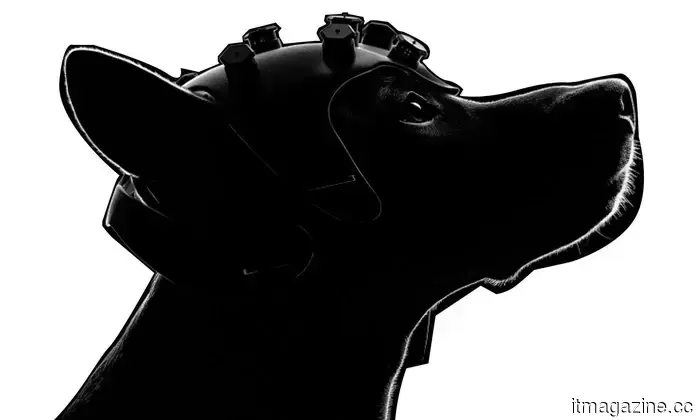
The dogs are trained to recognize alterations in volatile organic compounds (VOCs) linked to cancer. Sensors monitor various signals, including movement, respiration, brain activity, and body language, which Dognosis' AI converts into standardized data, rather than depending solely on a human handler to interpret each dog's behavior.
The initial results are quite encouraging.
Dognosis
Dognosis' Phase 2 study comprised 1,502 participants, including 283 individuals with biopsy-confirmed cancer. Seven trained dogs successfully identified over 90% of cancer cases and more than 91% of non-cancer samples across seven different cancer types, with comparable outcomes reported for cases in their early stages.
The startup claims its system can detect over 20 types of cancer, including breast, lung, cervical, and oral cancer. Its Phase 3 trial commenced in April across 10 hospitals with the goal of enrolling approximately 10,000 participants. Dognosis ultimately aims to have around 30 dogs to facilitate up to one million tests each year.
However, it's important to note that this is not a definitive diagnostic solution. BreathEasy is being developed as a prescreening tool, meaning a positive result would prompt further medical testing instead of delivering a cancer diagnosis. Ongoing large-scale trials are needed to evaluate how well the method performs in broader clinical settings.
Dognosis
Dogs might be training their successors.
The company seeks to gather enough information from canine olfaction to replicate those abilities using sensors, potentially eliminating dogs from the process altogether. Hence, even dogs are at risk of being replaced. For now, their sense of smell serves as the biological sensing hardware while AI handles consistency and scalability.
Dognosis plans to launch an at-home prescreening service in India in 2027 for a modest fee. If its larger trials are successful, the idea of breathing into a mask and allowing an AI-assisted dog to sniff it may soon feel far less bizarre than it sounds.
Vikhyaat Vivek is a tech journalist and reviewer with seven years of experience in consumer hardware coverage.
Google Sheets can now transform your mundane spreadsheets into mini-apps.
Having spent ample time dealing with spreadsheets, I understand how quickly they can become overwhelming. What begins as a tidy table can eventually evolve into numerous rows, endless columns, and a lot of scrolling to locate the one piece of information needed. Google believes Gemini can significantly improve that experience.
The company is launching Sheets canvas, a new feature powered by Gemini that can convert data from a Google Sheets spreadsheet into a more customized mini-app. Instead of constructing charts, formatting cells, or solving complex formulas manually, you can simply instruct Gemini on what to create. For instance, you could request it to transform a spreadsheet filled with assignments into a visual study tracker. Gemini will then utilize the existing information in your sheet to create an interactive interface around it.
Read more.
Heart X1 makes its debut as the world’s largest electric aircraft, with a flight costing just $5 in electricity.
While electric cars are now a common sight, replacing jet fuel with batteries becomes significantly more complex when lifting heavy weights into the air. Heart Aerospace has demonstrated that this can be accomplished on a surprisingly large scale.
The company’s X1 demonstrator has successfully conducted its first flight, becoming what Heart claims is the largest battery-electric aircraft ever flown. The X1 boasts a 106-foot wingspan, measures 76 feet from nose to tail, and weighs over 25,000 pounds at takeoff. The piloted flight took place on August 12 at Plattsburgh International Airport in New York and lasted 27 minutes. During this time, the X1 ascended to 1,100 feet above ground level, while its battery-powered propulsion system delivered more than one megawatt of power.
Read more.
AI agents are now attending students’ online classes, and colleges are struggling to combat this issue.
The technology has evolved from assisting with homework to effectively impersonating students in virtual classrooms.
AI cheating has progressed from using a chatbot to write an essay to employing tools that can make AI-generated content appear human. We have previously discussed AI tools designed to facilitate student cheating and the increasing challenge of AI detectors keeping pace, as well as the widespread use of AI for homework among students. Now, AI technology is not just aiding students in completing their work; in some instances, it can actually take on the role of the student.
Just






Other articles
 Galaxy phones might finally receive a fundamental privacy feature that Samsung overlooked.
A leaked build of One UI 9.5 shows that Galaxy phones will feature a dedicated App Lock, which secures individual apps using biometrics and conceals their notifications, widgets, and shortcuts.
Galaxy phones might finally receive a fundamental privacy feature that Samsung overlooked.
A leaked build of One UI 9.5 shows that Galaxy phones will feature a dedicated App Lock, which secures individual apps using biometrics and conceals their notifications, widgets, and shortcuts.
 The CFO of OpenAI informs shareholders that revenue from enterprise has surpassed that of ChatGPT.
OpenAI's enterprise revenue has surpassed that of consumer revenue ahead of expectations, according to its finance chief, with the run rate hitting $40 billion.
The CFO of OpenAI informs shareholders that revenue from enterprise has surpassed that of ChatGPT.
OpenAI's enterprise revenue has surpassed that of consumer revenue ahead of expectations, according to its finance chief, with the run rate hitting $40 billion.
 EV prices increased for the first time in 2026, and the reasons can be attributed to the discounts.
In July, the average price of electric cars sold in the US was $56,126, marking the first increase since 2026, following a nearly 25% reduction in EV incentives by manufacturers over the course of a year.
EV prices increased for the first time in 2026, and the reasons can be attributed to the discounts.
In July, the average price of electric cars sold in the US was $56,126, marking the first increase since 2026, following a nearly 25% reduction in EV incentives by manufacturers over the course of a year.
 Mark Rober's latest CrunchLabs mysteries transform reading into an interactive STEM experience.
The CrunchLabs Mysteries book series, created by scientist and inventor Mark Rober, merges illustrated detective stories designed to inspire young thinkers and enhance their problem-solving abilities.
Mark Rober's latest CrunchLabs mysteries transform reading into an interactive STEM experience.
The CrunchLabs Mysteries book series, created by scientist and inventor Mark Rober, merges illustrated detective stories designed to inspire young thinkers and enhance their problem-solving abilities.
 DJI's latest 360 camera addresses one of the major challenges of owning such a device.
DJI's second-generation 360 camera offers significant improvements in key areas, but there is a downside: it isn't available for purchase worldwide just yet.
DJI's latest 360 camera addresses one of the major challenges of owning such a device.
DJI's second-generation 360 camera offers significant improvements in key areas, but there is a downside: it isn't available for purchase worldwide just yet.
 U.S. courts will now disclose the government's use of spyware tools.
U.S. courts are set to publicly disclose the frequency with which judges approve spyware and hacking tools for intercepting communications, providing Americans with a clearer understanding of government surveillance.
U.S. courts will now disclose the government's use of spyware tools.
U.S. courts are set to publicly disclose the frequency with which judges approve spyware and hacking tools for intercepting communications, providing Americans with a clearer understanding of government surveillance.
AI's new partner in cancer screening has four legs and an excellent sense of smell.
Indian startup Dognosis integrates trained detection dogs with sensors and artificial intelligence to identify cancer-related signals from breath, and is currently conducting a Phase 3 trial involving 10,000 participants.