
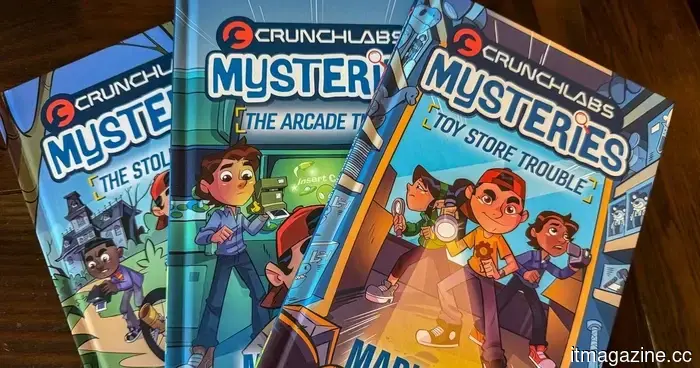
Mark Rober's latest CrunchLabs mysteries transform reading into an engaging hands-on STEM experience.
Mark Rober has dedicated many years to demonstrating that science and engineering can be enjoyable rather than feel like tedious homework. His incredibly popular videos transform topics like physics, robotics, and mechanical engineering into exciting challenges, clever pranks, and engaging machines that captivate kids’ curiosity.
CrunchLabs has carried this philosophy into the real world with its Build Box subscriptions. Now, Rober is expanding this initiative into the realm of children's literature.
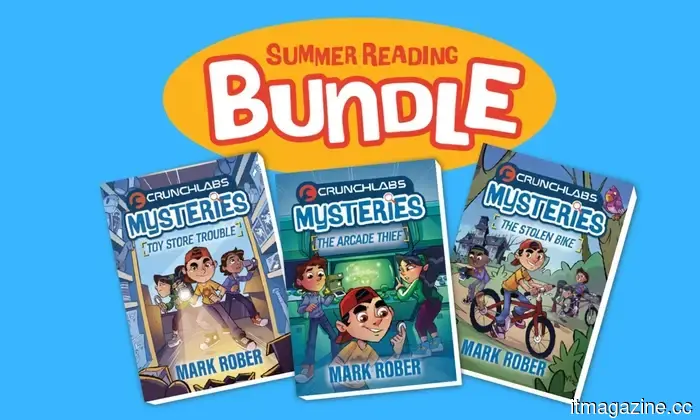
The inaugural trio of books in the new CrunchLabs Mysteries series includes Toy Store Trouble, The Arcade Thief, and The Stolen Bike. Each book is a hardcover, richly illustrated mystery featuring a fictionalized 12-year-old version of Mark Rober. These stories target children who are reading at about a third-grade level or higher, appealing particularly to elementary school students in grades three through six.
This age group is a logical choice. Younger readers often seek more complex narratives but can find long, unbroken text daunting. Mysteries offer a natural incentive to keep flipping pages, and the illustrations along with the familiar CrunchLabs style make the books more inviting than a typical science lesson.
The premise also provides Rober with a perfect childhood avatar. Twelve-year-old Mark does not solve problems using superhuman abilities or extraordinary luck. Instead, he observes, experiments, constructs, and applies engineering concepts to unravel the mysteries. The science is seamlessly integrated into the hero's thought process, rather than being an add-on to an unrelated adventure.
This concept may be the key idea behind the series. Children are often taught science as a set of facts with definitive answers. In contrast, engineering starts with a different inquiry: How can I apply what I know to resolve this issue?
Rober's videos and Build Boxes have consistently highlighted this process, including the trial, error, and occasional setbacks that accompany the act of creation. The mysteries now extend this methodology to reading and narrative.
Each book concludes with a hands-on STEM project tied to the story, complemented by a new video featuring the real Rober. Instead of finishing the mystery and simply putting the book back on the shelf, young readers are encouraged to experiment with one of the ideas themselves.
I have witnessed the effectiveness of this approach firsthand.
I gifted one of my granddaughters a CrunchLabs Build Box subscription for two years, during which we completed several projects together. The kits were thoughtfully crafted, engaging to build, and rooted in genuine engineering principles. They presented enough of a challenge that completing them felt rewarding without being so difficult that an adult needed to intervene.
Equally important, the explanations were integral to the experience. A project might lead to a catapult, launcher, or mechanical toy, but the true objective was to understand the underlying mechanics. Building together provided an opportunity to discuss concepts like force, motion, leverage, stored energy, and design choices without the experience feeling like a formal lecture.
The books seem to employ this same approach to reading. A child first encounters an engineering concept through characters and a mystery, followed by the chance to create or conduct an experiment related to it.
This sequence could be particularly beneficial for reluctant readers who enjoy building, as well as enthusiastic readers who have yet to explore an interest in engineering. A child who may shy away from a typical science book might be drawn into these stories through the mystery, the illustrations, or simply by recognizing Rober from YouTube.
Additionally, it serves as a clever extension of the CrunchLabs universe. YouTube videos can spark excitement, and Build Boxes can transform that enthusiasm into action. The mystery series introduces another layer by motivating kids to read, solve puzzles, and envision themselves as problem-solvers. It bridges storytelling, video, and hands-on construction instead of treating them as distinct endeavors.
CrunchLabs indicates that the first series will ultimately consist of 12 books. The broader series will be available as a monthly add-on for current CrunchLabs subscribers, but the initial three books are also offered together in a special bundle.
For a limited time, Toy Store Trouble, The Arcade Thief, and The Stolen Bike are being sold as a bundle for $39.95, with free shipping within the U.S. This bundle is currently only available in the United States.
No book series, video channel, or subscription box is poised to turn every child into an engineer. That isn’t really the objective. The more practical—and arguably more significant—goal is to make science feel inviting, imaginative, and enjoyable before children conclude that it is challenging or “not meant for them.”
These three books appear to be crafted with that aim in mind. They harness the curiosity already sparked by Mark Rober's YouTube videos and CrunchLabs Build Boxes and embed it within narratives that children can explore independently.
Then, true to the CrunchLabs spirit, they encourage readers to set aside watching and reading, and instead delve into building.

Other articles
 Ferrari's latest unique model took two years to complete, and it will be driven by only one individual.
Ferrari presented the CZ26 at Pebble Beach, a unique supercar constructed on the foundation of the SF90 Stradale, but featuring an entirely new design inspired by the 1970s.
Ferrari's latest unique model took two years to complete, and it will be driven by only one individual.
Ferrari presented the CZ26 at Pebble Beach, a unique supercar constructed on the foundation of the SF90 Stradale, but featuring an entirely new design inspired by the 1970s.
 Oracle's $165 billion data center project has been postponed to next year.
The gas pipeline for Oracle's Project Jupiter data center in New Mexico has been postponed to February 2027 after the state rejected its route on two occasions.
Oracle's $165 billion data center project has been postponed to next year.
The gas pipeline for Oracle's Project Jupiter data center in New Mexico has been postponed to February 2027 after the state rejected its route on two occasions.
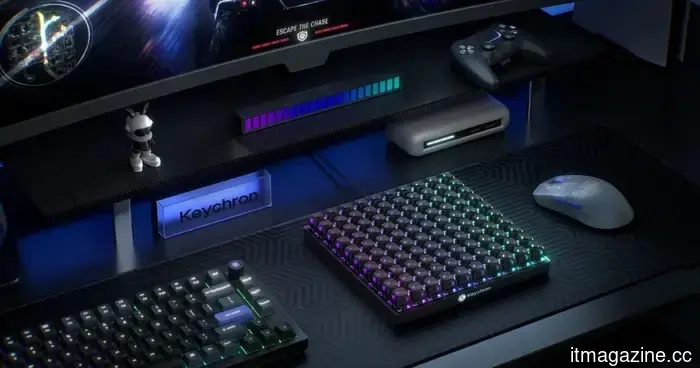 Keychron produced 96 blank keys, leaving the issue to someone else.
The Keychron C100 8K is a wired macro pad priced at $65, featuring 96 customizable keys, hot-swappable switches, individual RGB lighting for each key, and ample blank areas to transform it into nearly any type of desktop control panel you envision.
Keychron produced 96 blank keys, leaving the issue to someone else.
The Keychron C100 8K is a wired macro pad priced at $65, featuring 96 customizable keys, hot-swappable switches, individual RGB lighting for each key, and ample blank areas to transform it into nearly any type of desktop control panel you envision.
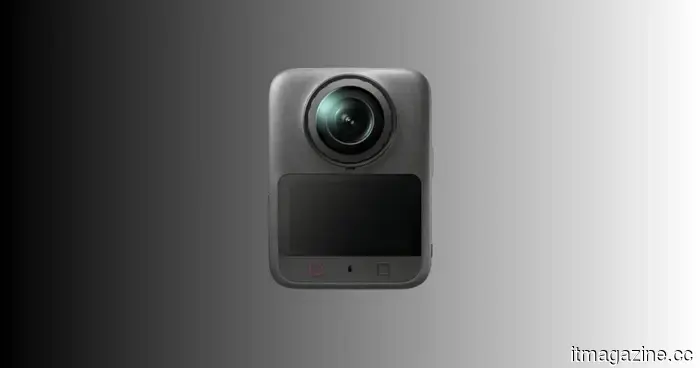 DJI's latest 360 camera addresses one of the major challenges of owning such a device.
DJI's second-generation 360 camera offers significant improvements in key areas, but there is a downside: it isn't available for purchase worldwide just yet.
DJI's latest 360 camera addresses one of the major challenges of owning such a device.
DJI's second-generation 360 camera offers significant improvements in key areas, but there is a downside: it isn't available for purchase worldwide just yet.
 Heart X1 takes to the skies for the first time as the largest electric aircraft in the world, with a flight cost of only $5 in electricity.
Heart Aerospace's large X1 demonstrator has successfully completed its inaugural flight, providing an initial look at the future of battery-powered regional air travel.
Heart X1 takes to the skies for the first time as the largest electric aircraft in the world, with a flight cost of only $5 in electricity.
Heart Aerospace's large X1 demonstrator has successfully completed its inaugural flight, providing an initial look at the future of battery-powered regional air travel.
 The CFO of OpenAI informs shareholders that revenue from enterprise has surpassed that of ChatGPT.
OpenAI's enterprise revenue has surpassed that of consumer revenue ahead of expectations, according to its finance chief, with the run rate hitting $40 billion.
The CFO of OpenAI informs shareholders that revenue from enterprise has surpassed that of ChatGPT.
OpenAI's enterprise revenue has surpassed that of consumer revenue ahead of expectations, according to its finance chief, with the run rate hitting $40 billion.
Mark Rober's latest CrunchLabs mysteries transform reading into an engaging hands-on STEM experience.
The CrunchLabs Mysteries book series, created by scientist and inventor Mark Rober, features illustrated detective stories designed to inspire young readers and enhance their problem-solving abilities.