
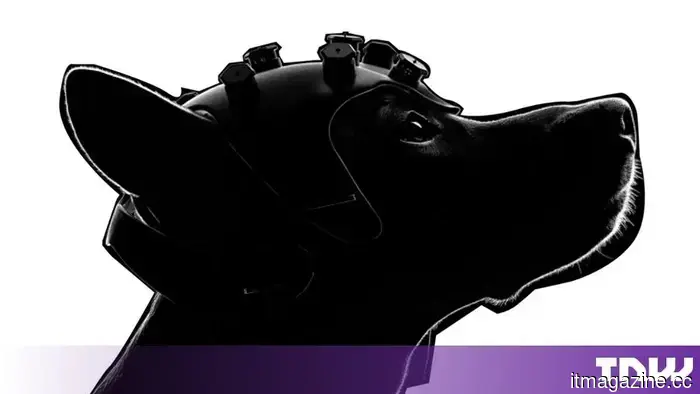
This startup in Bengaluru is training dogs and artificial intelligence to detect cancer at an early stage.
Dognosis combines trained sniffer dogs with artificial intelligence to detect cancer from a breath sample. It's an intriguing concept addressing a significant issue, but there are important limitations: this is still in the prescreening trial phase, not a validated diagnostic method.
A dog's sense of smell has consistently surpassed most laboratory equipment, and a Bengaluru startup called Dognosis, founded two years ago, is betting on transforming this natural ability into a screening method.
The company integrates trained sniffer dogs with sensors and AI to identify early signs of cancer from a single breath sample, adding to the growing number of AI applications in cancer detection.
The procedure for patients is quite straightforward. A person breathes into a mask, which is then sent to Dognosis's facility, located on a farm near Bengaluru, where beagles, labradors, and Dutch shepherds analyze the sample.
While the dogs are sniffing, sensors and AI monitor their movements, breathing, brain activity, and body language, converting signals like a hesitation or a tail wag into structured data. The hypothesis is that tumors produce a detectable chemical signature in exhaled breath, which dogs can sense long before traditional methods can identify it.
The process does not involve imaging, unlike systems designed to detect breast cancer through X-rays, nor does it require blood samples or biopsies. The AI component is intended to standardize the animal's reactions into a repeatable format.
Founded by Akash Kulgod, Dognosis claims its approach addresses over 20 cancer types across seven categories, including breast, oral cavity, lung, and cervical cancers.
In Phase 2 trials published in the Journal of Clinical Oncology, the company asserts approximately 90% sensitivity for early-stage cancers. Trained dogs that were exposed to 10 cancer types were able to identify an 11th type they had not previously encountered. However, these detection and accuracy statistics are currently reported by the company and its researchers without independent validation.
This initiative is particularly relevant given India's concerning cancer statistics. The country reported about 1.5 million new cancer cases and over 900,000 deaths in 2024, one of the most severe situations globally, yet screening rates remain alarmingly low.
Only about 1.9% of women are screened for cervical cancer, and less than 1% for breast or oral cancers. A significant part of this shortfall is attributed to cost, distance, and the discomfort associated with invasive procedures.
A low-cost, non-invasive tool focused on preventative healthcare could reach individuals who are currently underserved by the formal healthcare system, which is the particular demographic that Dognosis is targeting.
In 2024, Dognosis secured a $1.5 million pre-seed investment and has since completed another undisclosed funding round, with Accel India and Caffeinated Capital among its investors. However, no figures have been released regarding the new funding round.
The company's plans are ambitious. Kulgod aims to launch an at-home, multi-cancer prescreening test in India next year, with a price point in the range of a few thousand rupees.
A Phase 3 trial commenced in April, involving 10 hospitals with a goal to enroll approximately 10,000 participants, and the company aims to conduct a million tests annually, with results expected within a week, using around 30 dogs. A facility in the U.S. is projected to open in late 2027 or early 2028.
It's important to note a regulatory aspect. Kulgod states that Dognosis does not require Indian regulatory approval since prescreening tools are not categorized as diagnostic devices.
This simplifies the launch process but also indicates that the technology could be made available to patients without the rigorous validation necessary for formal diagnostics. A positive result serves as a recommendation to consult a doctor, rather than a definitive diagnosis, and it's crucial for the company to clarify this distinction.
The caveats are significant. This is a prescreening tool aimed at indicating who should pursue further testing, rather than a substitute for a diagnosis, and the trials are still in the early stages.
There's also an interesting irony in the long-term vision, as Dognosis ultimately intends to replace the dogs with sensors, aiming to replicate their olfactory capabilities in hardware.
Regardless of the outcome, the fundamental concept is serious: harnessing a dog's nose as a biosensor, standardized by AI, to target a screening gap that conventional medicine has struggled to bridge.
Other articles
 Pixel 11 Pro Fold vs. Galaxy Z Fold 8 Ultra: Google takes a cautious approach while Samsung fully commits.
The Pixel 11 Pro Fold and Galaxy Z Fold 8 Ultra pursue different approaches to achieve a similar objective. Here’s a comparison to help you decide which foldable suits you better.
Pixel 11 Pro Fold vs. Galaxy Z Fold 8 Ultra: Google takes a cautious approach while Samsung fully commits.
The Pixel 11 Pro Fold and Galaxy Z Fold 8 Ultra pursue different approaches to achieve a similar objective. Here’s a comparison to help you decide which foldable suits you better.
 OpenAI’s new Ultrafast mode operates GPT-5.6 Sol at a speed 14 times quicker, utilizing Cerebras chips.
OpenAI has unveiled Ultrafast, an API tier that operates GPT-5.6 Sol at speeds of up to 14 times faster on Cerebras hardware, claiming that latency, in addition to intelligence, is crucial for the usability of AI agents.
OpenAI’s new Ultrafast mode operates GPT-5.6 Sol at a speed 14 times quicker, utilizing Cerebras chips.
OpenAI has unveiled Ultrafast, an API tier that operates GPT-5.6 Sol at speeds of up to 14 times faster on Cerebras hardware, claiming that latency, in addition to intelligence, is crucial for the usability of AI agents.
 Apple developed its own AI model for China and then provided the technology to Alibaba.
Apple, with assistance from Alibaba, has developed a large language model exclusively for China, making it the first foreign company authorized to provide a proprietary AI model in mainland China.
Apple developed its own AI model for China and then provided the technology to Alibaba.
Apple, with assistance from Alibaba, has developed a large language model exclusively for China, making it the first foreign company authorized to provide a proprietary AI model in mainland China.
 Microsoft is consolidating its Copilot applications ahead of the anticipated launch of its 'super app.'
Microsoft is merging its Copilot apps into a unified experience, with Podcasts, Deep Research, and Group Chat being phased out in the process.
Microsoft is consolidating its Copilot applications ahead of the anticipated launch of its 'super app.'
Microsoft is merging its Copilot apps into a unified experience, with Podcasts, Deep Research, and Group Chat being phased out in the process.
 Microsoft is consolidating its Copilot applications ahead of the anticipated launch of its 'super app.'
Microsoft is merging its Copilot apps into a unified experience, resulting in the retirement of Podcasts, Deep Research, and Group Chat.
Microsoft is consolidating its Copilot applications ahead of the anticipated launch of its 'super app.'
Microsoft is merging its Copilot apps into a unified experience, resulting in the retirement of Podcasts, Deep Research, and Group Chat.
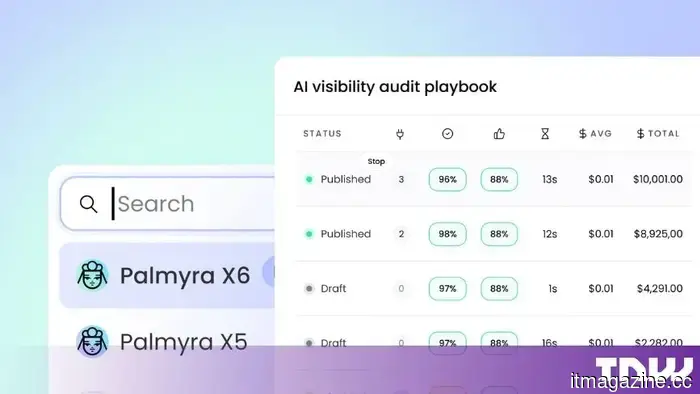 The writer is placing their bets on more affordable AI agents through the Palmyra X6 and a streamlined harness.
Writer has introduced the Palmyra X6 along with an enhanced harness that it claims can reduce AI agent expenses by as much as 50%, anticipating that enterprises are reacting to rising costs.
The writer is placing their bets on more affordable AI agents through the Palmyra X6 and a streamlined harness.
Writer has introduced the Palmyra X6 along with an enhanced harness that it claims can reduce AI agent expenses by as much as 50%, anticipating that enterprises are reacting to rising costs.
This startup in Bengaluru is training dogs and artificial intelligence to detect cancer at an early stage.
Dognosis, a startup based in Bengaluru, combines trained sniffer dogs with artificial intelligence to detect early signs of cancer from a breath sample. It serves as a prescreening tool currently undergoing trials and is not yet a validated diagnostic method.