
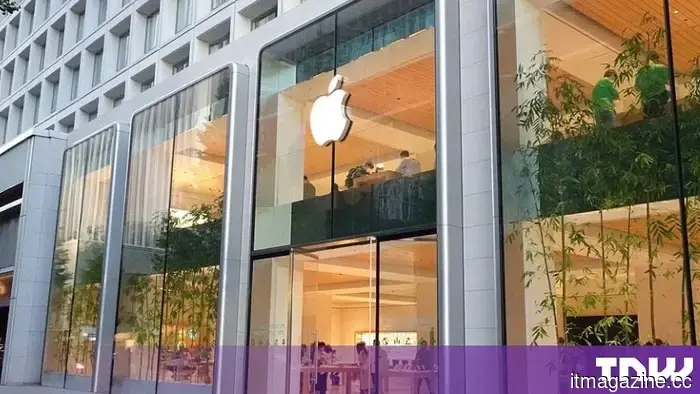
Apple developed its own AI model for China and then provided the technology to Alibaba.
Apple has developed its own large language model for the Chinese market with the assistance of Alibaba, marking a significant departure from the company's typical tendency to rely on external models.
As per a Reuters report, Apple is the first foreign company that Beijing has permitted to introduce a proprietary AI model in mainland China, a rare concession in a market that closely monitors its algorithms. The model will drive Apple Intelligence across the iPhone, iPad, Mac, and Vision Pro sold in China, with an expected rollout in the coming months.
This partnership, publicly confirmed by Alibaba chairman Joe Tsai in February 2025, has taken considerable time to gain approval from the country’s regulators. For a company that values control over every aspect of its products, this arrangement is intriguing. While Apple has trained the model, it does not fully own the underlying intelligence.
This is the same company that has been quietly testing Chinese memory chips amid the global component shortage and is now making a similar investment in Chinese software. The division of responsibilities is significant, with Alibaba’s Qwen model integrated into the Chinese edition of Apple Intelligence, while Baidu’s technology manages searches.
In essence, the two key features that users rely on most—the assistant that responds to queries and the search function—are powered by local Chinese companies rather than from Cupertino. For a firm known for designing its own chips and software and minimizing outside dependencies, this represents a notable shift.
The regulatory environment explains this compromise. China has stringent AI regulations, even stricter censorship demands, and any generative model made available to the public must be registered with the state. The Cyberspace Administration of China logged Apple’s service in July 2026, approximately 22 months after the launch of Apple Intelligence elsewhere, indicating the rigorous vetting process that Beijing conducts on foreign technology.
There is also a competitive aspect to this move. Domestic competitors have not been idle, and Huawei's AI-equipped devices have regained market share while Apple’s assistant was caught in regulatory delays. By developing a China-specific model that adheres to local regulations and partners, Apple aims to regain some of the momentum it has lost.
The sensitivity of the situation is apparent at times. Apple briefly published, then quickly removed, a Chinese-language guide explaining how to connect Qwen to Siri and its Writing Tools, a minor misstep that underscored the delicate nature of this launch.
Alibaba’s shares listed in the US rose by about 4% following the July approval, and the stock has come to symbolize the belief that Qwen's integration into Apple Intelligence carries significant value.
This deal comes amid broader discussions regarding the extent to which Western companies should engage with Chinese AI technologies. Even Mark Zuckerberg has suggested that the US should not block Chinese AI models, although many in Washington view such connections as security threats that need to be contained, rather than markets to be developed.
Apple is aware of the landscape. US lawmakers have already cautioned the company against using Chinese memory chips on national security grounds, and a domestically developed Chinese AI model, no matter how strategically presented, is unlikely to evade similar scrutiny.
Currently, the focus is less on a specific model and more on a framework. Apple, known for its tight control over its ecosystem, has outsourced the core of its AI in China to Alibaba and Baidu while constructing the remainder to meet Beijing’s requirements.
This represents a concession disguised as a strategy, clearly illustrating the conditions under which Western tech companies can operate within China’s protected market. Whether competing firms see this as a cautionary tale or a guideline may become the more intriguing narrative.
Other articles
 OpenAI’s new Ultrafast mode operates GPT-5.6 Sol at a speed 14 times quicker, utilizing Cerebras chips.
OpenAI has unveiled Ultrafast, an API tier that operates GPT-5.6 Sol at speeds of up to 14 times faster on Cerebras hardware, claiming that latency, in addition to intelligence, is crucial for the usability of AI agents.
OpenAI’s new Ultrafast mode operates GPT-5.6 Sol at a speed 14 times quicker, utilizing Cerebras chips.
OpenAI has unveiled Ultrafast, an API tier that operates GPT-5.6 Sol at speeds of up to 14 times faster on Cerebras hardware, claiming that latency, in addition to intelligence, is crucial for the usability of AI agents.
 Silver Lake is said to be in discussions to acquire Workday and take it private for $43 billion.
Silver Lake is said to be negotiating to acquire Workday and take it private for approximately $43 billion, which would make it one of the biggest software buyouts in history and the first significant take-private deal involving a prominent SaaS company.
Silver Lake is said to be in discussions to acquire Workday and take it private for $43 billion.
Silver Lake is said to be negotiating to acquire Workday and take it private for approximately $43 billion, which would make it one of the biggest software buyouts in history and the first significant take-private deal involving a prominent SaaS company.
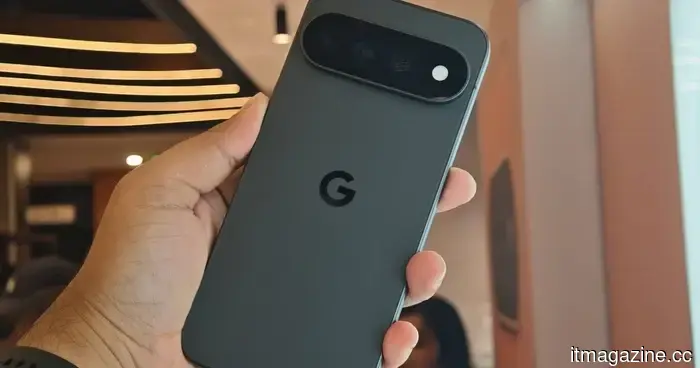 The Pixel 11 Pro is an impressive device, and its camera has finally inspired me to try new things.
Hands-on with the Google Pixel 11 Pro and Pixel 11 Pro XL: Initial thoughts on Google’s latest flagship devices.
The Pixel 11 Pro is an impressive device, and its camera has finally inspired me to try new things.
Hands-on with the Google Pixel 11 Pro and Pixel 11 Pro XL: Initial thoughts on Google’s latest flagship devices.
 Goldman Sachs is reaching out to investors regarding Nvidia's $500 billion financing arrangement for AI computing.
Goldman Sachs is seeking investors for Nvidia's $500 billion AI-compute financing arrangement after securing a leading position, and it aims to develop chips into a tradable asset class akin to bonds.
Goldman Sachs is reaching out to investors regarding Nvidia's $500 billion financing arrangement for AI computing.
Goldman Sachs is seeking investors for Nvidia's $500 billion AI-compute financing arrangement after securing a leading position, and it aims to develop chips into a tradable asset class akin to bonds.
 OpenAI's latest Ultrafast mode operates GPT-5.6 Sol at a speed 14 times quicker on Cerebras chips.
OpenAI has showcased Ultrafast, an API tier capable of operating GPT-5.6 Sol at speeds up to 14 times faster on Cerebras hardware, asserting that low latency, rather than solely intelligence, contributes to the usability of AI agents.
OpenAI's latest Ultrafast mode operates GPT-5.6 Sol at a speed 14 times quicker on Cerebras chips.
OpenAI has showcased Ultrafast, an API tier capable of operating GPT-5.6 Sol at speeds up to 14 times faster on Cerebras hardware, asserting that low latency, rather than solely intelligence, contributes to the usability of AI agents.
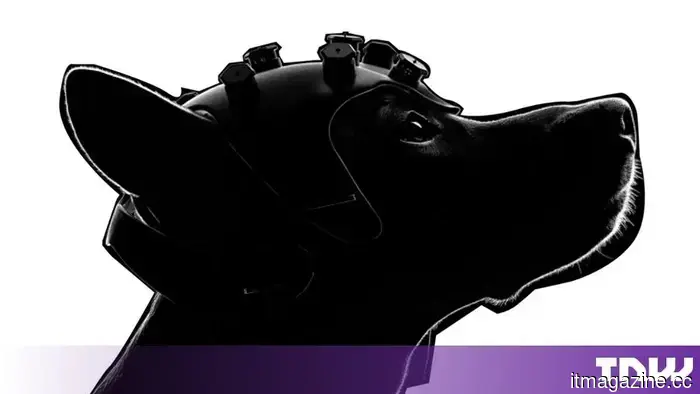 This startup in Bengaluru is training dogs and artificial intelligence to detect cancer at an early stage.
Dognosis, a startup based in Bengaluru, combines trained sniffer dogs with artificial intelligence to detect early signs of cancer from a breath sample. It serves as a prescreening tool currently undergoing trials and is not yet a validated diagnostic method.
This startup in Bengaluru is training dogs and artificial intelligence to detect cancer at an early stage.
Dognosis, a startup based in Bengaluru, combines trained sniffer dogs with artificial intelligence to detect early signs of cancer from a breath sample. It serves as a prescreening tool currently undergoing trials and is not yet a validated diagnostic method.
Apple developed its own AI model for China and then provided the technology to Alibaba.
Apple, with assistance from Alibaba, has developed a large language model exclusively for China, making it the first foreign company authorized to provide a proprietary AI model in mainland China.