

Lightspeed is divesting its stake in OpenAI to a fund that it will also manage.
The firm refers to the deal as Project Mercury, according to Bloomberg, which cited sources familiar with the matter. It involves assets from two Lightspeed funds, Select V and Opportunity II, in addition to a separately managed account, with OpenAI as the primary asset. Coller Capital is the main buyer, while UBS is providing advisory services. Lightspeed did not respond to Bloomberg's inquiries, and Coller chose not to comment.
Understanding what a continuation fund does
The mechanics are more important than the terminology, so here’s the straightforward explanation. A venture fund typically has a lifespan of around ten years, at which point it must liquidate its holdings and return the funds to investors. A continuation fund changes this timeline. The manager transfers selected assets into a new fund, a buyer finances it, the original investors receive their money, and the firm retains its position. Investors from the previous fund can either take the cash or invest in the new one. This choice is the product being offered.
The problem it addresses is significant. Companies are remaining private for longer than a decade, meaning the fund often expires before the investment matures.
Lightspeed operates from both sides
This is where the deals become contentious in private equity, and it remains unchanged in venture capital. Lightspeed is selling the assets on behalf of one group of investors while simultaneously managing the fund that acquires them. Someone must determine OpenAI's value for this transaction; there is no public stock price, given the company's private status. The reference point is the most recent primary funding round, which valued OpenAI at $852 billion post-money in March following a $122 billion raise, according to Tech Funding News. The buyers set that figure, not the sellers. The continuation fund must convert it into a transaction price, and the manager benefits by accurately pricing it for their side.
Coller acts with discipline in this scenario. As an arm’s-length buyer with its own investors, it has no incentive to overpay.
The Anthropic aspect is not a rollover
One detail that distinguishes this from a simple extension is that Bloomberg characterizes the exposure to Anthropic as a new investment rather than a pre-existing one. Thus, investors being asked to roll over are not only retaining what they previously held but also financing a new acquisition. The entry point is substantial; Anthropic's last round valued it at $965 billion, just three months after it was valued at $380 billion. Lightspeed is well-acquainted with the company, having supported it through three consecutive funding rounds, including a $3.5 billion Series E in 2025. However, familiarity does not guarantee a discount.
Additional assets involved
Other holdings help diversify risk beyond the cutting-edge laboratories. Verkada produces AI-driven physical security systems, and a December investment from CapitalG valued it at $5.8 billion. Rippling, a workforce platform, raised $16.8 billion in May 2025. Glean, which develops enterprise AI search technologies, secured $7.2 billion a month later. Reflection AI has progressed rapidly, raising at $8 billion in October 2025 and reportedly seeking additional funding at $25 billion in March.
The desk has clarified its computational sources. Reflection has signed a $6.3 billion agreement with SpaceX for Nvidia chips effective until 2029.
Reasons for the structure’s expansion
It is wise to follow the math rather than the trend. AI valuations increase every few months, making the cost of maintaining a stake against dilution in later rounds extraordinarily high—amounting to hundreds of millions. An aging fund does not possess such capital, as its investors anticipate distributions rather than additional capital calls. A continuation fund addresses both issues simultaneously by raising new funds against existing assets while reimbursing the initial investors.
The figures illustrate the trend: venture-led secondary transactions hit $35 billion in 2025, nearly double the 2023 total, as reported by PJT Partners. This fits within a secondaries market that was valued at $121 billion for transactions in the first half of this year alone.
Underlying concentration
This trend should be viewed alongside where venture capital is currently directed. Large deals accounted for 87.5% of the capital deployed in U.S. venture in the second quarter. A structure designed to hold successful investments longer will likely further concentrate the market rather than loosen it. Lightspeed is merely responding to this situation rationally rather than initiating it. Other firms are concurrently restructuring; for instance, Accel raised $3.5 billion across four funds in a single process this week. Moreover, a single private investment can now define an entire firm, as evidenced by Thrive Capital’s first investor letter showcasing how significantly OpenAI has come to represent it.
European buyers
The European perspective features on the opposing side of the table. Coller Capital, a secondary specialist based in London, has recently been acquired by the Swedish investment group EQT. Thus, a Swedish-owned, London-based firm emerges as the leading
Other articles
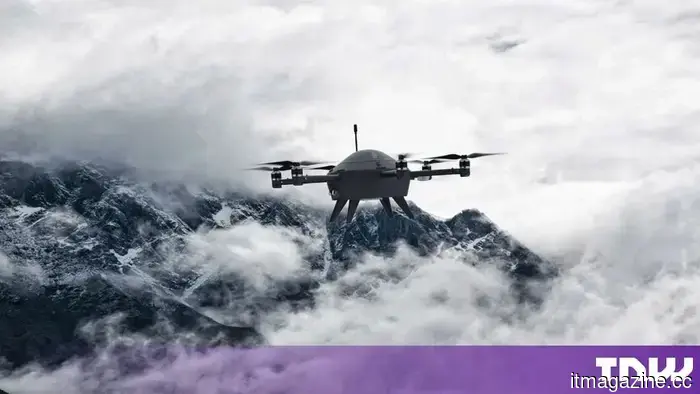 Weather drones are addressing the data gap that is essential for both military forces and traders.
With the decrease in weather-balloon launches, drones are filling a low-altitude data void that enhances predictions for energy traders and military operations, while also subtly contributing to the growth of AI in weather forecasting.
Weather drones are addressing the data gap that is essential for both military forces and traders.
With the decrease in weather-balloon launches, drones are filling a low-altitude data void that enhances predictions for energy traders and military operations, while also subtly contributing to the growth of AI in weather forecasting.
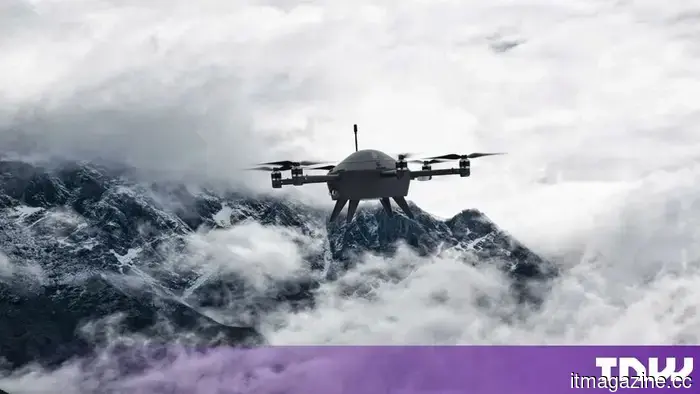 Weather drones are bridging the data gap that is essential for both military forces and traders.
With the decrease in weather-balloon launches, drones are filling a low-altitude data void that enhances forecasts for energy traders and military operations, while also subtly contributing to the growth of AI in weather-related applications.
Weather drones are bridging the data gap that is essential for both military forces and traders.
With the decrease in weather-balloon launches, drones are filling a low-altitude data void that enhances forecasts for energy traders and military operations, while also subtly contributing to the growth of AI in weather-related applications.
 Thrive Capital's inaugural investor letter reveals how entirely OpenAI has come to shape its identity.
A Thrive Capital fund has grown to approximately $3.7 billion thanks to investments in OpenAI and SpaceX, as disclosed in Joshua Kushner’s initial formal investor letter. Additionally, the firm is discreetly divesting a portion of its OpenAI holdings.
Thrive Capital's inaugural investor letter reveals how entirely OpenAI has come to shape its identity.
A Thrive Capital fund has grown to approximately $3.7 billion thanks to investments in OpenAI and SpaceX, as disclosed in Joshua Kushner’s initial formal investor letter. Additionally, the firm is discreetly divesting a portion of its OpenAI holdings.
 Google has released the Gemini 3.7 Flash model, which is equipped to assist you with your tasks using the Spark agent.
Google's latest Gemini 3.7 Flash model offers significant improvements in workflow automation and document management, which could greatly enhance the functionality of Spark.
Google has released the Gemini 3.7 Flash model, which is equipped to assist you with your tasks using the Spark agent.
Google's latest Gemini 3.7 Flash model offers significant improvements in workflow automation and document management, which could greatly enhance the functionality of Spark.
 Thrive Capital's initial investor letter illustrates how fully OpenAI has come to characterize the firm.
According to Joshua Kushner's inaugural formal investor letter, a Thrive Capital fund has grown to approximately $3.7 billion due to investments in OpenAI and SpaceX, and the firm is discreetly offloading a portion of its stake in OpenAI.
Thrive Capital's initial investor letter illustrates how fully OpenAI has come to characterize the firm.
According to Joshua Kushner's inaugural formal investor letter, a Thrive Capital fund has grown to approximately $3.7 billion due to investments in OpenAI and SpaceX, and the firm is discreetly offloading a portion of its stake in OpenAI.
 Google Meet can now take notes for your in-person meetings.
Google Meet's meeting notes function is broadening its scope beyond video calls, allowing Gemini to record notes during your in-person meetings and convert them into a document that includes action items and a complete transcript.
Google Meet can now take notes for your in-person meetings.
Google Meet's meeting notes function is broadening its scope beyond video calls, allowing Gemini to record notes during your in-person meetings and convert them into a document that includes action items and a complete transcript.
Lightspeed is divesting its stake in OpenAI to a fund that it will also manage.
Lightspeed is looking to raise $600 million for a continuation fund that includes OpenAI, Anthropic, and three additional companies. It will sell the assets and manage the fund that acquires them.