
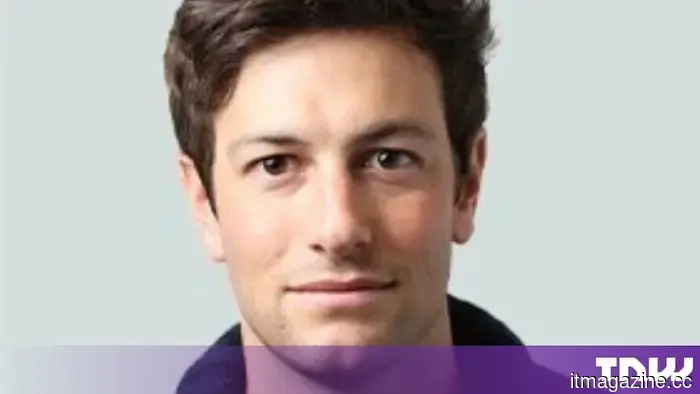
Thrive Capital's initial investor letter illustrates how fully OpenAI has come to characterize the firm.
Joshua Kushner's Thrive Capital has issued its inaugural formal letter to investors, with a key figure encapsulating the AI era in a nutshell. One of its funds has risen to approximately $3.7 billion in value, primarily driven by early investments in OpenAI and SpaceX. The letter, as reported by Bloomberg, serves both as a celebratory acknowledgment of success and a subtle precaution.
It is significant that Thrive is communicating with its investors at all. Kushner has established one of the most elusive and desirable firms in venture capital, and providing a formal update, complete with specific metrics and an honest remark on investment concentration, marks a shift that also conveys confidence.
This communication comes at a time when the entire industry is in debate over whether AI valuations represent genuine value or merely collective optimism, making it especially notable that a firm highly invested in a single entity is revealing its figures.
Thrive's involvement with OpenAI illustrates the narrative of the boom. The firm first supported the company in 2022 at a $29 billion valuation, led a tender offer the subsequent year at $86 billion, and has since invested around $1 billion more across funding rounds that valued OpenAI at $150 billion and subsequently $285 billion.
With the company now preparing for a trillion-dollar listing, those early investments have significantly increased in value, at least theoretically. The $3.7 billion figure also greatly benefits from Thrive's investment in Elon Musk's SpaceX, another private powerhouse whose valuation has consistently risen. Together, these two holdings now represent the majority of the fund's gains, a concentration that most portfolio managers would find concerning, yet Thrive presents it as validation of their strategy.
However, there is an important caveat: almost all of that value remains unrealized. The gains are still on paper, reliant on the continued appreciation of OpenAI's and SpaceX's private valuations, and an increasing portion of Thrive's paper returns is now tied to OpenAI alone.
On the surface, the firm appears to be enjoying an extraordinary decade, but in terms of cash, far less has been finalized, and unrealized fortunes often diminish quickly when market conditions shift.
This context underscores a significant point made in the letter: Thrive is selling a part of its OpenAI stake, taking profits from the table while asserting that the narrative is just beginning. Reducing exposure on a successful investment is a standard risk management practice; however, it also subtly acknowledges a fundamental truth in venture capital: a valuation is not actualized until it is realized through a transaction.
Thrive has established itself as a dominant player through these investments, now managing around $25 billion and having recently closed a record $10 billion fund, its largest to date and reportedly oversubscribed, indicating that limited partners are comfortable continuing to support a strategy focused on a few significant private assets. Kushner has also launched a separate venture, Thrive Holdings, aimed at acquiring traditional service companies and integrating AI solutions.
The timing of this letter is particularly sensitive as uncertainties grow regarding whether AI revenues can sustain the lofty valuations, and whether much of the sector represents a bubble poised to burst. Funds reliant on a single, soaring private valuation may begin to appear vulnerable rather than savvy.
Thrive's impressive figures shine precisely because OpenAI's valuation continues to thrive. For the moment, it remains one of the standout venture investments of the current era. Kushner's backing of OpenAI when it was still emerging has now positioned him at the forefront of the economy.
What the letter cannot clarify is the future of a fund like this when OpenAI's private valuation inevitably ceases to increase, as returns represented solely as marks can diminish almost as swiftly as they were created.
Other articles
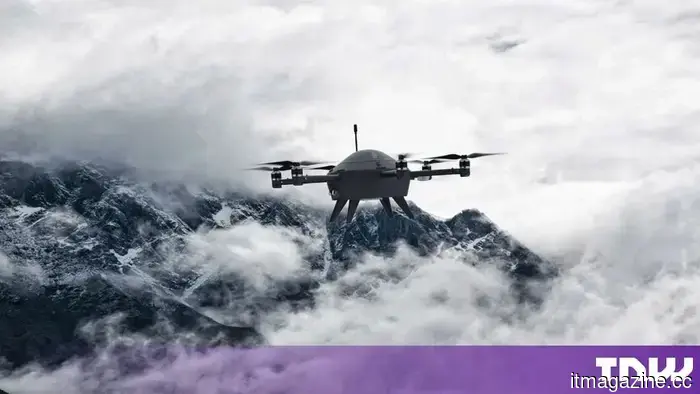 Weather drones are addressing the data gap that is essential for both military forces and traders.
With the decrease in weather-balloon launches, drones are filling a low-altitude data void that enhances predictions for energy traders and military operations, while also subtly contributing to the growth of AI in weather forecasting.
Weather drones are addressing the data gap that is essential for both military forces and traders.
With the decrease in weather-balloon launches, drones are filling a low-altitude data void that enhances predictions for energy traders and military operations, while also subtly contributing to the growth of AI in weather forecasting.
 A teenager from Massachusetts faces charges for the murder of his mother and brother, with prosecutors citing ChatGPT as a point of reference.
Prosecutors claim that a 17-year-old in Acton, Massachusetts utilized ChatGPT to delve into “fantasy stories” centered around murdering his family, marking the latest instance of an AI chatbot being connected to a violent crime.
A teenager from Massachusetts faces charges for the murder of his mother and brother, with prosecutors citing ChatGPT as a point of reference.
Prosecutors claim that a 17-year-old in Acton, Massachusetts utilized ChatGPT to delve into “fantasy stories” centered around murdering his family, marking the latest instance of an AI chatbot being connected to a violent crime.
 Meta deleted 756,000 accounts in Australia. The company's actual request is for Apple to handle the verification.
Meta's recent update regarding the social media ban in Australia concludes with a request for policy changes: verify age just once at the operating system or app store level, rather than requiring verification on each individual platform.
Meta deleted 756,000 accounts in Australia. The company's actual request is for Apple to handle the verification.
Meta's recent update regarding the social media ban in Australia concludes with a request for policy changes: verify age just once at the operating system or app store level, rather than requiring verification on each individual platform.
 Lightspeed is divesting its stake in OpenAI to a fund that it will also manage.
Lightspeed is looking to raise $600 million for a continuation fund that includes OpenAI, Anthropic, and three additional companies. It will sell the assets and manage the fund that acquires them.
Lightspeed is divesting its stake in OpenAI to a fund that it will also manage.
Lightspeed is looking to raise $600 million for a continuation fund that includes OpenAI, Anthropic, and three additional companies. It will sell the assets and manage the fund that acquires them.
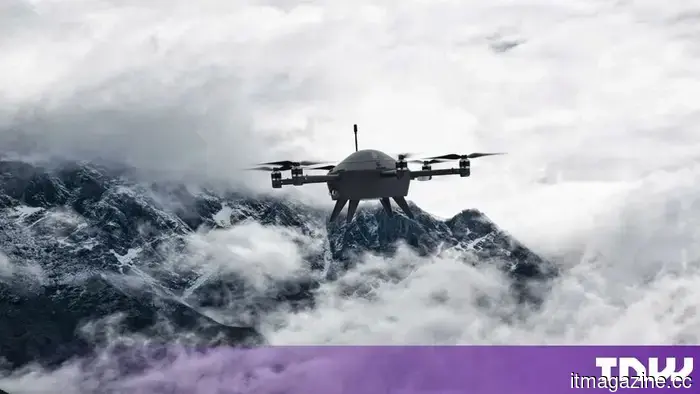 Weather drones are bridging the data gap that is essential for both military forces and traders.
With the decrease in weather-balloon launches, drones are filling a low-altitude data void that enhances forecasts for energy traders and military operations, while also subtly contributing to the growth of AI in weather-related applications.
Weather drones are bridging the data gap that is essential for both military forces and traders.
With the decrease in weather-balloon launches, drones are filling a low-altitude data void that enhances forecasts for energy traders and military operations, while also subtly contributing to the growth of AI in weather-related applications.
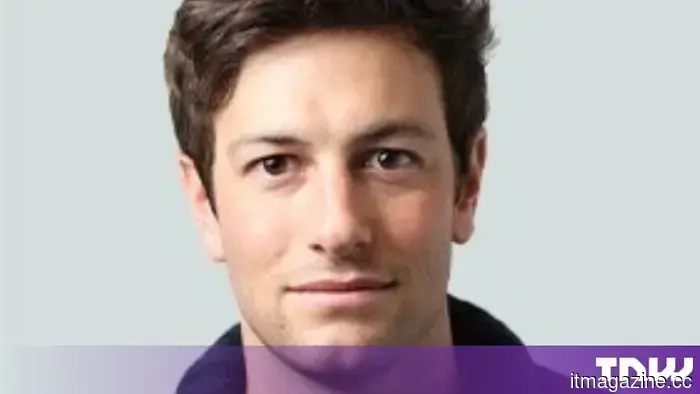 Thrive Capital's inaugural investor letter reveals how entirely OpenAI has come to shape its identity.
A Thrive Capital fund has grown to approximately $3.7 billion thanks to investments in OpenAI and SpaceX, as disclosed in Joshua Kushner’s initial formal investor letter. Additionally, the firm is discreetly divesting a portion of its OpenAI holdings.
Thrive Capital's inaugural investor letter reveals how entirely OpenAI has come to shape its identity.
A Thrive Capital fund has grown to approximately $3.7 billion thanks to investments in OpenAI and SpaceX, as disclosed in Joshua Kushner’s initial formal investor letter. Additionally, the firm is discreetly divesting a portion of its OpenAI holdings.
Thrive Capital's initial investor letter illustrates how fully OpenAI has come to characterize the firm.
According to Joshua Kushner's inaugural formal investor letter, a Thrive Capital fund has grown to approximately $3.7 billion due to investments in OpenAI and SpaceX, and the firm is discreetly offloading a portion of its stake in OpenAI.