
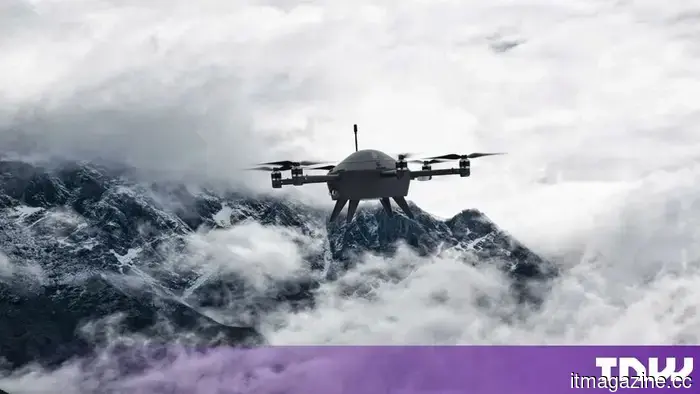
Weather drones are bridging the data gap that is essential for both military forces and traders.
The recent surge in artificial intelligence for weather forecasting carries an inconvenient truth. Despite claims of advanced models predicting storms several days in advance, the effectiveness of an AI forecaster relies heavily on the quality of the observations used for input, which have recently become scarce.
As reported by Bloomberg, drones are now being deployed to fill this gap, evolving into essential sensors relied upon by both military operations and energy traders. The issue lies within the lowest few kilometers of the atmosphere, where most weather events occur. For many years, this crucial layer was monitored using radiosondes—balloons equipped with instruments that are launched twice daily from various locations around the globe.
As the frequency of these launches decreases, so does the amount of available data, which poses a significant challenge for an industry striving to create the most precise forecasts possible. The allure of AI in meteorology is compelling; for instance, Google DeepMind claims that its system is the most accurate 10-day weather forecaster in the world. However, any model that is based on previous data still requires current measurements to accurately assess the weather conditions at any given moment. Without real-time ground truth, even the most sophisticated neural networks are left to make educated guesses.
This decline in data collection is partially due to internal factors. In the United States, staffing shortages following federal cuts have led the National Weather Service to suspend or reduce the launches from several upper-air stations through 2025, creating significant gaps in a dataset that meteorologists have long relied on.
Drones are stepping in to address this issue. Companies like Switzerland’s Meteomatics operate what they refer to as Meteodrones—small unmanned aircraft intended specifically to replace radiosondes. These drones ascend several kilometers, collecting data on temperature, humidity, pressure, and wind conditions during their flight before returning to the ground to be deployed again.
The economic benefits also play a role. Unlike weather balloons, which are single-use and often lost to the wind, drones can collect data and return, thereby providing a consistent stream of information rather than sporadic coverage.
The concept is evolving from mere demonstration to practical application. According to Meteomatics, they supplied operational weather-drone data to the US National Weather Service for the first time earlier this year, as part of a broader NOAA initiative to incorporate these aircraft into standard forecasting rather than just considering them experimental.
This integration has financial implications. In energy markets, prices fluctuate based on wind conditions, solar energy production, and temperature, making slightly more accurate forecasts a valuable advantage for trading. Bloomberg notes that energy traders are among the most eager consumers of enhanced low-altitude data because of its profitability.
The military also finds value in this data. The same information that assists traders in optimizing gas positions can also guide military decisions on flight, combat, and troop movements, leading Bloomberg to highlight the dual utility of drones for both soldiers and traders.
This leads to a somewhat uncomfortable reality for those in AI weather forecasting. While companies like Google DeepMind, which has significantly outperformed others, and rivals like Switzerland’s Jua, which asserts it surpasses Microsoft and Google, are competing to create better algorithms, the quest for superior raw data could be even more critical, albeit less glamorous.
From a European perspective, there is also a strategic benefit to note. Meteomatics represents a European enterprise providing necessary tools for the American data rush in forecasting—a rare instance of Europe exporting technology rather than importing it, even as leading AI models continue to emerge from Silicon Valley.
There lies an interesting irony in this situation: The future of weather forecasting was expected to be driven by advanced software and extensive models trained on historical data. However, it may instead depend on who can deploy the most sensors in the atmosphere and who possesses the data they collect. The entities that achieve this can secure both financial profit and military advantages, fulfilling a vital role in areas where algorithms can’t operate without their foundational data.
Other articles
 Lightspeed is divesting its stake in OpenAI to a fund that it will also manage.
Lightspeed is looking to raise $600 million for a continuation fund that includes OpenAI, Anthropic, and three additional companies. It will sell the assets and manage the fund that acquires them.
Lightspeed is divesting its stake in OpenAI to a fund that it will also manage.
Lightspeed is looking to raise $600 million for a continuation fund that includes OpenAI, Anthropic, and three additional companies. It will sell the assets and manage the fund that acquires them.
 A teenager from Massachusetts is facing charges for the murders of his mother and brother, with prosecutors highlighting the involvement of ChatGPT.
Prosecutors allege that a 17-year-old from Acton, Massachusetts utilized ChatGPT to investigate “fantasy stories” involving the murder of his family, marking the latest incident linking an AI chatbot to a violent crime.
A teenager from Massachusetts is facing charges for the murders of his mother and brother, with prosecutors highlighting the involvement of ChatGPT.
Prosecutors allege that a 17-year-old from Acton, Massachusetts utilized ChatGPT to investigate “fantasy stories” involving the murder of his family, marking the latest incident linking an AI chatbot to a violent crime.
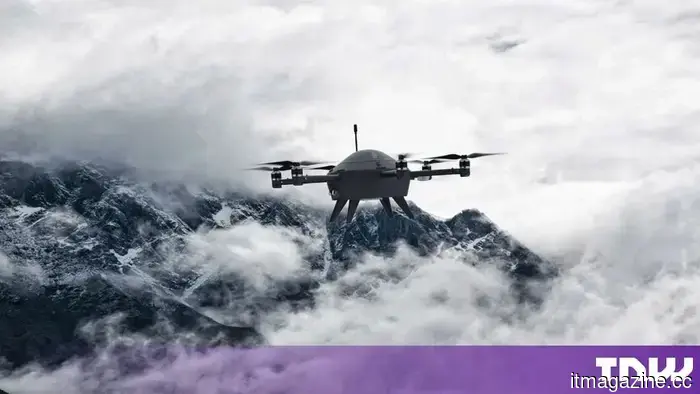 Weather drones are addressing the data gap that is essential for both military forces and traders.
With the decrease in weather-balloon launches, drones are filling a low-altitude data void that enhances predictions for energy traders and military operations, while also subtly contributing to the growth of AI in weather forecasting.
Weather drones are addressing the data gap that is essential for both military forces and traders.
With the decrease in weather-balloon launches, drones are filling a low-altitude data void that enhances predictions for energy traders and military operations, while also subtly contributing to the growth of AI in weather forecasting.
 Thrive Capital's inaugural investor letter reveals how entirely OpenAI has come to shape its identity.
A Thrive Capital fund has grown to approximately $3.7 billion thanks to investments in OpenAI and SpaceX, as disclosed in Joshua Kushner’s initial formal investor letter. Additionally, the firm is discreetly divesting a portion of its OpenAI holdings.
Thrive Capital's inaugural investor letter reveals how entirely OpenAI has come to shape its identity.
A Thrive Capital fund has grown to approximately $3.7 billion thanks to investments in OpenAI and SpaceX, as disclosed in Joshua Kushner’s initial formal investor letter. Additionally, the firm is discreetly divesting a portion of its OpenAI holdings.
 Meta deleted 756,000 accounts in Australia. The company's actual request is for Apple to handle the verification.
Meta's recent update regarding the social media ban in Australia concludes with a request for policy changes: verify age just once at the operating system or app store level, rather than requiring verification on each individual platform.
Meta deleted 756,000 accounts in Australia. The company's actual request is for Apple to handle the verification.
Meta's recent update regarding the social media ban in Australia concludes with a request for policy changes: verify age just once at the operating system or app store level, rather than requiring verification on each individual platform.
 A teenager from Massachusetts faces charges for the murder of his mother and brother, with prosecutors citing ChatGPT as a point of reference.
Prosecutors claim that a 17-year-old in Acton, Massachusetts utilized ChatGPT to delve into “fantasy stories” centered around murdering his family, marking the latest instance of an AI chatbot being connected to a violent crime.
A teenager from Massachusetts faces charges for the murder of his mother and brother, with prosecutors citing ChatGPT as a point of reference.
Prosecutors claim that a 17-year-old in Acton, Massachusetts utilized ChatGPT to delve into “fantasy stories” centered around murdering his family, marking the latest instance of an AI chatbot being connected to a violent crime.
Weather drones are bridging the data gap that is essential for both military forces and traders.
With the decrease in weather-balloon launches, drones are filling a low-altitude data void that enhances forecasts for energy traders and military operations, while also subtly contributing to the growth of AI in weather-related applications.