

GM and LG have resumed battery production in Ohio after a seven-month pause.
Ultium Cells, the joint venture between GM and LG Energy Solution, will resume EV battery cell production next week in Warren, Ohio, after a seven-month halt, employing around 1,400 workers. While US EV sales saw a 14.2% increase in the second quarter, they remain 20.5% lower compared to a year ago.
The battery plant that GM and LG paused in January is now restarting operations. Ultium Cells will begin cell production in Warren next week, bringing back approximately 1,400 employees as production ramps up. Tom Gallagher, the vice president of operations for the joint venture, mentioned that most of the laid-off workers are set to return.
About 1,330 workers lost their jobs when the plant was shut down in January. The shutdown was initially projected to last six months but extended to seven, with a small team recalled in May to prepare the facility.
The halt was attributed to policy changes rather than manufacturing issues. Following the withdrawal of the $7,500 federal tax credit, consumers rushed to make purchases, resulting in a significant drop in the following quarter's sales. US EV sales have since rebounded to 247,226 units in the second quarter, reflecting a 14.2% increase from the first quarter but still down 20.5% compared to the same quarter the previous year.
GM’s own brands are contributing to that recovery. Chevrolet's sales increased by 11.6% from the previous quarter, while Cadillac saw a rise of 27.9%, justifying the need to restart cell production in Ohio.
However, this does not indicate a shift in GM's strategy. The company's second-quarter sales fell by four percent as EV demand declined, and traditional petrol engines are being reintroduced into Cadillacs.
The plants illustrate a similar narrative. Ohio produces large-format nickel cobalt manganese aluminum pouch cells for most GM electric vehicles. Meanwhile, the joint venture's factory in Tennessee has been repurposed for energy storage and is not expected to manufacture the more affordable lithium iron phosphate cells for vehicles until late 2027.
In Indiana, the situation is more drastic. Samsung SDI has acquired GM's share in their joint venture this week, and the facility currently under construction will now produce cells for energy storage, rather than the prismatic EV cells it was initially intended to make.
In summary, while one EV cell line is being revived, two other facilities are shifting their focus. Although American battery capacity continues to expand, the proportion allocated for vehicles is decreasing, aligning with GM's overall strategy as it undertakes an $11 billion retreat from electric vehicles.
One GM electric vehicle will remain unaffected by these changes. The Chevrolet Bolt is powered by lithium iron phosphate cells sourced from China, so the restart in Ohio will not impact its production.
Other articles
 I got some hands-on experience with the Pixel 11, and Google's most affordable flagship finally has everything it needs.
The Pixel 11 features three practical cameras, 256GB of storage, quicker Pixelsnap charging, and the latest software from Google, all without increasing the cost of the comparable configuration.
I got some hands-on experience with the Pixel 11, and Google's most affordable flagship finally has everything it needs.
The Pixel 11 features three practical cameras, 256GB of storage, quicker Pixelsnap charging, and the latest software from Google, all without increasing the cost of the comparable configuration.
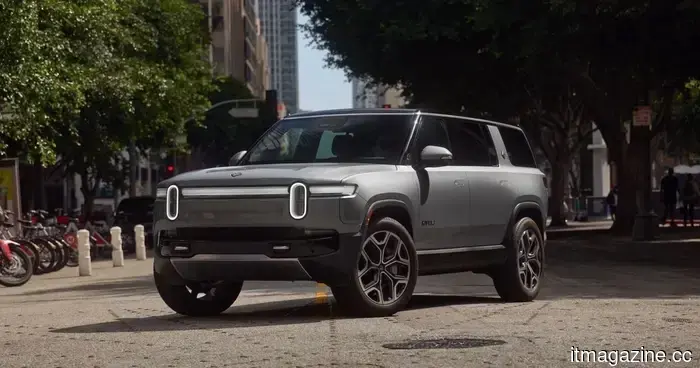 Rivian updates its 2027 R1 series with new trim options and a significant enhancement in seating.
The 2027 Rivian R1S now includes optional captain's chairs, and the entire R1 series features streamlined trims along with a new Esker Silver paint choice.
Rivian updates its 2027 R1 series with new trim options and a significant enhancement in seating.
The 2027 Rivian R1S now includes optional captain's chairs, and the entire R1 series features streamlined trims along with a new Esker Silver paint choice.
 Nvidia's GeForce Now concludes its beta phase on Linux, featuring enhanced cloud gaming performance.
Nvidia's GeForce NOW native Linux application has officially left beta after seven months, introducing quicker streaming, support for Chromebooks, and the addition of nine new cloud games.
Nvidia's GeForce Now concludes its beta phase on Linux, featuring enhanced cloud gaming performance.
Nvidia's GeForce NOW native Linux application has officially left beta after seven months, introducing quicker streaming, support for Chromebooks, and the addition of nine new cloud games.
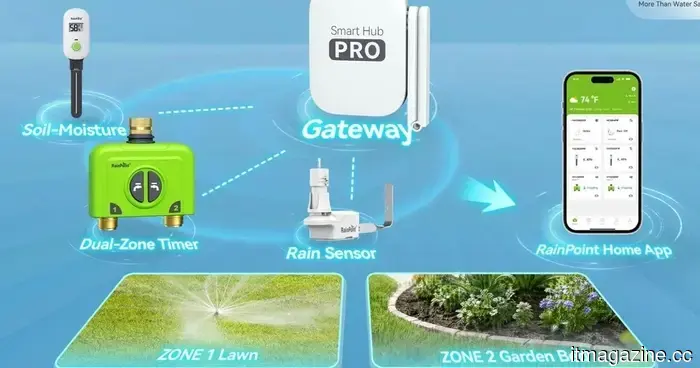 From Timers to Networks: Insights on Outdoor Automation Offered by Connected Irrigation
Watering a lawn or garden has typically depended on fixed schedules that may not accurately represent the current circumstances. Connected irrigation systems aim to overcome this challenge by integrating timers with environmental sensors and centralized software. An example of this is RainPoint’s smart garden system, which illustrates how manufacturers are linking timers and environmental components...
From Timers to Networks: Insights on Outdoor Automation Offered by Connected Irrigation
Watering a lawn or garden has typically depended on fixed schedules that may not accurately represent the current circumstances. Connected irrigation systems aim to overcome this challenge by integrating timers with environmental sensors and centralized software. An example of this is RainPoint’s smart garden system, which illustrates how manufacturers are linking timers and environmental components...
 Nvidia's GeForce Now leaves beta on Linux, showcasing enhanced cloud gaming performance.
After seven months in beta, Nvidia's GeForce NOW native Linux app has officially launched, featuring improved streaming speed, support for Chromebooks, and the addition of nine new cloud games.
Nvidia's GeForce Now leaves beta on Linux, showcasing enhanced cloud gaming performance.
After seven months in beta, Nvidia's GeForce NOW native Linux app has officially launched, featuring improved streaming speed, support for Chromebooks, and the addition of nine new cloud games.
 Anthropic's $2 trillion IPO is set at a price lower than the current valuations of AI stocks.
Six investors informed the FT that they anticipate a $2 trillion IPO for Anthropic in October. Based on the revenue previously reported by Anthropic, this represents 43 times its sales.
Anthropic's $2 trillion IPO is set at a price lower than the current valuations of AI stocks.
Six investors informed the FT that they anticipate a $2 trillion IPO for Anthropic in October. Based on the revenue previously reported by Anthropic, this represents 43 times its sales.
GM and LG have resumed battery production in Ohio after a seven-month pause.
Ultium Cells is resuming production of EV cells in Warren, Ohio, following a seven-month pause due to the conclusion of the $7,500 federal tax credit.