

France's ban on social media for those under 15 has been overturned just two weeks before its implementation.
The ruling came roughly two weeks before the anticipated start date of the ban, as reported by Bloomberg. From September 1, platforms were required to cease account creation for users under 15. The law received final approval from Parliament on July 21, which was covered in the news at that time.
The Council's decision
The Council annulled the ban on the grounds of freedom of expression, concluding that the restriction constituted “une atteinte qui n’est pas adaptée, nécessaire et proportionnée,” as reported by Brut. In English, this translates to an infringement that is not appropriately suited, necessary, or proportionate to the intended objective.
The Council highlighted the broad scope of the ban as a significant issue. It noted that the prohibition applied to services where “les risques pour la santé et la sécurité des mineurs (…) ne sont pas établis,” indicating that the risks to the health and safety of minors had not been demonstrated. Privacy concerns were the second reason for the ruling, as the Council determined that the legislator had not provided adequate legal protections for private life regarding age verification.
What the law would have entailed
Article 1 encompassed a wide array of services, including TikTok, Snapchat, X, Instagram, YouTube's social features, messaging apps like WhatsApp and Messenger, and various online games. The breadth of the article allowed for the ruling, as it required justification across services with differing records, and the Council found that the evidence did not support such a broad application. The text did not identify specific platforms and applied to services fitting the definition of a social network as per France’s 2004 digital confidence law.
According to parliamentary channel LCP, the timeline included two key dates: new accounts were to be prohibited starting September 1, followed by a four-month transition period for existing accounts ending on January 1, 2027. Exemptions included online encyclopedias, educational directories, and open-source educational software.
What remains
Schools are not impacted by this ruling, and the smartphone ban for lycées will still take effect on September 1. This decision was procedural rather than substantive, focusing solely on Article 1, so the rest of the law was unaffected. The education minister defended this provision on the grounds of attention and concentration. Primary and secondary schools already had bans in place, and the law extends this to sixth-form level.
Who initiated the challenge
In July, La France Insoumise referred the law to the Council, as reported by Generation-NT. The party argued based on two constitutional grounds. The first pertained to freedom of expression and communication, asserting that the broad and absolute nature of the ban constituted a disproportionate restriction. The second ground was privacy, referencing the 1789 Declaration, both of which were acknowledged in the decision. LFI also contended that the ban treated dissimilar entities as if they were the same, emphasizing that social platforms promote socialization, access to information, and civic engagement, and that different services present varying risks.
Changes prior to enforcement
The law considered by the Council had already been weakened from its original form. Parliament removed the age-verification requirement before the final vote, as reported by TechTimes. The initial proposal mandated platforms to submit age verification strategies to Arcom, the audiovisual regulator, for approval by September 1, but this requirement was eliminated, along with Arcom’s authority to impose measures on platforms that failed to comply with the deadline. Additionally, a section revising the penal code regarding parental negligence was also discarded, leaving the adopted law without specified penalties.
Verification was left to the discretion of the platforms, contingent upon approval from CNIL, the privacy regulator. No specific method of verification was mandated, meaning options such as document verification, facial age estimation, or other methods could have potentially qualified.
The government's perspective
Ministers framed the law as a measure for child protection rather than an infringement on free speech, positioning the ban as central to their digital policy for the school year. Polling data supported this viewpoint, with a study from Arcom in July revealing that over two-thirds of 10 to 14-year-olds favored the ban, according to reports about the decision.
French media characterized the ruling as a setback for President Emmanuel Macron, who had publicly supported the measure and advocated for the September start date.
Comparisons with other bans
Australia is often referenced in discussions of these issues, particularly regarding penalties. Its under-16 ban includes fines up to A$49.5 million, with a study conducted six months later indicating that 85% of that age group still utilized the platforms. In contrast, France's proposed approach sought to achieve similar objectives without including fines in the legislative text. Enforcement would have relied on the EU Digital Services Act, which allows for penalties of up to 6% of global turnover, though this framework has not yet resulted in any child safety penalties, as noted by TechTimes. The European Commission has initiated cases without concluding compliance
Other articles
 The ban on social media for individuals under 15 in France has been overturned just two weeks before it was set to take effect.
France's prohibition on social media for those under 15 was dismissed by the Constitutional Council, just two weeks prior to its implementation. However, the ban on phones in schools remains intact.
The ban on social media for individuals under 15 in France has been overturned just two weeks before it was set to take effect.
France's prohibition on social media for those under 15 was dismissed by the Constitutional Council, just two weeks prior to its implementation. However, the ban on phones in schools remains intact.
 Five of Europe's largest companies have just purchased computing resources that Mistral has not developed.
ASML, Amadeus, Capgemini, Caisse des Dépôts, and CMA CGM are supporting the construction of the Mistral data centre by purchasing multi-year computing units that are not currently available.
Five of Europe's largest companies have just purchased computing resources that Mistral has not developed.
ASML, Amadeus, Capgemini, Caisse des Dépôts, and CMA CGM are supporting the construction of the Mistral data centre by purchasing multi-year computing units that are not currently available.
 Bid farewell to Chronicle. ChatGPT's new Computer History feature outperforms it.
The desktop app for ChatGPT has introduced Computer History, a more private and screenshot-free enhancement of Chronicle that transforms your daily activities into a searchable timeline.
Bid farewell to Chronicle. ChatGPT's new Computer History feature outperforms it.
The desktop app for ChatGPT has introduced Computer History, a more private and screenshot-free enhancement of Chronicle that transforms your daily activities into a searchable timeline.
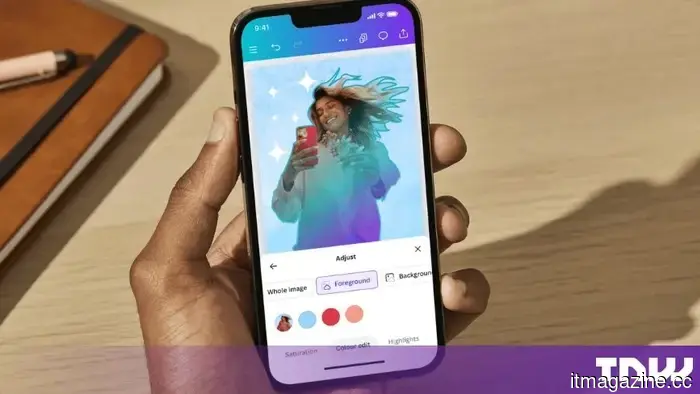 Canva's supporters have reduced its valuation by $7.1 billion, while its internal valuator made an even larger cut.
Blackbird and Airtree reduced Canva's valuation to $34.9 billion, and Canva's internal assessment also dropped further, following a revenue downgrade due to AI expenses.
Canva's supporters have reduced its valuation by $7.1 billion, while its internal valuator made an even larger cut.
Blackbird and Airtree reduced Canva's valuation to $34.9 billion, and Canva's internal assessment also dropped further, following a revenue downgrade due to AI expenses.
 Trump's tariffs on drones hit 100%, while Europe's are limited to 15%.
Trump's drone tariffs have been set at 100% for drones weighing over 25kg and for thermal imaging models. Starting from September 3, the EU will have a cap of 15% and the UK will have a cap of 10%.
Trump's tariffs on drones hit 100%, while Europe's are limited to 15%.
Trump's drone tariffs have been set at 100% for drones weighing over 25kg and for thermal imaging models. Starting from September 3, the EU will have a cap of 15% and the UK will have a cap of 10%.
 Bid farewell to Chronicle. ChatGPT's new Computer History feature surpasses it.
The desktop app for ChatGPT has introduced Computer History, a more private, screenshot-free enhancement to Chronicle that transforms your everyday activities into a searchable timeline.
Bid farewell to Chronicle. ChatGPT's new Computer History feature surpasses it.
The desktop app for ChatGPT has introduced Computer History, a more private, screenshot-free enhancement to Chronicle that transforms your everyday activities into a searchable timeline.
France's ban on social media for those under 15 has been overturned just two weeks before its implementation.
France's prohibition on social media for those under 15 has been rejected by the Constitutional Council, just two weeks before its implementation was set to begin. However, the ban on phones in schools remains in effect.