
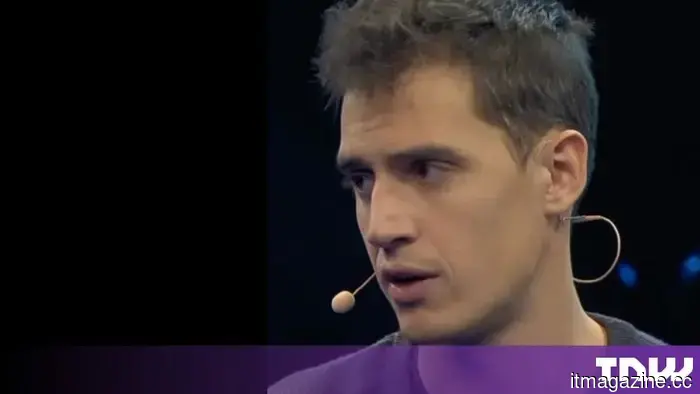
Five of Europe's largest companies have just purchased computing resources that Mistral has not developed.
Mistral presented its plan on 11 August, which encompasses three main components. Regional endpoints are now widely available, allowing customers to choose between Europe and the US for inference. Additionally, a Priority Tier is in public preview, offering custom rate limits and a commitment to uptime. The third component is the financing mechanism for the other two elements.
The concept of a European Compute Unit is introduced as a forward sale model, where enterprises invest money upfront, which then converts into multi-year access to future computing resources that Mistral will develop. Mistral labels these as European Compute Units, which customers can utilize across its computing offerings once the capacity is ready.
The partnership commitments are long-term, generally lasting about five years without early exit options, as explained by chief technology officer Timothée Lacroix to European Business Magazine. This arrangement allows Mistral to gauge demand it can finance against while buyers assume the delivery risks associated with infrastructure that is largely still in the planning stage.
According to a report by Sifted, five companies constitute what Mistral calls its anchor group: ASML from the Netherlands, Amadeus from Spain, Capgemini and Caisse des Dépôts from France, and the shipping firm CMA CGM. The announcement includes representation from each firm's chief executive: Christophe Fouquet for ASML, Luis Maroto for Amadeus, Aiman Ezzat for Capgemini, Olivier Sichel for Caisse des Dépôts, and Rodolphe Saadé for CMA CGM. Fouquet emphasized the importance of supporting scale, stating that Mistral is rising to this challenge with ambition and resilience.
Caisse des Dépôts deserves special mention as it is a French state financial institution, signifying state involvement as one of the five anchor clients.
ASML has a dual role as both a customer and an investor. The Dutch firm led a €1.7 billion funding round for Mistral in September 2025, valuing the company at €11.7 billion, and has now committed to purchasing the computing capacity that this investment will help create. Both pieces of information are publicly available. This context alters the interpretation of the demand signal; an order from an investor carries less insight about the open market compared to one from a different entity.
Microsoft also made a separate commitment three weeks earlier, aimed at funding Nvidia Vera Rubin chips for Mistral's European capacity without gaining an equity stake.
Regarding the infrastructure build-out, the target is to reach a capacity of up to 1GW by 2030, with approximately 200MW expected by the end of 2027. Arthur Mensch previously estimated that achieving a gigawatt of computing capacity would require around $50 billion in investment. The first facility is smaller than this overall goal, providing only 44MW near Paris and supported by an $830 million loan. The achievement of 1,000MW hinges on the project's successful execution, with everything bought by the anchor group dependent on this development.
Mistral is already working on other projects, as noted by DatacenterDynamics. A 40MW GPU cluster is operational in the Paris area at an Eclairion facility managed by Scaleway. In collaboration with partners including Bpifrance, the UAE fund MGX, and Nvidia, Mistral is considering a larger 1.4GW site in the same region, potentially starting in 2028.
Mistral will also host external open models on the same infrastructure, adhering to the same regional regulations. The first model to be introduced is GLM-5.2 from the Beijing-based Z.ai, which has a context window of one million tokens and costs $1.40 per million input tokens. Z.ai has made GLM-5.2 available as open weights without usage limitations. Mistral asserts that the infrastructure layer is more critical than any individual model, allowing customers to use open models without needing to restart whenever they change providers. Matan Grinberg, CEO of Factory, highlighted Mistral's ability to run open models with strict regional controls and service assurances.
The term "sovereignty" in this context refers to jurisdiction over where the model weights are executed, not their origin. These matters are distinct, and the announcement emphasizes the first point.
Europe has been engaged in a similar discussion for two years, with Mistral cautioning that American service providers could potentially cut off European clients—a situation referred to as a sovereignty moment. The opposing viewpoint suggests that renting GPU capacity creates a false sense of sovereignty while the chips remain American. Owning the infrastructure addresses part of this concern but not entirely, as Mistral will utilize Nvidia silicon within European facilities governed by European law.
Real physical limitations also exist. Research conducted this summer identified challenges such as power availability, planning delays, construction costs, and skill shortages that could hinder Europe’s data center ambitions. These challenges apply to Mistral in the same way they
Other articles
 The co-founder of Arm states that AI will generate more value than any previous revolution and predicts it will be a thrilling ride.
Hermann Hauser, co-founder of Arm, believes that AI will generate greater value than any previous revolution, though he cautions that certain valuations have become overly inflated.
The co-founder of Arm states that AI will generate more value than any previous revolution and predicts it will be a thrilling ride.
Hermann Hauser, co-founder of Arm, believes that AI will generate greater value than any previous revolution, though he cautions that certain valuations have become overly inflated.
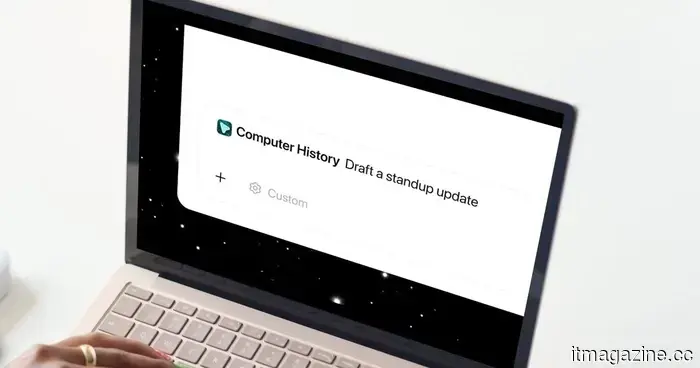 Bid farewell to Chronicle. ChatGPT's new Computer History feature surpasses it.
The desktop app for ChatGPT has introduced Computer History, a more private, screenshot-free enhancement to Chronicle that transforms your everyday activities into a searchable timeline.
Bid farewell to Chronicle. ChatGPT's new Computer History feature surpasses it.
The desktop app for ChatGPT has introduced Computer History, a more private, screenshot-free enhancement to Chronicle that transforms your everyday activities into a searchable timeline.
 A judge has instructed Google to ease the installation of competing app stores.
The compliance order from Epic v Google allows Google one week to eliminate the additional taps and warning screens that hinder the installation of competing Android app stores.
A judge has instructed Google to ease the installation of competing app stores.
The compliance order from Epic v Google allows Google one week to eliminate the additional taps and warning screens that hinder the installation of competing Android app stores.
 A judge has instructed Google to cease complicating the installation of competing app stores.
The compliance order from Epic v. Google allows Google one week to eliminate the additional taps and warning screens that hinder the installation of competing Android app stores.
A judge has instructed Google to cease complicating the installation of competing app stores.
The compliance order from Epic v. Google allows Google one week to eliminate the additional taps and warning screens that hinder the installation of competing Android app stores.
 Trump's tariffs on drones hit 100%, while Europe's are limited to 15%.
Trump's drone tariffs have been set at 100% for drones weighing over 25kg and for thermal imaging models. Starting from September 3, the EU will have a cap of 15% and the UK will have a cap of 10%.
Trump's tariffs on drones hit 100%, while Europe's are limited to 15%.
Trump's drone tariffs have been set at 100% for drones weighing over 25kg and for thermal imaging models. Starting from September 3, the EU will have a cap of 15% and the UK will have a cap of 10%.
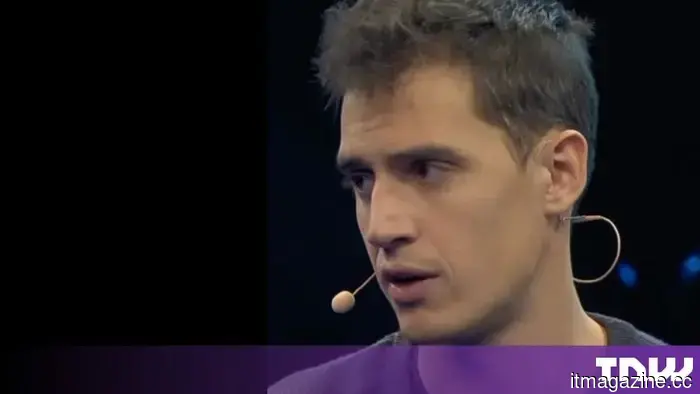 Five of the largest companies in Europe have recently acquired computing resources that Mistral has not developed.
ASML, Amadeus, Capgemini, Caisse des Dépôts, and CMA CGM are supporting the expansion of the Mistral data centre by purchasing multi-year computing units that are currently unavailable.
Five of the largest companies in Europe have recently acquired computing resources that Mistral has not developed.
ASML, Amadeus, Capgemini, Caisse des Dépôts, and CMA CGM are supporting the expansion of the Mistral data centre by purchasing multi-year computing units that are currently unavailable.
Five of Europe's largest companies have just purchased computing resources that Mistral has not developed.
ASML, Amadeus, Capgemini, Caisse des Dépôts, and CMA CGM are supporting the construction of the Mistral data centre by purchasing multi-year computing units that are not currently available.