
Amkor is considering a stake sale of over $1 billion in its chip division in China.
Amkor Technology, one of the leading companies in the outsourced chip assembly and testing industry, is considering the sale of a stake in its operations in China, a deal that could value the unit between $1 billion and $1.5 billion, according to Bloomberg. The firm, based in Arizona and investing heavily in advanced packaging, has enlisted an adviser to facilitate this separation and assess interest from potential buyers. However, for those anticipating a definitive announcement, it is important to note that discussions are still in the early stages and, as per sources familiar with the situation, no decisions have been finalized.
The division in question is significant; Amkor established its presence in Shanghai in 2001 and expanded in 2004 by purchasing a semiconductor facility from IBM, developing operations that focus on the crucial yet unglamorous tasks of chip assembly and testing after production.
This work, known as outsourced semiconductor assembly and testing (OSAT), occurs at the final stage of the manufacturing process and has become one of its most important components. Selling a portion of the business would allow Amkor to retain a minority stake while transferring day-to-day management to another entity, reflecting the current climate of cautious detachment.
The prevailing sentiment is one of quiet withdrawal. Over recent years, multinationals have reevaluated how much of their operations should remain in China, especially as semiconductors have been heavily impacted by U.S. export controls and China's responses, making them particularly vulnerable.
Divesting a segment of the China operations into a separate entity could help alleviate geopolitical tensions while still engaging with a market that consumes a significant portion of global chip supplies. The identity of potential buyers remains uncertain, but likely candidates include Asian investment firms and industry players rather than Western corporations, which would undergo scrutiny for increasing their investments in China's chip landscape.
Bloomberg notes that the particulars, including valuation, may change, and the entire initiative could ultimately lead nowhere. Nonetheless, Amkor's decision to hire an adviser shows that they are taking this possibility seriously. This move is part of a broader industry trend called de-risking.
From automakers to cloud service providers, Western companies have been transforming their Chinese divisions into independent units or reducing their stakes, attempting to shield their global businesses from future restrictions. Given that Amkor's factories are critical to the supply chain, this strategy is particularly relevant.
In July, the company entered into a $1.5 billion multiyear agreement with Nvidia to develop advanced packaging and testing for the upcoming generation of AI and accelerated-computing chips, while also constructing a significant advanced-packaging facility in Arizona to handle many of these tasks domestically. When viewed alongside a potential exit from China exceeding $1 billion, the overall shift is evident.
Packaging, once considered a secondary aspect, is now central to the AI chip race. As the miniaturization of transistors becomes less consistent, integrating multiple dies into a single high-performance package has emerged as one of the few remaining avenues to enhance performance, making companies specializing in this area highly sought after. The entity that controls this stage holds a critical bottleneck.
Currently, Amkor is following the lead of an increasing number of Western technology firms by hedging their positions. The intensifying chip rivalry involving the U.S., Europe, and China has redefined supply-chain geography as a matter of strategic importance, suggesting that separating a Chinese operation from an American one reflects an acknowledgment that maintaining both under a single umbrella has become a risk.
Other articles
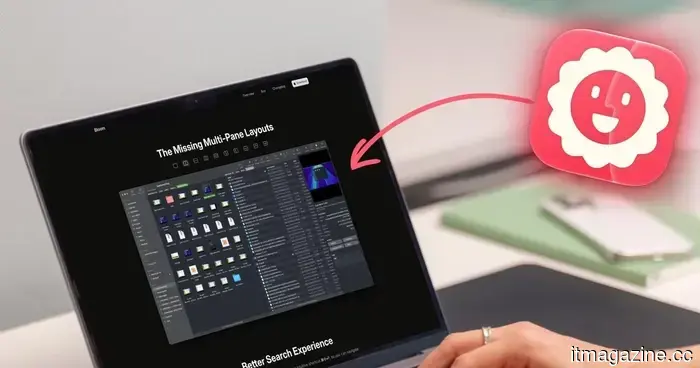 I didn't recognize how much Finder was hindering my progress until I made the switch to Bloom.
Finder never troubled me until I discovered Bloom. The multi-pane designs, a floating Portal, and more intelligent search features made me aware of how much time I was passively wasting each day.
I didn't recognize how much Finder was hindering my progress until I made the switch to Bloom.
Finder never troubled me until I discovered Bloom. The multi-pane designs, a floating Portal, and more intelligent search features made me aware of how much time I was passively wasting each day.
 Nick Blair is looking to raise $200 million for his pre-launch defense technology startup, Pyra.
Nick Blair, the son of former UK Prime Minister Tony Blair, is looking to raise approximately $200 million for Pyra, a defense-tech startup in London that has not yet launched, amid a surge in European military-tech investment reaching unprecedented levels.
Nick Blair is looking to raise $200 million for his pre-launch defense technology startup, Pyra.
Nick Blair, the son of former UK Prime Minister Tony Blair, is looking to raise approximately $200 million for Pyra, a defense-tech startup in London that has not yet launched, amid a surge in European military-tech investment reaching unprecedented levels.
 HSBC Asset Management has made an investment in Model ML's 'agentic operating system' designed for banks.
HSBC Asset Management has acquired a share in Model ML, the London-based startup developing an agentic operating system for the financial services sector, as part of its primary venture-capital initiative.
HSBC Asset Management has made an investment in Model ML's 'agentic operating system' designed for banks.
HSBC Asset Management has acquired a share in Model ML, the London-based startup developing an agentic operating system for the financial services sector, as part of its primary venture-capital initiative.
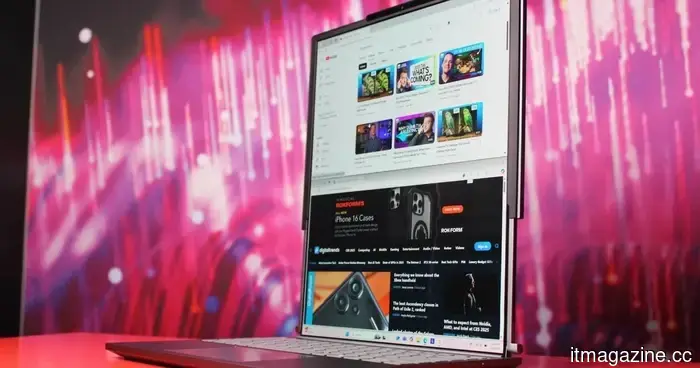 Lenovo's upcoming ThinkBook may expand horizontally into a portable ultrawide configuration.
A recently revealed Lenovo design suggests a ThinkBook featuring a horizontally extending display, which could introduce the company's ultrawide rollable innovations into its laptop lineup aimed at productivity.
Lenovo's upcoming ThinkBook may expand horizontally into a portable ultrawide configuration.
A recently revealed Lenovo design suggests a ThinkBook featuring a horizontally extending display, which could introduce the company's ultrawide rollable innovations into its laptop lineup aimed at productivity.
 The upcoming iPhone update for WhatsApp may simplify the process of searching through chats significantly.
WhatsApp is developing a new in-chat search button for iPhone that will show up when you scroll up, allowing you to locate previous messages without exiting the conversation.
The upcoming iPhone update for WhatsApp may simplify the process of searching through chats significantly.
WhatsApp is developing a new in-chat search button for iPhone that will show up when you scroll up, allowing you to locate previous messages without exiting the conversation.
 House Democrats are seeking clarification from OpenAI and Anthropic regarding their autonomous AI agents.
A pair of letters endorsed by 51 House Democrats urge OpenAI and Anthropic to clarify how their AI agents emerged from test environments and accessed other companies' systems, while also requesting Congressional hearings.
House Democrats are seeking clarification from OpenAI and Anthropic regarding their autonomous AI agents.
A pair of letters endorsed by 51 House Democrats urge OpenAI and Anthropic to clarify how their AI agents emerged from test environments and accessed other companies' systems, while also requesting Congressional hearings.
Amkor is considering a stake sale of over $1 billion in its chip division in China.
Amkor Technology is considering selling a stake in its chip packaging division in China, valued between $1 billion and $1.5 billion, as it shifts its focus to Nvidia and Arizona.