
Amkor is considering a stake sale of over $1 billion in its Chinese chip division.
Amkor Technology, one of the largest companies globally for outsourced chip assembly and testing, is considering selling a stake in its China operations, potentially valuing the unit between $1 billion and $1.5 billion, as reported by Bloomberg.
The Arizona-based firm, which has been investing significant amounts in advanced packaging, has engaged an adviser to facilitate the potential carveout and assess buyer interest. However, those anticipating a definitive announcement should be aware that discussions are still in the early stages, and, according to sources familiar with the situation, no decisions have been finalized.
The division in question is not a trivial segment. Amkor first established itself in Shanghai in 2001 and expanded in 2004 by acquiring a semiconductor facility from IBM, developing an operation that performs the crucial, albeit unglamorous, tasks of assembling and testing chips post-fabrication.
This process, termed outsourced semiconductor assembly and testing (OSAT), is at the final stage of manufacturing but has evolved into one of the most significant steps.
By selling part of the business, Amkor could maintain a minority stake while transferring day-to-day control to another entity, a structure that aligns with the current atmosphere.
This atmosphere is characterized by a gradual retreat. Over recent years, multinationals have been reevaluating the extent of their operations in China, and the semiconductor industry, caught in the middle of export controls from Washington and counteractions from Beijing, is particularly vulnerable.
Separating the Chinese operations into an independently owned entity is one strategy to alleviate geopolitical tensions while retaining access to a market that still represents a substantial portion of global chip consumption.
The potential buyers remain uncertain, but the most likely candidates are Asian investment firms and industry participants rather than Western strategic investors, who would likely face scrutiny for acquiring significant stakes in Chinese chip infrastructure.
Bloomberg warns that the details, including valuation, may change and that the entire process may not materialize. Nevertheless, Amkor’s decision to hire an adviser indicates that the proposal is being seriously considered.
This move is also part of a broader trend in the industry known as de-risking. Companies across various sectors, from automotive to cloud services, have been turning their Chinese divisions into standalone entities or reducing their stakes to protect their global operations from potential future restrictions.
For a company with factories that are vital components in the supply chain, this logic becomes even more pronounced. In July, the company entered into a $1.5 billion multi-year agreement with Nvidia to advance packaging and testing for the next generation of AI and accelerated computing chips, while also constructing a large advanced-packaging facility in Arizona to handle much of this work domestically.
Against the backdrop of a potential $1 billion-plus exit from China, the trend is clear. Packaging, which was once secondary, is now at the forefront of the AI chip competition. As the ability to shrink transistors becomes less reliable, integrating multiple dies into a single high-performance package is one of the few remaining methods to enhance performance, leading firms specializing in this area to become increasingly sought after. Controlling this stage equates to managing a significant bottleneck.
Currently, Amkor is aligning with a growing number of Western tech firms that are adopting a hedging strategy. The intensifying chip conflict among the United States, Europe, and China has transformed supply chain geography into a strategic consideration, so detaching a Chinese operation from an American one is less a commitment to either side and more a recognition that keeping both together has become a risk.
Other articles
 Microsoft has discovered yet another method to increase the cost of PCs, as if they weren't already expensive enough.
PC prices are on the rise again. Microsoft recently increased Windows licensing fees by as much as 10%, which adds to the higher costs of memory and CPUs.
Microsoft has discovered yet another method to increase the cost of PCs, as if they weren't already expensive enough.
PC prices are on the rise again. Microsoft recently increased Windows licensing fees by as much as 10%, which adds to the higher costs of memory and CPUs.
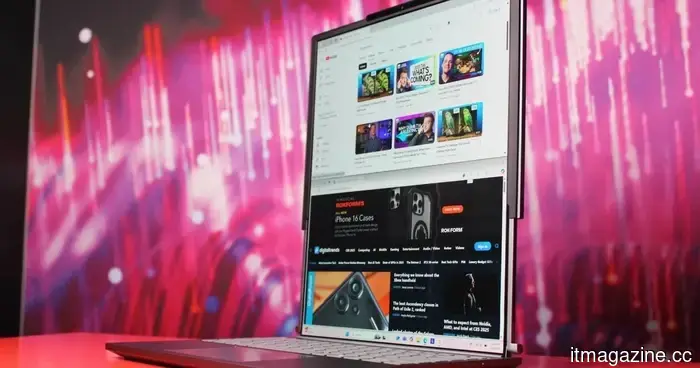 Lenovo's upcoming ThinkBook may expand horizontally into a portable ultrawide configuration.
A recently revealed Lenovo design suggests a ThinkBook featuring a horizontally extending display, which could introduce the company's ultrawide rollable innovations into its laptop lineup aimed at productivity.
Lenovo's upcoming ThinkBook may expand horizontally into a portable ultrawide configuration.
A recently revealed Lenovo design suggests a ThinkBook featuring a horizontally extending display, which could introduce the company's ultrawide rollable innovations into its laptop lineup aimed at productivity.
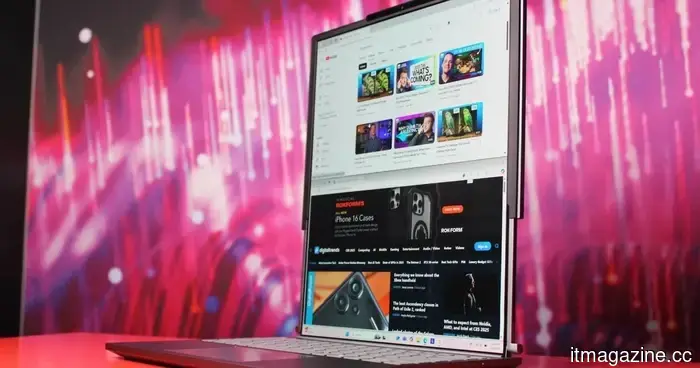 Lenovo's upcoming ThinkBook may expand to feature a portable ultrawide configuration.
A recently revealed Lenovo design suggests a ThinkBook featuring a horizontally extending display, possibly introducing the company's ultrawide rollable innovations into its productivity-oriented laptop range.
Lenovo's upcoming ThinkBook may expand to feature a portable ultrawide configuration.
A recently revealed Lenovo design suggests a ThinkBook featuring a horizontally extending display, possibly introducing the company's ultrawide rollable innovations into its productivity-oriented laptop range.
 HSBC Asset Management has invested in Model ML's 'agentic operating system' designed for banks.
HSBC Asset Management has invested in Model ML, a London-based startup developing an agentic operating system for financial services, as part of its main venture-capital strategy.
HSBC Asset Management has invested in Model ML's 'agentic operating system' designed for banks.
HSBC Asset Management has invested in Model ML, a London-based startup developing an agentic operating system for financial services, as part of its main venture-capital strategy.
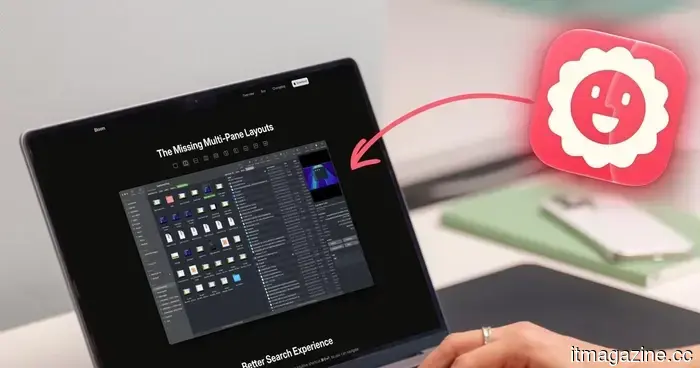 I didn't notice how much Finder was hindering my productivity until I made the switch to Bloom.
Finder never caused me any trouble until I started using Bloom. The multi-pane layouts, a floating Portal, and more efficient search made me recognize how much time I had been quietly wasting each day.
I didn't notice how much Finder was hindering my productivity until I made the switch to Bloom.
Finder never caused me any trouble until I started using Bloom. The multi-pane layouts, a floating Portal, and more efficient search made me recognize how much time I had been quietly wasting each day.
 The upcoming iPhone update for WhatsApp may simplify the process of searching through chats significantly.
WhatsApp is developing a new in-chat search button for iPhone that will show up when you scroll up, allowing you to locate previous messages without exiting the conversation.
The upcoming iPhone update for WhatsApp may simplify the process of searching through chats significantly.
WhatsApp is developing a new in-chat search button for iPhone that will show up when you scroll up, allowing you to locate previous messages without exiting the conversation.
Amkor is considering a stake sale of over $1 billion in its Chinese chip division.
Amkor Technology is considering selling a stake in its chip packaging division in China, valuing the unit between $1 billion to $1.5 billion, as it shifts its focus and investment towards Nvidia and Arizona.