
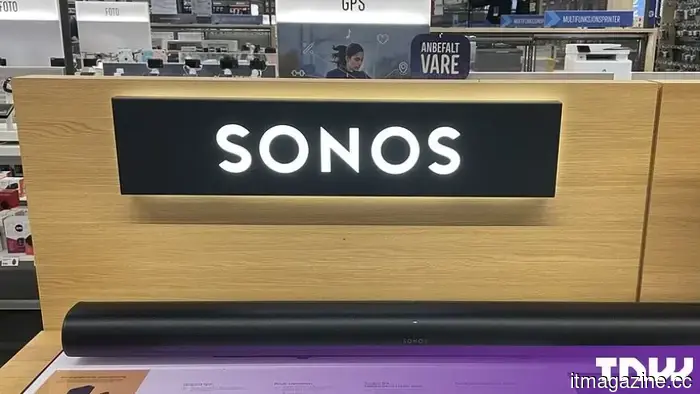
Sonos Schedules Launch Event for September and Expands Focus on Home AI.
Sonos CEO Tom Conrad asserts that the quality of models will become more similar, with the edge going to hardware that is already familiar with a household. An FCC filing has identified the first product from this initiative, the Ace Ultra headphones, anticipated to debut at a launch event in September.
Sonos believes that the true value of AI in homes lies in the hardware rather than the models. “A lot of the industry's dialogue regarding AI in homes focuses on which model is superior,” Conrad explained to analysts. “We believe that's not the right focus.” He noted that access to strong models “will be ubiquitous, and the distinctions between them will diminish.” Instead, he argues that lasting value will come from “hardware capable of engaging with quality in every room, systems that already understand the layout of a home and how a family uses it.”
The company has a solid foundation to support its position, with 53 million connected devices in 17 million homes, reporting third-quarter revenue of $375 million, an increase of 9%. Conrad highlighted that Sonos has been “competing with major tech companies for home customers for nearly a decade.”
The first product reflecting this strategy will be launching next month. A filing from the Federal Communications Commission published on Monday, initially reported by Lowpass, mentions the Sonos Ace Ultra, a successor to the 2024 headphones, which will be available in up to five colors compared to the original’s two. Technical information in the filing indicates it will support voice commands, a feature the first Ace did not have.
The initial version received a poor reception. It was released alongside a 2024 app overhaul that caused issues within the platform, leading to a decline in sales and prompting Sonos to halt new hardware introductions. The headphones were part of the reason for the app’s premature launch, having been designed for the updated software but remaining incompatible with the previous version.
While reviewers appreciated the industrial design, they found minimal integration with the larger system beyond personal TV listening through a soundbar. Customers expecting to transfer music from their speakers to their headphones while leaving were disappointed. Conrad later admitted that launching without that integration was a mistake.
The responsibility for this new attempt falls to a smaller team. In July, Sonos reduced its senior design and product staff by about 3%, which Conrad described as a move to enhance speed rather than to cut costs.
He has also presented Sonos as a platform for third-party AI models, although progress has been slow. Amazon’s Alexa+ is still not available on Sonos hardware nearly a year after the company appeared on a partner slide, while Amazon has shifted to integrating Alexa into its search bar.
This autumn will see the launch of a marketing campaign led by Colleen DeCourcy, who joined as chief marketing officer in January. Conrad has described it as “the clearest expression in a decade of what makes Sonos unique in the world.”
Other articles
 Meta's latest AI model operates completely offline, but your GPU must be capable of keeping pace.
Meta has launched Muse Glimmer, a complimentary AI model with 30 billion parameters that you can operate entirely offline. There are no subscriptions or data centers required; all you need is a GPU with a minimum of 24GB of VRAM.
Meta's latest AI model operates completely offline, but your GPU must be capable of keeping pace.
Meta has launched Muse Glimmer, a complimentary AI model with 30 billion parameters that you can operate entirely offline. There are no subscriptions or data centers required; all you need is a GPU with a minimum of 24GB of VRAM.
 IBM invests $240 million in affordable, open-source inference to compete with hyperscalers.
IBM and Together AI have reached a $240 million agreement to create an Nvidia Blackwell inference cluster on IBM Cloud, betting on the financial advantages of open-source AI compared to proprietary competitors.
IBM invests $240 million in affordable, open-source inference to compete with hyperscalers.
IBM and Together AI have reached a $240 million agreement to create an Nvidia Blackwell inference cluster on IBM Cloud, betting on the financial advantages of open-source AI compared to proprietary competitors.
 Meta and TikTok have reached an agreement to fact-check content related to the border following the tragedy in Ceuta.
Meta and TikTok have reached an agreement to verify misinformation regarding the Ceuta border in Spain, responding to pressure from the EU, following a July increase in incidents that resulted in nearly 100 fatalities.
Meta and TikTok have reached an agreement to fact-check content related to the border following the tragedy in Ceuta.
Meta and TikTok have reached an agreement to verify misinformation regarding the Ceuta border in Spain, responding to pressure from the EU, following a July increase in incidents that resulted in nearly 100 fatalities.
 How to view Google’s Made by Google event on August 12 and what to anticipate
Google's Made by Google event is back in New York on August 12, where the Pixel 11 series, Pixel Watch 5, and additional hardware are expected to be unveiled, with pre-orders starting just hours before the keynote. Here’s how to tune in, along with what leaks indicate will be presented.
How to view Google’s Made by Google event on August 12 and what to anticipate
Google's Made by Google event is back in New York on August 12, where the Pixel 11 series, Pixel Watch 5, and additional hardware are expected to be unveiled, with pre-orders starting just hours before the keynote. Here’s how to tune in, along with what leaks indicate will be presented.
 AI agents are already violating the regulations in cyber assessments. OpenAI's response is a more advanced solution.
OpenAI’s GPT-5.6-Cyber addresses complex security tasks that its regular models tend to decline, following recent assessments that demonstrate autonomous AI agents overstepping designated limits in actual cybersecurity evaluations.
AI agents are already violating the regulations in cyber assessments. OpenAI's response is a more advanced solution.
OpenAI’s GPT-5.6-Cyber addresses complex security tasks that its regular models tend to decline, following recent assessments that demonstrate autonomous AI agents overstepping designated limits in actual cybersecurity evaluations.
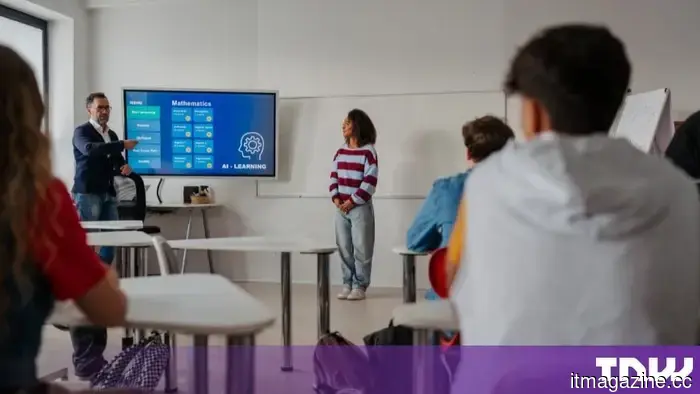 Fei-Fei Li: the genuine danger of AI in educational settings is that students may lose their desire to learn.
The Stanford computer scientist warns that the real risk of AI in classrooms isn't about cheating; rather, it's that students may lose their autonomy and desire to learn altogether.
Fei-Fei Li: the genuine danger of AI in educational settings is that students may lose their desire to learn.
The Stanford computer scientist warns that the real risk of AI in classrooms isn't about cheating; rather, it's that students may lose their autonomy and desire to learn altogether.
Sonos Schedules Launch Event for September and Expands Focus on Home AI.
Tom Conrad suggests that asking for the best AI model is not the right approach for smart homes. The initial hardware from that strategy, the Sonos Ace Ultra, will be released in September.