

Meta and TikTok have reached an agreement to fact-check content related to the border following the tragedy in Ceuta.
Meta and TikTok have reached an agreement to fact-check information regarding Spain’s border crossings, a voluntary commitment facilitated by Brussels following a tragedy that highlighted how swiftly a viral video can escalate into a life-threatening situation.
This agreement comes after the events of July 30, when over 70,000 migrants rushed towards Ceuta, the Spanish territory adjacent to Morocco, resulting in nearly 100 fatalities during the crossing attempts.
Viral videos propagated false assertions that the border was open or easily crossed, including clips from a Spanish news outlet that originally aimed to showcase the pressures of migration, but were taken out of context and repurposed to entice individuals to make the dangerous journey.
This scenario starkly illustrates a longstanding issue that regulators have struggled with for years, concerning disinformation campaigns and the way platforms promote content. The EU has increasingly held TikTok accountable, having already accused the app of not safeguarding children under the Digital Services Act.
The agreement was revealed by Henna Virkkunen, the EU’s technology chief, with Oscar Lopez, Spain’s digital economy minister, participating in the discussions aimed at prevention.
Under this arrangement, Meta and TikTok will establish what the Commission calls an “ad-hoc escalation and cooperation mechanism with fact-checkers,” essentially a crisis protocol to be activated when a situation intensifies.
Additionally, the platforms have consented to prohibit content related to human trafficking and to voluntarily block or downgrade problematic posts. Virkkunen articulated the objective clearly, stating the intention is to prevent “criminal networks from luring potential migrants to attempt the crossing with false information.”
The Commission and Europol are now engaged in daily talks with both companies, reflecting the seriousness with which officials regard the content surrounding the enclave.
What makes this agreement significant is not just its quick formation but its structure. Since the commitments are voluntary rather than enforced, the Commission isn’t using the DSA as a heavy-handed tool, although the law provides the context for the platforms' decision to collaborate.
This distinction is important because the same framework has sparked ongoing speculation about what conditions might lead the EU to ban TikTok outright, with a demonstration of goodwill being a more favorable outcome for all parties than conflict.
The irony at the heart of this situation is notable. Meta has spent recent years scaling back its reliance on third-party fact-checking, shifting to a Community Notes approach that relies on users over professional verifiers, a change interpreted as a concession to the altered political landscape in the United States.
Yet here, under pressure from Europe and in the context of a rising death toll, the company is consenting to a fact-checking process after all. Whether this signifies a genuine reconsideration or simply a strategic calculation by a firm eager to avoid testing Brussels’ tolerance remains uncertain.
The EU has increasingly asserted its authority over how platforms interact with their users, having previously reprimanded TikTok for treating minds as “not currency for social media” when it compelled the company to eliminate its Lite Rewards feature. The Ceuta agreement fits within a pattern of regulatory readiness to secure commitments before a situation escalates into legal action.
For now, the real test is whether a hastily put-together protocol can act more swiftly than a viral video. The Ceuta incident demonstrated that misinformation can outpace any moderation system designed for normal circumstances, and a mechanism meant to escalate during emergencies is only effective when it is activated.
The platforms have made their commitments, leaving the lingering question: what will happen the next time a clip goes viral, and how quickly will action be taken when lives are at stake?
Altri articoli
 An activist investor claims that the market has concluded that Lionsgate is a victim of AI. The investor is urging the studio to demonstrate otherwise or consider selling.
Anson Funds states that Lionsgate's stock declines whenever a new AI video model is released. The issue or solution may lie within its library of 20,000 titles.
An activist investor claims that the market has concluded that Lionsgate is a victim of AI. The investor is urging the studio to demonstrate otherwise or consider selling.
Anson Funds states that Lionsgate's stock declines whenever a new AI video model is released. The issue or solution may lie within its library of 20,000 titles.
 YouTube has just doubled the requirements for creators to begin earning money from ads.
YouTube is increasing its watch-time and Shorts-view thresholds for new creators aiming for ad revenue, significantly raising the bar for entry into its Partner Program starting in 2027.
YouTube has just doubled the requirements for creators to begin earning money from ads.
YouTube is increasing its watch-time and Shorts-view thresholds for new creators aiming for ad revenue, significantly raising the bar for entry into its Partner Program starting in 2027.
 Nvidia has halted its sole support for the AI surge, Saudi banks are unable to finance theirs, and 500 towns in the US have prohibited the construction of such facilities.
Nvidia enlisted Apollo, BlackRock, and KKR for a $500 billion financing initiative. Saudi banks are unable to finance their pipeline. In July, local bans in the US surpassed 500.
Nvidia has halted its sole support for the AI surge, Saudi banks are unable to finance theirs, and 500 towns in the US have prohibited the construction of such facilities.
Nvidia enlisted Apollo, BlackRock, and KKR for a $500 billion financing initiative. Saudi banks are unable to finance their pipeline. In July, local bans in the US surpassed 500.
 Italian researchers prepare a new solar instrument for a crucial eclipse experiment.
Italian scientists will evaluate a new spectrometer, CISS, on 12 August during the total solar eclipse in Spain, aiming for a quicker assessment of the Sun’s corona.
Italian researchers prepare a new solar instrument for a crucial eclipse experiment.
Italian scientists will evaluate a new spectrometer, CISS, on 12 August during the total solar eclipse in Spain, aiming for a quicker assessment of the Sun’s corona.
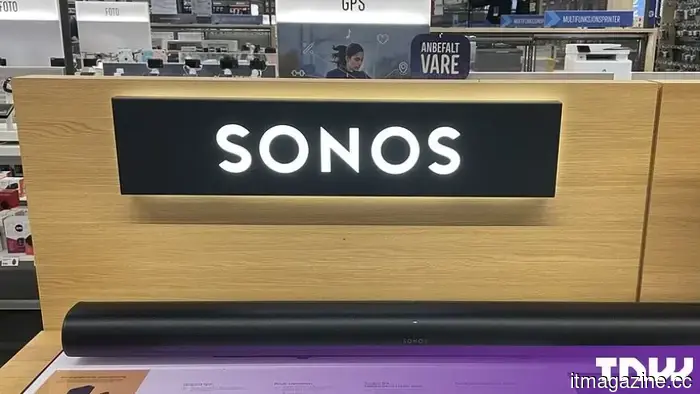 Sonos Schedules Launch Event for September and Expands Focus on Home AI.
Tom Conrad suggests that asking for the best AI model is not the right approach for smart homes. The initial hardware from that strategy, the Sonos Ace Ultra, will be released in September.
Sonos Schedules Launch Event for September and Expands Focus on Home AI.
Tom Conrad suggests that asking for the best AI model is not the right approach for smart homes. The initial hardware from that strategy, the Sonos Ace Ultra, will be released in September.
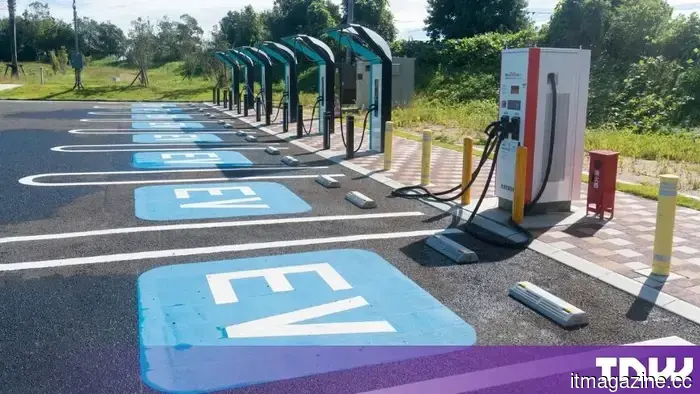 Tesla depleted its portion of California's new electric vehicle rebate in just five days.
Tesla depleted its allocation of California's new MyFirstEV rebate within five days, even though a price cap applies that excludes Rivian and Lucid but not Tesla.
Tesla depleted its portion of California's new electric vehicle rebate in just five days.
Tesla depleted its allocation of California's new MyFirstEV rebate within five days, even though a price cap applies that excludes Rivian and Lucid but not Tesla.
Meta and TikTok have reached an agreement to fact-check content related to the border following the tragedy in Ceuta.
Meta and TikTok have committed to fact-checking misinformation regarding Spain’s Ceuta border in response to pressure from the EU, following a surge in July that resulted in nearly 100 fatalities.