
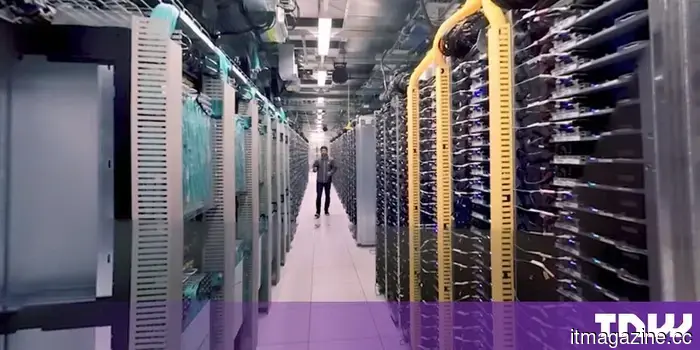
Texas puts the brakes on data centers it previously sought after.
For years, Texas promoted itself as the most convenient place in the United States to establish a data center. However, this week it initiated measures to complicate that process. Governor Greg Abbott, who proclaimed the state as the “epicenter of AI development” last year, has put a halt on new connections for data centers to the power grid. Each project in line must now undergo an audit before proceeding.
The reason behind this decision is significant. ERCOT, which manages the majority of the Texas grid, has amassed around 474 gigawatts of connection requests—over five times the state's highest recorded peak demand. Approximately 90% of those requests originate from data centers. In a directive aimed at regulators, Abbott expressed concerns that this load growth “could endanger the reliability and stability of the Texas electric grid.”
Details of the audit requirements
The audit requires information that had previously been unaccounted for. Every project is mandated to reveal details regarding any tax incentives utilized, their anticipated reliance on the grid, water usage and cooling methods, strategies to minimize noise and traffic, and the ownership of the project. Any project that does not pass the audit “must be denied,” according to the directive.
Abbott associated this decision with the failure of data centers to respond to a previous inquiry about water and power usage. Out of the 377 companies contacted by the utility commission, only 28 provided feedback, as reported by The Texas Tribune. Texas ranks as the second-largest data center market in the nation, following Virginia, hosting hundreds of operational facilities and more in the planning stages. Following the governor's directive, ERCOT has paused its review of the initial projects awaiting approval.
Limitations of the moratorium
The order is not as restrictive as an outright ban. It applies to projects seeking connections to the ERCOT grid, meaning that a data center generating its own power on-site can avoid both the audit and the queue. Some areas of the state, such as El Paso, are not part of ERCOT. Typically, on-site power generation relies on gas, which introduces its own issues of noise and pollution.
The political implications are pronounced. Abbott, a Republican up for re-election, faces criticism for not going far enough. Texas Agriculture Commissioner Sid Miller labeled the decision as “all hat and no cattle,” pushing for a special session. His Democratic opponent, Gina Hinojosa, referred to it as “another strongly worded letter” that is not credible. The Data Center Coalition, an industry organization, expressed cautious support for the measures.
A national shift against expansion
Texas is not the only state reconsidering data center construction. New York has already become the first state to suspend large-scale data center projects, with local opposition growing across the country. This move goes beyond the voluntary federal commitment that critics deemed ineffective.
The financial implications for Texas are also significant. The state’s data center tax breaks currently exceed $1 billion annually, with an expected loss of $3.2 billion in sales tax revenue over two years, according to Ars Technica. The duration of the audit and its impact on construction timelines remain uncertain.
Other articles
 Research reveals that readers give higher ratings to stories written by AI, yet they still have more trust in the "human" label.
A recent study discovered that readers not only had difficulty distinguishing between stories written by AI and those by humans, but they often gave higher ratings to the AI-generated versions—at least until they found out the actual authorship.
Research reveals that readers give higher ratings to stories written by AI, yet they still have more trust in the "human" label.
A recent study discovered that readers not only had difficulty distinguishing between stories written by AI and those by humans, but they often gave higher ratings to the AI-generated versions—at least until they found out the actual authorship.
 $26,000 lab monkeys represent the unusual indicator of China's biotechnology surge.
The cost of research monkeys in China has risen to nearly $26,000, highlighting the rapid growth of the nation’s pharmaceutical industry, which is on track to compete with that of the US.
$26,000 lab monkeys represent the unusual indicator of China's biotechnology surge.
The cost of research monkeys in China has risen to nearly $26,000, highlighting the rapid growth of the nation’s pharmaceutical industry, which is on track to compete with that of the US.
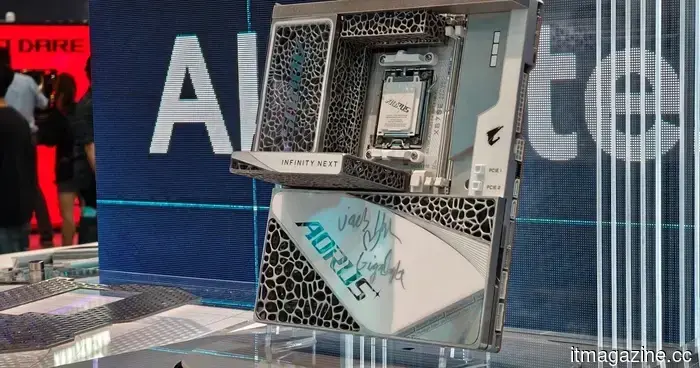 Motherboards could be the next PC component to experience a significant price hike.
A recent report indicates that Asus, MSI, and Gigabyte are planning to raise motherboard prices, which could lead to a noticeable increase in the cost of building a new PC.
Motherboards could be the next PC component to experience a significant price hike.
A recent report indicates that Asus, MSI, and Gigabyte are planning to raise motherboard prices, which could lead to a noticeable increase in the cost of building a new PC.
 Xbox is marking its 25th anniversary by adorning your console with a touch of nostalgia.
Xbox users can now obtain free profile artwork created by the community, a dynamic console background, and a commemorative badge as Microsoft readies for the brand’s 25th anniversary.
Xbox is marking its 25th anniversary by adorning your console with a touch of nostalgia.
Xbox users can now obtain free profile artwork created by the community, a dynamic console background, and a commemorative badge as Microsoft readies for the brand’s 25th anniversary.
 A Federal Reserve official is questioning if AI is becoming 'too big to fail.'
Kansas City Fed president Jeff Schmid states that the extensive level of investment in AI warrants examination at a macro scale, and questions whether the industry is becoming too big to fail.
A Federal Reserve official is questioning if AI is becoming 'too big to fail.'
Kansas City Fed president Jeff Schmid states that the extensive level of investment in AI warrants examination at a macro scale, and questions whether the industry is becoming too big to fail.
 Samsung challenges Dolby Vision 2 with the introduction of its new HDR format, which will be available on Prime Video this month.
Samsung's HDR10+ Advanced format is set to debut on Prime Video and 2026 televisions this month.
Samsung challenges Dolby Vision 2 with the introduction of its new HDR format, which will be available on Prime Video this month.
Samsung's HDR10+ Advanced format is set to debut on Prime Video and 2026 televisions this month.
Texas puts the brakes on data centers it previously sought after.
Texas will conduct an audit of each data centre before it can connect to the grid, following a surge in requests to plug in that reached five times the state's previous peak demand.