
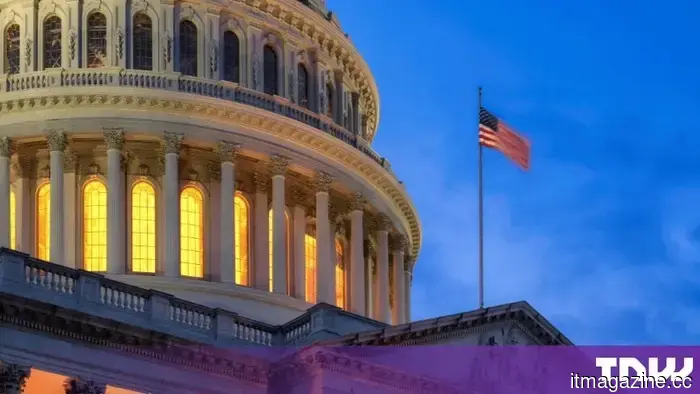
Congress allocates 88% of its AI budget to ChatGPT.
Before Congress establishes any regulations for artificial intelligence, it has already selected a provider. In the year ending in March, House offices allocated nine out of every ten visible AI dollars to a single product: OpenAI's ChatGPT.
These statistics are derived from a CNBC analysis of House expenditure records. Of the $113,740 spent on specific AI vendors, ChatGPT accounted for $100,580, which is about 88% of the total spending and 96% of the transactions. Anthropic's Claude was a far-off second, receiving $13,160. ChatGPT is now utilized in at least 71 member offices, roughly one out of every six.
The activities are precisely what one would anticipate. Staff members employ these tools to summarize legislation, draft memos, prepare materials for hearings, and respond to constituents. Representative Julie Fedorchak, a Republican from North Dakota, stated that a ChatGPT-created database of her legislative activities was "saving dozens and dozens of hours every week" for her staff.
The skeptics are the primary purchasers
The political dynamics are somewhat uncomfortable. Democratic offices spent $54,165 on identifiable AI tools, more than three times the $15,782 spent by Republicans. ChatGPT was found in 44 Democratic offices and 27 Republican ones. This is noteworthy considering that this same party has been vocal about the risks AI poses to workers, privacy, and elections, yet they lead in spending on it.
None of this operates in a neutral space. OpenAI, Anthropic, Google, and Microsoft are competing for influence in Washington as lawmakers determine how AI will be procured, utilized, and regulated. The structural advantage was established early. In 2023, the House issued its first 40 ChatGPT licenses, and by the time restrictions were introduced in 2024, the name had become synonymous with AI.
"ChatGPT was almost synonymous with AI," stated Marci Harris from the POPVOX Foundation, which trains congressional staff. She likened it to the relationship between Kleenex and tissues or Band-Aid and bandages. OpenAI further solidified its lead by co-hosting training sessions for senior staff through a nonpartisan Hill group and spending $1 million on lobbying in Washington in the first quarter, an increase of 82.5% from the previous year.
The significance of the vendor
Claude’s lack of presence has a less glamorous explanation than brand recognition. Interest in competitors increased only after Anthropic's dispute with the Pentagon, which labeled the company a supply-chain risk in March. The Senate explicitly prohibits Claude's use for official purposes. When a model is restricted, it does not appear in spending records.
This makes the vendor issue significant. Eric Petry of the Brennan Center remarked that the aim, "not to reward political favorites," should be to provide government with the best available tools. His concern is that offices may be standardizing on one model before lawmakers fully understand how any of them function.
The caveats are considerable, and CNBC acknowledges them. The records do not account for free accounts, AI integrated into broader software like Microsoft Copilot, reimbursed purchases, and almost all Senate expenditures. The actual figure is likely higher, and $113,740 is negligible in the context of a federal budget. What the data reveals is not the scale but rather the habitual use.
And that habit is significant. The same institution that will establish the rules is learning about AI from the product of one company. It also learns from that company's training. Meanwhile, that company continues to increase its lobbying efforts. Regulators often retain the tools they are already familiar with. OpenAI seems to grasp this better than anyone else.
Other articles
 TikTok reaches another settlement to avoid a jury trial regarding harm to teens.
TikTok resolved the three lawsuits it was scheduled to contest in October, continuing a streak that has spared it from any jury trials. In contrast, Meta and Google opted to contest their cases.
TikTok reaches another settlement to avoid a jury trial regarding harm to teens.
TikTok resolved the three lawsuits it was scheduled to contest in October, continuing a streak that has spared it from any jury trials. In contrast, Meta and Google opted to contest their cases.
 Nvidia and Dell support AI cloud startup Volta, which is valued at $2.4 billion.
AI cloud startup Volta has secured $300 million in funding and arranged $5 billion in financing at a valuation of $2.4 billion, with support from a16z, Altimeter, Nvidia, and Michael Dell.
Nvidia and Dell support AI cloud startup Volta, which is valued at $2.4 billion.
AI cloud startup Volta has secured $300 million in funding and arranged $5 billion in financing at a valuation of $2.4 billion, with support from a16z, Altimeter, Nvidia, and Michael Dell.
 The 'death zone': how independent Chinese models are undermining US AI.
Bloomberg refers to it as a ‘death zone’: China’s advanced, accessible open-source AI models are impacting the mid-market segment where US model developers operate.
The 'death zone': how independent Chinese models are undermining US AI.
Bloomberg refers to it as a ‘death zone’: China’s advanced, accessible open-source AI models are impacting the mid-market segment where US model developers operate.
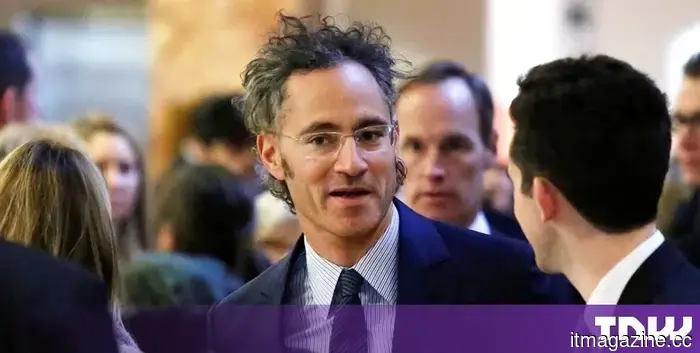 Alex Karp's one-sided radicalism: Palantir's issue with Marxism is Palantir itself.
Alex Karp states that Palantir has 'Marxist overtones.' If this concept is considered seriously, it focuses on Palantir itself, the company that controls the infrastructure.
Alex Karp's one-sided radicalism: Palantir's issue with Marxism is Palantir itself.
Alex Karp states that Palantir has 'Marxist overtones.' If this concept is considered seriously, it focuses on Palantir itself, the company that controls the infrastructure.
 Nvidia and Dell support the AI cloud startup Volta, which has been valued at $2.4 billion.
AI cloud startup Volta has secured $300 million in funding and arranged for $5 billion in financing, achieving a valuation of $2.4 billion, with support from a16z, Altimeter, Nvidia, and Michael Dell.
Nvidia and Dell support the AI cloud startup Volta, which has been valued at $2.4 billion.
AI cloud startup Volta has secured $300 million in funding and arranged for $5 billion in financing, achieving a valuation of $2.4 billion, with support from a16z, Altimeter, Nvidia, and Michael Dell.
 PwC is reducing the number of consultants it hires as AI changes the nature of the job.
The US CEO of PwC indicates that the firm is reducing the hiring of junior consultants and accountants while increasing the recruitment of data scientists, as evidenced by its AI Jobs Barometer revealing a 42% pay disparity emerging.
PwC is reducing the number of consultants it hires as AI changes the nature of the job.
The US CEO of PwC indicates that the firm is reducing the hiring of junior consultants and accountants while increasing the recruitment of data scientists, as evidenced by its AI Jobs Barometer revealing a 42% pay disparity emerging.
Congress allocates 88% of its AI budget to ChatGPT.
House records indicate that OpenAI's ChatGPT captured nine out of every ten visible AI dollars in Congress, with Democrats, who are the most vocal skeptics of AI, having the highest spending.