
Apple's lawsuit against OpenAI has encountered a misstep due to an embarrassing email sent to the wrong recipient.
Apple pursued OpenAI for its trade secrets, but OpenAI retained email evidence.
The legal dispute between OpenAI and Apple has escalated beyond formal court declarations. OpenAI has recently disclosed email and message exchanges relevant to the conflict, and one specific interaction casts doubt on Apple’s narrative.
In a straightforwardly titled post, "Apple is getting this wrong," OpenAI contested Apple’s request for a preliminary injunction, claiming that the iPhone manufacturer constructed parts of its argument based on inaccurate or incomplete information. Apple seeks a court order to prevent OpenAI and two former Apple employees from accessing, acquiring, utilizing, or disclosing its purported confidential information.
Apple's documentation reveals a comical confusion.
Apple had alleged it reached out to OpenAI in February concerning former employees keeping confidential information and claimed there was no response. The emails released by OpenAI show that Apple’s external lawyer, Gabriel Gross, contacted OpenAI General Counsel Che Chang. Gross later sent a follow-up message to Chang, expressing gratitude for a phone conversation and an offer to collaborate. Chang responded that no such conversation had occurred.
Gross later admitted that his message was meant for another former Apple employee, whose last name was Wang, and it had been mistakenly sent in the email thread with Chang. OpenAI interprets this incident as Apple mixing up two Asian surnames.
OpenAI further contends that Apple did not raise the specific allegations that later appeared in its lawsuit. The correspondence reveals that Apple’s counsel mentioned it was working to resolve the issue before communication ceased for about five months, before the company officially filed its lawsuit on July 10.
OpenAI provided more than just emails.
Apple's lawsuit identifies former employees Chang Liu and Tang Yew Tan, accusing them and OpenAI of improperly using confidential hardware data to expedite OpenAI’s plans for consumer devices. Recently, Apple requested swift document production and depositions from OpenAI staff and corporate representatives.
OpenAI also released iMessages showing Apple employees still seeking Liu’s assistance in finding files and answering technical queries after his departure. This suggests that Apple’s claim that Liu intentionally retained access is unfounded, as it failed to properly sever former employees from its systems.
These exchanges serve as OpenAI's defense in an ongoing lawsuit, rather than a judge's ruling. Nonetheless, they present a troubling contradiction for Apple. Employees reportedly continued to seek Liu’s help while the company now asserts that his ongoing access poses an immediate threat, a situation that could significantly impact its hardware strategies.

Other articles
 Congress allocates 88% of its AI budget to ChatGPT.
House records indicate that OpenAI's ChatGPT captured nine out of every ten visible AI dollars in Congress, with Democrats, who are the most vocal skeptics of AI, having the highest spending.
Congress allocates 88% of its AI budget to ChatGPT.
House records indicate that OpenAI's ChatGPT captured nine out of every ten visible AI dollars in Congress, with Democrats, who are the most vocal skeptics of AI, having the highest spending.
 SpaceX is pushing competitors out of the market for the rockets they rely on.
As SpaceX increases the number of its Starlink satellites, it is pushing competing satellite companies out of the Falcon 9 launch schedule, with some reservations extending to 2028-2029.
SpaceX is pushing competitors out of the market for the rockets they rely on.
As SpaceX increases the number of its Starlink satellites, it is pushing competing satellite companies out of the Falcon 9 launch schedule, with some reservations extending to 2028-2029.
 The U.S. is working on a prohibition against Chinese devices in data centers.
The Trump administration is working on a ban for data center equipment manufactured in China, furthering its efforts to isolate US AI infrastructure from Chinese technology.
The U.S. is working on a prohibition against Chinese devices in data centers.
The Trump administration is working on a ban for data center equipment manufactured in China, furthering its efforts to isolate US AI infrastructure from Chinese technology.
 The 'death zone': how independent Chinese models are undermining US AI.
Bloomberg refers to it as a ‘death zone’: China’s advanced, accessible open-source AI models are impacting the mid-market segment where US model developers operate.
The 'death zone': how independent Chinese models are undermining US AI.
Bloomberg refers to it as a ‘death zone’: China’s advanced, accessible open-source AI models are impacting the mid-market segment where US model developers operate.
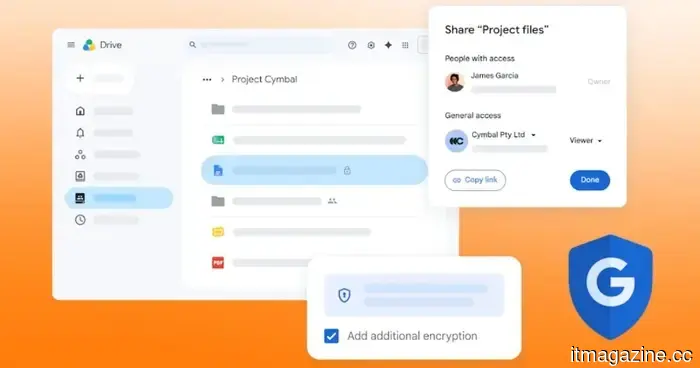 Google Drive enhances its video collaboration features by introducing timestamped comments.
Google Drive introduces timestamped video comments, allowing users to attach feedback to specific points in the timeline.
Google Drive enhances its video collaboration features by introducing timestamped comments.
Google Drive introduces timestamped video comments, allowing users to attach feedback to specific points in the timeline.
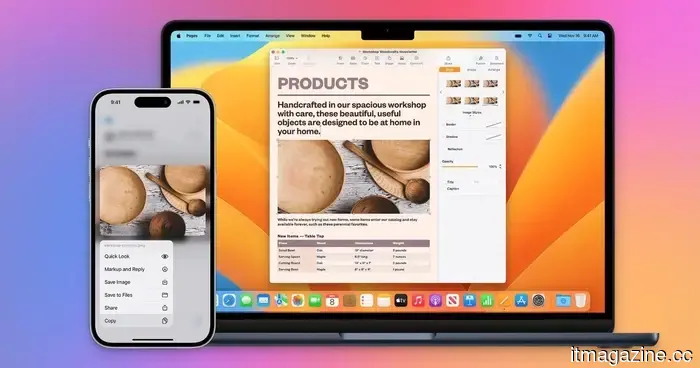 Apple is finally introducing one of my favorite Continuity features to Windows.
Apple is said to be developing a feature that will allow users to copy content on their iPhone and paste it on a Windows PC, following a request from Microsoft, but it may not be available until 2027 or beyond.
Apple is finally introducing one of my favorite Continuity features to Windows.
Apple is said to be developing a feature that will allow users to copy content on their iPhone and paste it on a Windows PC, following a request from Microsoft, but it may not be available until 2027 or beyond.
Apple's lawsuit against OpenAI has encountered a misstep due to an embarrassing email sent to the wrong recipient.
OpenAI has released emails and messages that dispute Apple’s claims regarding trade secrets, featuring an uncomfortable incident where Apple's external attorney reached out to the incorrect individual.