

Mark Zuckerberg predicts that billions will possess a personal AI agent within the next five years.
Mark Zuckerberg believes that nearly everyone will soon have an AI assistant working for them. During Meta’s second-quarter earnings call on July 29, he forecasted that in five years, “billions of people” will possess “a personal agent that understands your goals,” which will manage their finances, health, relationships, and homes.
This projection represents yet another refined version of a pitch he has been honing for several months. Zuckerberg has positioned personal AI agents as the forthcoming mass-market computing platform, suggesting that Meta’s own applications, WhatsApp and Messenger, will be the primary environments where most individuals interact with them.
The prediction also serves as a business strategy. Meta is already providing AI agents for businesses through its messaging apps, reaching over a million business users this quarter, while the consumer version is intended to evolve into a revenue stream sufficiently large to justify the investments being made.
The context of financial pressures looms large. Meta’s free cash flow plummeted 91% this quarter, dropping to $784 million, while its Reality Labs division incurred an additional loss of $4.6 billion, bringing total losses since 2021 to approximately $88 billion.
The costs associated with infrastructure continue to rise. This quarter, Meta and BlackRock announced a $14 billion partnership for a data center in El Paso, further indicating that the company is preparing for a future with agents, well ahead of when revenue will be available to support it.
Investors were not reassured by this vision. Following the earnings report, Meta’s stock dropped nearly 10%, reflecting Wall Street's current concern over declining cash flow rather than optimism about the potential for a personal assistant in everyone's pocket.
Zuckerberg has a history of prematurely predicting the next major platform, from the metaverse to AI, and of investing significant amounts to secure a lead, with outcomes that have varied from successful to disappointing.
His own agents have not all launched as planned. Earlier this year, Zuckerberg admitted that progress on Meta’s AI agents was slower than he anticipated, which makes the ambitious forecast of billions of users within five years a considerable gamble on a swift acceleration in development.
At least he is personally utilizing these products. Zuckerberg has mentioned developing a personal assistant to help manage his executive responsibilities, hinting at the type of everyday agent he expects others will come to rely on.
The vision remains consistent, regardless of its probabilities. If agents become the primary method for managing finances, health, and home administration, whoever controls the agent will hold a powerful position, which is why Meta, OpenAI, and Google are all vying for the same market.
Zuckerberg is not alone in this endeavor. OpenAI, Google, and numerous startups are offering similar promises, which provides momentum to the concept, but also implies that being correct about agents does not guarantee market success.
The challenge is uniform among all of them. Creating agents that can reliably act on an individual’s behalf, managing their money and data, is significantly more complex than developing a simple chatbot that responds to queries, and trust cannot be manufactured with a demonstration.
For Meta specifically, there is a credibility issue to address. The company is currently facing lawsuits regarding the impact of its existing products on users, yet it is now asking those same users to entrust an AI agent with their financial and health information.
Regulators may also have opinions on these developments. Allowing an agent access to someone’s bank account and medical records raises privacy concerns that Meta is already contending with, potentially hindering the very future Zuckerberg envisions.
Zuckerberg’s approach to overcoming the skepticism is to increase investment. Meta’s capital budget is projected to reach $145 billion, indicating a belief that by building the necessary infrastructure and models, the agents and user base will eventually follow.
The five-year countdown is now officially underway, at least in rhetoric. Zuckerberg has specified both a figure and a timeline; however, the market's lukewarm reaction indicates a preference for seeing the agents in action rather than merely hearing about them, and the disparity between the two will determine the outcome in the coming years.
Other articles
 Onyx secures $113 million to ensure humans remain in charge of AI agents.
Onyx Security secured $113 million in a Series B funding round led by Bessemer, achieving a valuation of approximately $640 million just four months after coming out of stealth mode, with the aim of managing AI agents that are revolutionizing enterprise operations.
Onyx secures $113 million to ensure humans remain in charge of AI agents.
Onyx Security secured $113 million in a Series B funding round led by Bessemer, achieving a valuation of approximately $640 million just four months after coming out of stealth mode, with the aim of managing AI agents that are revolutionizing enterprise operations.
 Revolut collaborates with OpenAI to include ChatGPT Go in its subscription offerings.
Revolut is including free ChatGPT Go in its subscriptions, which range from three months to a year, as part of an agreement with OpenAI that provides the AI company a significant distribution network.
Revolut collaborates with OpenAI to include ChatGPT Go in its subscription offerings.
Revolut is including free ChatGPT Go in its subscriptions, which range from three months to a year, as part of an agreement with OpenAI that provides the AI company a significant distribution network.
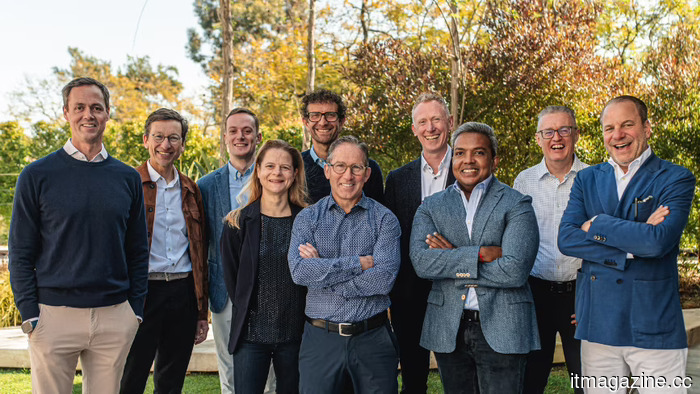 Highland Europe has finalized a €1.1 billion fund dedicated to continuing support for European scale-ups.
Highland Europe has completed the closing of its sixth fund, totaling €1.1 billion, to support growth-stage technology in Europe. This comes after a year marked by exits, including the sale of Nexthink for approximately $3 billion, and the promotion of two partners.
Highland Europe has finalized a €1.1 billion fund dedicated to continuing support for European scale-ups.
Highland Europe has completed the closing of its sixth fund, totaling €1.1 billion, to support growth-stage technology in Europe. This comes after a year marked by exits, including the sale of Nexthink for approximately $3 billion, and the promotion of two partners.
 Blue Owl’s Stack is pursuing a $5.9 billion loan, contributing to the surge in debt for AI data centers.
According to a report by Bloomberg, Blue Owl’s data-centre division, Stack, is looking to secure a loan of approximately $5.9 billion, just months after finalizing a $2.1 billion agreement, as the push to increase AI capabilities through borrowing intensifies.
Blue Owl’s Stack is pursuing a $5.9 billion loan, contributing to the surge in debt for AI data centers.
According to a report by Bloomberg, Blue Owl’s data-centre division, Stack, is looking to secure a loan of approximately $5.9 billion, just months after finalizing a $2.1 billion agreement, as the push to increase AI capabilities through borrowing intensifies.
 I use ChatGPT Pro on a daily basis, and these three features are the reasons I maintain my subscription.
I finally tried out ChatGPT Pro thoroughly, and these three features made it irresistible to cancel.
I use ChatGPT Pro on a daily basis, and these three features are the reasons I maintain my subscription.
I finally tried out ChatGPT Pro thoroughly, and these three features made it irresistible to cancel.
 Revolut has formed a partnership with OpenAI to incorporate ChatGPT Go into its subscription offerings.
Revolut is including free ChatGPT Go in its subscription plans, which range from three months to a year, thanks to a partnership with OpenAI that provides the AI company with a significant distribution avenue.
Revolut has formed a partnership with OpenAI to incorporate ChatGPT Go into its subscription offerings.
Revolut is including free ChatGPT Go in its subscription plans, which range from three months to a year, thanks to a partnership with OpenAI that provides the AI company with a significant distribution avenue.
Mark Zuckerberg predicts that billions will possess a personal AI agent within the next five years.
Mark Zuckerberg forecasted that billions will possess a personal AI agent within the next five years, despite Meta experiencing a 91% decline in free cash flow and a 10% drop in its stock price.