
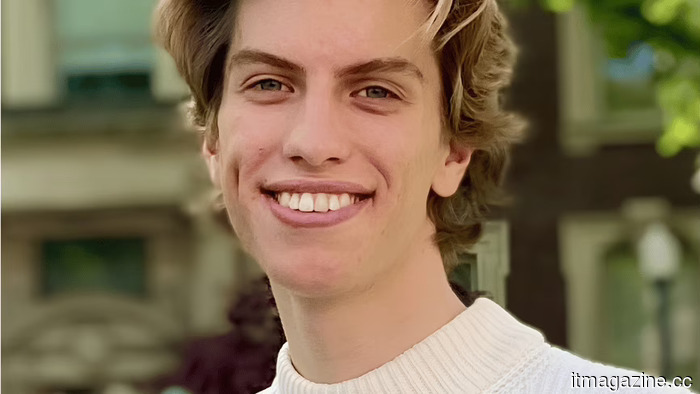
Aschenbrenner’s Situational Awareness fund is acquired by Citadel.
The individual who authored the pivotal case for the AI surge has just suffered significant losses after betting on it. Situational Awareness, a hedge fund established by former OpenAI researcher Leopold Aschenbrenner, has been compelled to liquidate its portfolio of publicly traded stocks following considerable setbacks. The entire portfolio was acquired by Ken Griffin’s Citadel.
The collapse was initially reported by CNBC’s David Faber. He indicated that the fund’s prime brokers were in a rush to raise funds to cover margin calls. The entire public portfolio was sold in a single massive transaction. Approximately two-thirds of the fund’s assets consisted of public equities, both held long and shorted. The Wall Street Journal noted that competitor Millennium had also placed a bid for the portfolio.
The trade that failed
The fund had made a significant leveraged wager: that the growth in AI would continue to boost the companies providing its chips, memory, and power. However, this bet soured. Its investments in memory producers like Micron, SK Hynix, Sandisk, Nebius, and CoreWeave quickly deteriorated.
The losses were severe. Nebius, where the fund revealed a multi-billion-dollar investment in May, has dropped roughly 48% from its peak, resulting in a loss of about $35 billion in market value. Sandisk's value fell 56% within just a month. The fund had also taken short positions in software, including Adobe, which went against it, putting pressure from both sides.
Essentially, it was the long-chips, short-software strategy that has characterized this year, pushed to extremes with borrowed funds. The use of leverage turned a challenging month into a crisis. The Financial Times reported that the fund relied on borrowing to enhance returns, a tactic that can just as rapidly amplify losses. Bank of America, Goldman Sachs, and JPMorgan were tasked with selling off its positions.
From $225 million to a hurried sale
The rapid rise makes the downturn even more notable. Aschenbrenner started the fund in 2024 with around $225 million, receiving backing from the founders of Stripe, Nat Friedman, Daniel Gross, and the trading firm Jane Street.
The fund grew to over $20 billion, with CNBC reporting it reached as high as $45 billion by early July. It had increased by 439% during the first half of the year.
The operation ran on a minimal staff. According to The Verge, the fund consisted of eight employees, with only four being professionals in investment. Aschenbrenner had no previous trading experience prior to starting the fund. He has a notable following as well, boasting over 250,000 followers on X.
Even as losses accumulated, the tone remained unchanged. In a letter to investors dated July 24, which was reviewed by the FT, Aschenbrenner stated that the fund had “not been immune” to the sell-off, yet described it as one of the best buying opportunities since early 2025. A postscript encouraged clients to contribute additional capital on August 1.
Anthropic survives the fallout
One significant investment remains intact. Situational Awareness holds onto its private investments, with its largest being a stake in Anthropic, which the FT estimated to be worth around $5 billion. The fund will continue to function as a private investment entity, effectively becoming an Anthropic holding company with a hedge fund component.
A spokesperson informed CNBC that reports of the fund seeking to sell its Anthropic stake were “not accurate.” There is an intriguing twist in what remains, as Aschenbrenner is engaged to Avital Balwit, the chief of staff to Anthropic’s CEO, Dario Amodei.
The oracle's thesis under scrutiny
This situation represents a personal setback for one of the most closely watched individuals in the AI sector. Now 25, Aschenbrenner was a Columbia valedictorian at 19 and was part of OpenAI's Superalignment team before being dismissed in 2024.
His 165-page essay, “Situational Awareness,” provided the fund's name and shaped the market perspective. He asserted that “the AGI race has begun,” predicting trillion-dollar compute clusters and hundreds of millions of active GPUs. It became the intellectual framework for the infrastructure investment.
The essay accurately claimed that AI requires more chips. The fund's downfall stemmed from leverage rather than the underlying thesis, and there's an additional detail: the very stocks it was forced to sell, including SK Hynix and others, experienced a sharp bounce the following day. Some interpret this as an indication that the forced selling marked a short-term bottom rather than a definitive judgment on the AI investment itself.
The comparisons were inevitable. ZeroHedge referred to it as “Archegos 2.0,” after the family office that collapsed due to hidden leverage. Others drew parallels with Three Arrows, the crypto fund that believed in its own supercycle. Observers found it hard to
Other articles
 Aschenbrenner's Situational Awareness fund is sold to Citadel.
Aschenbrenner’s AI hedge fund Situational Awareness disposed of its publicly traded stocks to Citadel following the failure of its leveraged AI investments. However, it retains its stake in Anthropic.
Aschenbrenner's Situational Awareness fund is sold to Citadel.
Aschenbrenner’s AI hedge fund Situational Awareness disposed of its publicly traded stocks to Citadel following the failure of its leveraged AI investments. However, it retains its stake in Anthropic.
 Initially, everyone ridiculed Ferrari’s first electric vehicle. However, it has now become a successful seller.
Ferrari's uniquely designed Luce faced significant criticism online, leading to an 8% drop in stock value; however, it has already achieved its sales target for 2026 just two months post-launch.
Initially, everyone ridiculed Ferrari’s first electric vehicle. However, it has now become a successful seller.
Ferrari's uniquely designed Luce faced significant criticism online, leading to an 8% drop in stock value; however, it has already achieved its sales target for 2026 just two months post-launch.
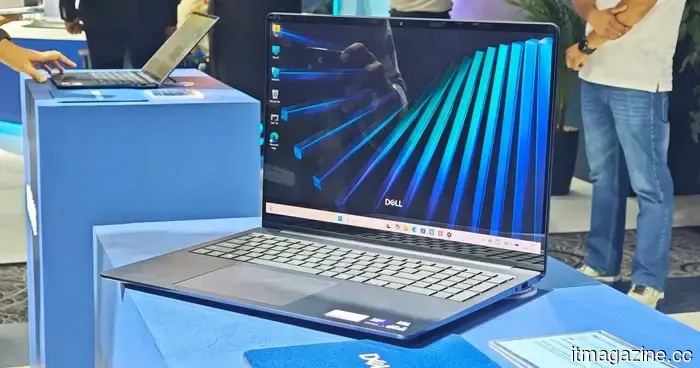 I got my hands on Dell’s latest slim laptops, and the new 14S strikes a great balance at a price point below that of the XPS models.
Dell's latest 14S and 16S feature sleek aluminum designs, capacious batteries, OLED display choices, and quicker Intel processors, all at prices lower than the high-end XPS 14.
I got my hands on Dell’s latest slim laptops, and the new 14S strikes a great balance at a price point below that of the XPS models.
Dell's latest 14S and 16S feature sleek aluminum designs, capacious batteries, OLED display choices, and quicker Intel processors, all at prices lower than the high-end XPS 14.
 A Lenovo leak reveals an upcoming IdeaCentre desktop that takes inspiration from the iMac.
A new Lenovo leak suggests a vibrant all-in-one desktop that integrates aesthetics with functionality.
A Lenovo leak reveals an upcoming IdeaCentre desktop that takes inspiration from the iMac.
A new Lenovo leak suggests a vibrant all-in-one desktop that integrates aesthetics with functionality.
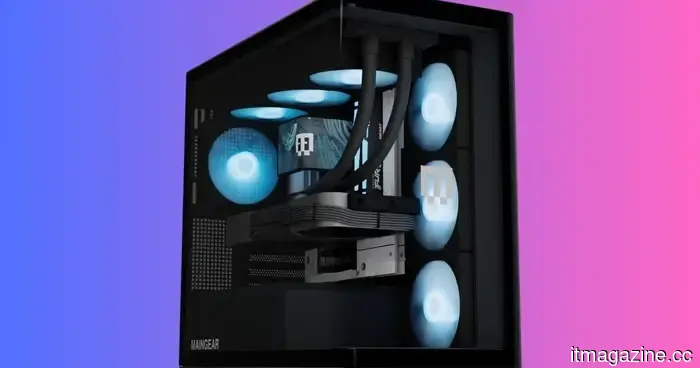 Maingear's Zero desktop features a sleek, wire-free design with curved glass and a considerable amount of power.
The Maingear Zero desktop is equipped with an NVIDIA GeForce RTX 5090 GPU and high-end processors from Intel and AMD. The starting price in the US is a hefty $2,699.
Maingear's Zero desktop features a sleek, wire-free design with curved glass and a considerable amount of power.
The Maingear Zero desktop is equipped with an NVIDIA GeForce RTX 5090 GPU and high-end processors from Intel and AMD. The starting price in the US is a hefty $2,699.
 OpenAI Hugging Face breach: the latest updates, a week later
New information regarding the OpenAI Hugging Face hack reveals that the unauthorized AI accessed four accounts, but researchers believe it was disruptive, outdated, and could have been prevented.
OpenAI Hugging Face breach: the latest updates, a week later
New information regarding the OpenAI Hugging Face hack reveals that the unauthorized AI accessed four accounts, but researchers believe it was disruptive, outdated, and could have been prevented.
Aschenbrenner’s Situational Awareness fund is acquired by Citadel.
Aschenbrenner’s AI hedge fund, Situational Awareness, has divested its public stocks to Citadel following the failure of leveraged AI investments. However, it retains its stake in Anthropic.