
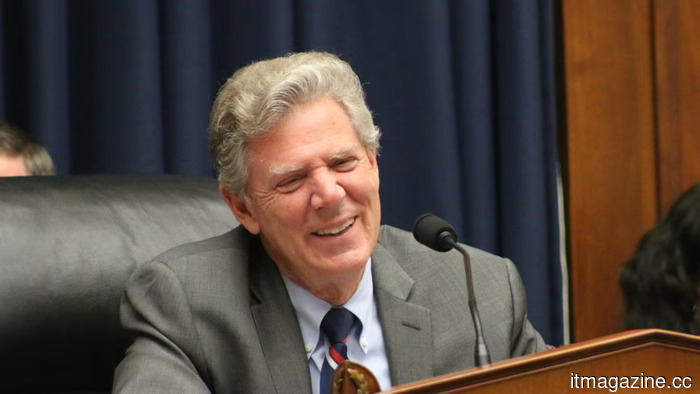
A Democratic member of the House is calling for Musk to be held accountable for the polluting data centers of xAI.
Frank Pallone is insisting on gaining emissions data and organizing a site visit regarding the gas turbines that supply energy to xAI’s Colossus supercomputers, located close to predominantly Black communities in Tennessee and Mississippi. The leading Democrat on the House Energy and Commerce Committee is calling on Elon Musk to address the pollution generated by xAI’s data centers, intensifying the dispute concerning the gas turbines that drive the company's supercomputers.
On July 29, Pallone sent a letter requesting emissions data, permitting records, and access for committee staff to inspect the sites. The facilities in question comprise xAI’s Colossus clusters. The Colossus 1 and Colossus 2 sites in Tennessee and Mississippi contain some of the largest AI training systems globally, relying on natural gas turbines to support a power demand that the grid could not promptly fulfill.
The scale of the operation is significant. Colossus was constructed rapidly to train Grok, xAI’s competitor to ChatGPT, and its requirements for electricity and cooling water have turned it into a case study of the demands that cutting-edge AI places on local grids.
The turbines are central to the complaint. According to Reuters, xAI installed 59 gas turbines for Colossus 2 without obtaining the federal clean-air permits typically required for emissions of that magnitude. Pallone’s requests are precise. He has asked Musk for emissions and permitting documents, correspondence with government officials, assessments of power and water usage, and a staff visit, which signals ongoing oversight efforts rather than a one-time complaint.
Pallone’s characterization is sharp. He accused the company of showing a “disregard for the health and well-being of local communities” following an earlier meeting where he claimed its representatives provided inadequate information to committee staff.
The location amplifies the stakes. The turbines are positioned near predominantly Black neighborhoods around Memphis, transforming an air-quality issue into one of environmental justice—an aspect that local groups have highlighted for months.
The NAACP has already taken action. The civil rights organization filed a notice of intent to sue regarding the operations, becoming part of a larger legal and political pressure campaign that Pallone’s letter now adds to from Washington.
xAI’s defense has been notable. The company, alongside the Justice Department at times, has contended that the turbines are essential for national security, as the Grok models are employed in military targeting, thus framing a permitting issue as a defense matter.
The organization itself is now intertwined with Musk's broader enterprises and is reported to be owned by SpaceX, which explains why the committee’s demands have been directed at Musk rather than a specific named company. SpaceX did not respond to a request for comment from Reuters, which aligns with how Musk’s companies have dealt with pollution inquiries—engaging when necessary and evading when possible.
This dispute highlights a wider tension. The demand for computing power in AI has outpaced the availability of clean energy, prompting companies racing to develop increasingly larger models to rely on gas turbines and diesel generators, prioritizing speed over permits.
Memphis has emerged as a central point in this trade-off. Residents and local officials have raised concerns about smog and noise, with the turbines turning a previously promised economic development advantage into a confrontation over who is exposed to the emissions associated with the AI boom.
Washington is starting to recognize the consequences. The same expansion that politicians commend for maintaining the US's leadership in AI is now leading to complaints about air quality, lawsuits, and oversight letters, the consequences of which are affecting specific communities.
Pallone’s letter, by itself, holds little power. A member of the minority party has no authority to compel a company to comply, and the Trump administration has moved to exempt data centers from certain aspects of environmental law, limiting the pressure behind the demand. Nonetheless, the inquiries are unlikely to fade away. With the NAACP's lawsuit, the permitting issue, and now a congressional request, xAI is facing an increasing buildup of pressure regarding the energy sources for its supercomputers, regardless of its response choices.
Other articles
 Waymo aims to make your next robotaxi experience feel more like being in your living room than just a typical taxi ride.
Waymo has introduced its Ojai in-car experience, incorporating Google Gemini, adaptive multi-screen controls, and a revamped interface to enhance the personalization of future robotaxi rides.
Waymo aims to make your next robotaxi experience feel more like being in your living room than just a typical taxi ride.
Waymo has introduced its Ojai in-car experience, incorporating Google Gemini, adaptive multi-screen controls, and a revamped interface to enhance the personalization of future robotaxi rides.
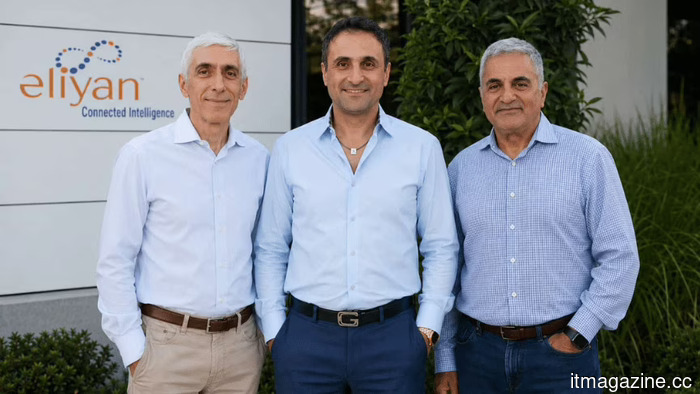 Eliyan achieves a $1 billion valuation for its AI chip interconnects.
Eliyan secured a $145 million Series C funding round at a valuation of $1 billion to address the data bottleneck between AI chips, bringing in Cisco and Lumentum for its optical initiative.
Gartner: the majority of privacy breaches will soon arise from AI inferences.
Gartner forecasts that by 2029, the majority of privacy incidents will arise from AI's inferences about individuals rather than from data breaches, indicating a transition from data leakage to the exposure of insights.
Eliyan achieves a $1 billion valuation for its AI chip interconnects.
Eliyan secured a $145 million Series C funding round at a valuation of $1 billion to address the data bottleneck between AI chips, bringing in Cisco and Lumentum for its optical initiative.
Gartner: the majority of privacy breaches will soon arise from AI inferences.
Gartner forecasts that by 2029, the majority of privacy incidents will arise from AI's inferences about individuals rather than from data breaches, indicating a transition from data leakage to the exposure of insights.
 Meta claims that its AI is increasing the amount of time you spend on Instagram.
According to Meta, time spent on Instagram increased by double digits last quarter, fueled by enhanced personalized AI recommendations, despite the company facing lawsuits concerning that design.
Meta claims that its AI is increasing the amount of time you spend on Instagram.
According to Meta, time spent on Instagram increased by double digits last quarter, fueled by enhanced personalized AI recommendations, despite the company facing lawsuits concerning that design.
 Relation introduces MORGAN, a cell model, along with a $110 million agreement with GSK.
Relation has revealed MORGAN, an AI "foundation model of the cell," along with a GSK partnership valued at up to $110 million to generate the data necessary for its training.
Relation introduces MORGAN, a cell model, along with a $110 million agreement with GSK.
Relation has revealed MORGAN, an AI "foundation model of the cell," along with a GSK partnership valued at up to $110 million to generate the data necessary for its training.
 Blue Owl's Stack is pursuing a $5.9 billion loan, contributing to the surge in debt for AI data centers.
Blue Owl's data center division, Stack, is looking for a loan of approximately $5.9 billion, according to Bloomberg, just months after securing a $2.1 billion deal, as the demand for funding to enhance AI capabilities increases.
Blue Owl's Stack is pursuing a $5.9 billion loan, contributing to the surge in debt for AI data centers.
Blue Owl's data center division, Stack, is looking for a loan of approximately $5.9 billion, according to Bloomberg, just months after securing a $2.1 billion deal, as the demand for funding to enhance AI capabilities increases.
A Democratic member of the House is calling for Musk to be held accountable for the polluting data centers of xAI.
Representative Frank Pallone is calling for emissions data and a site inspection regarding the gas turbines that power xAI’s Colossus supercomputers located near predominantly Black neighborhoods.