

Meta claims that its AI is increasing the amount of time you spend on Instagram.
Meta indicates that users are spending increased time on Instagram, attributing this growth to its artificial intelligence. In the second quarter, global time spent on the platform rose by double digits compared to the previous year, as reported to investors. This rise is largely due to AI-optimized recommendations in the main feed and Reels.
The improvements are quantifiable. Meta stated that an updated Reels framework increased sessions by 15 basis points, which may seem minor but represents a significant amount of additional user attention across billions of users.
This trend is consistent across Meta’s applications. The company noted a spike in video viewing on both Instagram and Facebook, with short-form recommendations guiding users from their followed feeds to an endless stream curated by the algorithm.
Mark Zuckerberg characterized this shift as more personal rather than just an increase in content. He emphasized that the recommendations are becoming more tailored, presenting fresh content while allowing users increased control over their viewing experience, linking the rise in engagement with user autonomy.
The technological evolution behind this is noteworthy. Zuckerberg explained that Reels now utilizes faster inference along with a new framework that leverages a more extensive history of user interactions, enhancing the system’s ability to predict what will maintain viewer interest.
Meta has also deployed large language models on its feed. Every public Reel and post is now processed through an LLM to evaluate its subject and tone, which Zuckerberg referred to as a “key building block toward greater personalization,” with intentions to expand this approach to Facebook.
The objective is clear. A deeper understanding of content enables Meta to align it more accurately with each viewer, and this precise alignment increases viewing time, which is critical for its advertising business.
However, this achievement brings discomfort. The personalization that Meta promotes is described by regulators and litigants as engineered compulsion, especially concerning younger users.
The legal issues are tangible. Meta recorded a $2.4 billion legal charge in the quarter, and a coalition of US states is pursuing claims suggesting that its products are designed to keep young people engaged, transforming “time spent” from a success story into legal evidence.
Meta contends that control is integrated with engagement. Executives highlight features allowing users to customize their algorithms and the introduction of teen-specific safeguards across its platforms, arguing that increased personalization does not equate to diminished choice.
Critics, however, argue that these claims are difficult to reconcile. A system optimized for maximum viewing time is not neutral regarding user “choices,” and the controls exist atop a mechanism designed to perpetuate scrolling.
For the business, the direction is clear. Engagement is the essential element of Meta’s advertising strategy, and any reliable increase, especially through scalable AI, is precisely what the company has invested billions to develop.
More time translates to additional inventory. Each extra minute of scrolling represents another opportunity for Meta to sell to advertisers, explaining why engagement increases are so directly linked to the revenue that supports other initiatives.
This also clarifies the level of investment. Meta’s substantial AI capital expenditures are often discussed in relation to future agents and superintelligence, but the most immediate benefit is a recommendation system that already demonstrably enhances user engagement.
The tension surrounding this issue will carry into legal proceedings and financial statements. The AI that boosts engagement serves both as a solid defense to investors inquiring about returns and as precarious evidence in lawsuits questioning whether those returns come at the cost of users.
At this point, the numbers are rising. Users are spending more time on Instagram, and Meta is keenly aware of the reasons. Ironically, the same data that reassures Wall Street is what its challengers aim to leverage against it.
Other articles
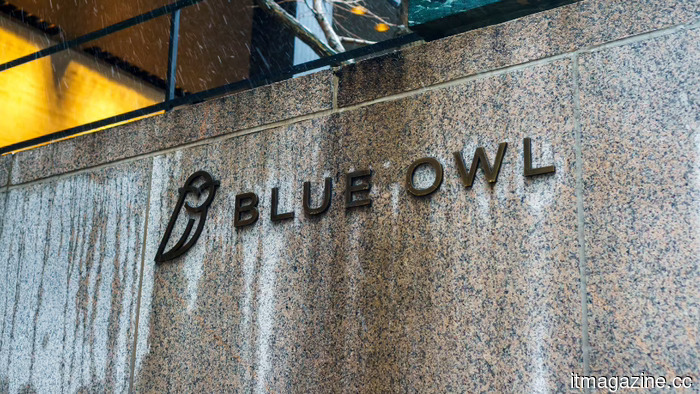 Blue Owl’s Stack is pursuing a $5.9 billion loan, contributing to the surge in debt for AI data centers.
According to a report by Bloomberg, Blue Owl’s data-centre division, Stack, is looking to secure a loan of approximately $5.9 billion, just months after finalizing a $2.1 billion agreement, as the push to increase AI capabilities through borrowing intensifies.
Blue Owl’s Stack is pursuing a $5.9 billion loan, contributing to the surge in debt for AI data centers.
According to a report by Bloomberg, Blue Owl’s data-centre division, Stack, is looking to secure a loan of approximately $5.9 billion, just months after finalizing a $2.1 billion agreement, as the push to increase AI capabilities through borrowing intensifies.
 The live-shopping platform Whatnot is in discussions to almost double its valuation to $20 billion.
Whatnot, the livestream-shopping platform, is negotiating to raise capital at a valuation of approximately $20 billion, an increase from $11.5 billion in late 2024, as live commerce expands in the West.
The live-shopping platform Whatnot is in discussions to almost double its valuation to $20 billion.
Whatnot, the livestream-shopping platform, is negotiating to raise capital at a valuation of approximately $20 billion, an increase from $11.5 billion in late 2024, as live commerce expands in the West.
 I use ChatGPT Pro on a daily basis, and these three features are the reasons I maintain my subscription.
I finally tried out ChatGPT Pro thoroughly, and these three features made it irresistible to cancel.
I use ChatGPT Pro on a daily basis, and these three features are the reasons I maintain my subscription.
I finally tried out ChatGPT Pro thoroughly, and these three features made it irresistible to cancel.
 The live-shopping app Whatnot is in negotiations to increase its valuation to almost $20 billion.
Whatnot, the livestream-shopping platform, is in negotiations to secure funding at a valuation of approximately $20 billion, an increase from $11.5 billion in late 2024, as live commerce expands in the West.
The autonomous AI agent named Dave from G2A.COM has assisted sellers in resolving 14,400 support tickets over the course of 63 days.
G2A.COM has introduced Dave, an AI-powered autonomous support agent that successfully addressed 54% of seller issues and reduced ticket volume by 30% during a 63-day trial conducted in 180 countries. The system links to transaction data to prevent inaccuracies.
The live-shopping app Whatnot is in negotiations to increase its valuation to almost $20 billion.
Whatnot, the livestream-shopping platform, is in negotiations to secure funding at a valuation of approximately $20 billion, an increase from $11.5 billion in late 2024, as live commerce expands in the West.
The autonomous AI agent named Dave from G2A.COM has assisted sellers in resolving 14,400 support tickets over the course of 63 days.
G2A.COM has introduced Dave, an AI-powered autonomous support agent that successfully addressed 54% of seller issues and reduced ticket volume by 30% during a 63-day trial conducted in 180 countries. The system links to transaction data to prevent inaccuracies.
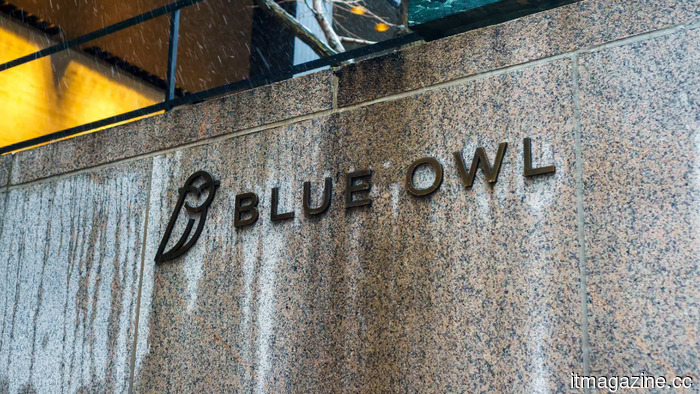 Blue Owl's Stack is pursuing a $5.9 billion loan, contributing to the surge in debt for AI data centers.
Blue Owl's data center division, Stack, is looking for a loan of approximately $5.9 billion, according to Bloomberg, just months after securing a $2.1 billion deal, as the demand for funding to enhance AI capabilities increases.
Blue Owl's Stack is pursuing a $5.9 billion loan, contributing to the surge in debt for AI data centers.
Blue Owl's data center division, Stack, is looking for a loan of approximately $5.9 billion, according to Bloomberg, just months after securing a $2.1 billion deal, as the demand for funding to enhance AI capabilities increases.
Meta claims that its AI is increasing the amount of time you spend on Instagram.
According to Meta, time spent on Instagram increased by double digits last quarter, fueled by enhanced personalized AI recommendations, despite the company facing lawsuits concerning that design.