

Relation introduces MORGAN, a cell model, along with a $110 million agreement with GSK.
The competition to create an AI "foundation model of the cell" is facing a challenge in terms of data availability. The biological data necessary for training such models is limited, disorganized, and inconsistent. Relation Therapeutics believes that producing this data internally is the solution, and GSK is investing as much as $110 million to assist.
On Thursday, the London startup announced two significant developments. The first is MORGAN, its primary cellular foundation model. The second involves an extended collaboration with GSK aimed at generating the data that will be used to enhance it.
MORGAN, which stands for Multi-Omic Regulatory Genomics using Artificial Neural Networks, is designed to anticipate how a human cell will respond to genetic modifications or pharmaceuticals. If successful, this model could identify disease mechanisms and potential drug targets on a computer before any laboratory work begins. This concept parallels the foundation model for the chest and the AI-biology initiatives at DeepMind’s Isomorphic.
Relation is promoting not just the model itself but also the underlying data. Such models derive their effectiveness from the data they are trained on, and there is a lack of comprehensive human biology data available. Consequently, Relation is developing automated laboratories that conduct cellular experiments with what they describe as "superhuman consistency." These labs produce "petascale" datasets documenting cellular responses to various interventions over time.
The reason GSK is investing is to access this data generation capability. According to the agreement, Relation can earn up to $110 million in upfront and milestone payments, and in exchange, it will create extensive human "perturbation" data for integration into models like MORGAN. These datasets detail how cells react to genetic and pharmacological alterations, something GSK is interested in for discovering new drug targets.
"The future of drug discovery relies on our ability to comprehend how human cells respond to disease and treatment with unparalleled detail," stated Relation’s CEO David Roblin. He describes MORGAN and the laboratory that supports it as "the scientific infrastructure" for the next generation of drug discovery.
Relation is not the only company pursuing the modeling of biology. Well-funded competitors, including Chai Discovery and an increasing number of AI-bio laboratories, are also seeking to achieve similar goals. Pharmaceutical companies are rapidly forming AI research partnerships.
The claims being made are substantial. Relation informed Endpoints News that their methodology could yield "transformationally different success rates" in drug discovery. However, this remains to be validated, as a significant number of drugs still encounter failures in trials, and no cell foundation model has yet led to an approved medication. The GSK partnership indicates that major pharmaceutical companies are willing to invest in data generation rather than solely focusing on drug development.
Other articles
 Revolut has formed a partnership with OpenAI to incorporate ChatGPT Go into its subscription offerings.
Revolut is including free ChatGPT Go in its subscription plans, which range from three months to a year, thanks to a partnership with OpenAI that provides the AI company with a significant distribution avenue.
Revolut has formed a partnership with OpenAI to incorporate ChatGPT Go into its subscription offerings.
Revolut is including free ChatGPT Go in its subscription plans, which range from three months to a year, thanks to a partnership with OpenAI that provides the AI company with a significant distribution avenue.
 Blue Owl's Stack is pursuing a $5.9 billion loan, contributing to the surge in debt for AI data centers.
Blue Owl's data center division, Stack, is looking for a loan of approximately $5.9 billion, according to Bloomberg, just months after securing a $2.1 billion deal, as the demand for funding to enhance AI capabilities increases.
Blue Owl's Stack is pursuing a $5.9 billion loan, contributing to the surge in debt for AI data centers.
Blue Owl's data center division, Stack, is looking for a loan of approximately $5.9 billion, according to Bloomberg, just months after securing a $2.1 billion deal, as the demand for funding to enhance AI capabilities increases.
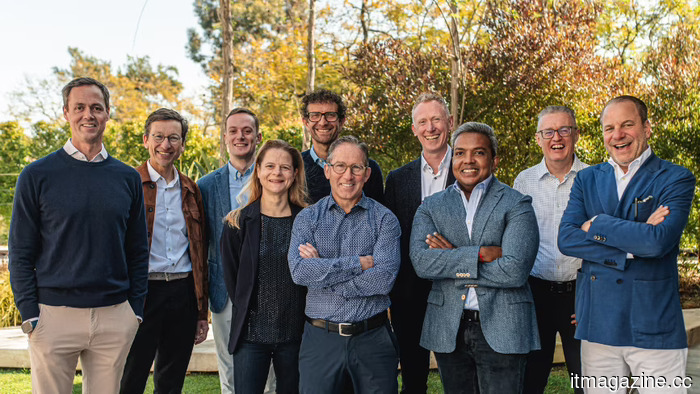 Highland Europe has finalized a €1.1 billion fund dedicated to continuing support for European scale-ups.
Highland Europe has completed the closing of its sixth fund, totaling €1.1 billion, to support growth-stage technology in Europe. This comes after a year marked by exits, including the sale of Nexthink for approximately $3 billion, and the promotion of two partners.
Highland Europe has finalized a €1.1 billion fund dedicated to continuing support for European scale-ups.
Highland Europe has completed the closing of its sixth fund, totaling €1.1 billion, to support growth-stage technology in Europe. This comes after a year marked by exits, including the sale of Nexthink for approximately $3 billion, and the promotion of two partners.
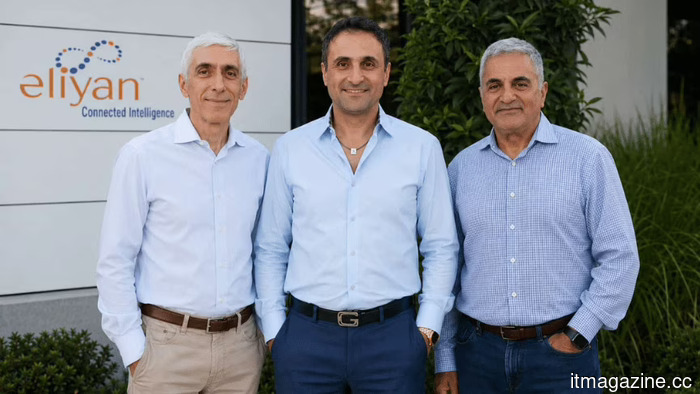 Eliyan achieves a $1 billion valuation for its AI chip interconnects.
Eliyan secured a $145 million Series C funding round at a valuation of $1 billion to address the data bottleneck between AI chips, bringing in Cisco and Lumentum for its optical initiative.
Eliyan achieves a $1 billion valuation for its AI chip interconnects.
Eliyan secured a $145 million Series C funding round at a valuation of $1 billion to address the data bottleneck between AI chips, bringing in Cisco and Lumentum for its optical initiative.
 The Ferrari electric vehicle that received a lot of ridicule has surprisingly sold out.
Ferrari's initial electric vehicle, the controversial Luce designed by Jony Ive, has fully sold out its allocation of approximately 500 units for 2026 just two months after a launch that caused a significant drop in its stock value.
The Ferrari electric vehicle that received a lot of ridicule has surprisingly sold out.
Ferrari's initial electric vehicle, the controversial Luce designed by Jony Ive, has fully sold out its allocation of approximately 500 units for 2026 just two months after a launch that caused a significant drop in its stock value.
Relation introduces MORGAN, a cell model, along with a $110 million agreement with GSK.
Relation has revealed MORGAN, an AI "foundation model of the cell," along with a GSK partnership valued at up to $110 million to generate the data necessary for its training.