
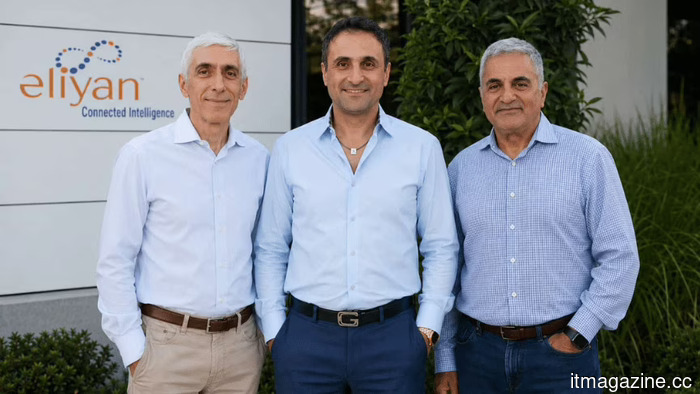
Eliyan achieves a $1 billion valuation for its AI chip interconnects.
For the past three years, the race in AI has focused on creating faster chips. Eliyan has just reached a $1 billion valuation by highlighting that these chips have become too fast for their wiring. The Santa Clara startup announced the successful closure of a $145 million Series C funding round, which was oversubscribed, bringing its valuation to unicorn status. Seligman Ventures led the investment, joined by two strategic investors, Cisco Investments and Lumentum.
The bottleneck has shifted
Modern AI accelerators can process information at speeds that exceed their data input capabilities, leaving them idle and waiting for data. Ramin Farjadrad, Eliyan's CEO, quantified this for Reuters: “Currently, only about 30-40% of the GPUs are being utilized, largely constrained by the speed at which they can receive data to process. We are addressing that issue.”
Eliyan focuses on the infrastructure rather than the computing power. Its NuLink and NuGear chiplets facilitate data transfer between chips, packages, and across racks. The straightforward proposition is that quicker, low-power connections enable a data center’s costly silicon to operate closer to maximum capacity.
An independent alternative to industry giants
The dominant companies have already tackled similar challenges internally. Nvidia acquired the networking company Mellanox for $6.8 billion in 2019 and has since established its own interconnect dependency. Google and Amazon rely on Broadcom and Marvell instead.
Eliyan aims to provide a neutral alternative, licensing its technology and offering chiplets to those creating their own AI chips. This is reflected in its shareholder list, which includes customers from earlier funding rounds such as AMD, Arm, Meta, Intel, Micron, Samsung, and SK hynix. The new investments from Cisco and Lumentum, both from the optical sector, further signify its direction.
Transitioning from electrical to optical
The two new investors indicate Eliyan's future direction. The company initially gained recognition through electrical connections between dies, using standard packaging rather than more expensive silicon interposers. Now, it is advancing into optical interconnects—light-based links that large-scale data centers increasingly require to transfer data across racks efficiently and cost-effectively.
The founders presented their funding as a commitment to a significant transition. “AI infrastructure is experiencing one of the most substantial architectural shifts in computing history,” Farjadrad stated. “As compute, memory, packaging, and networking grow more interconnected, traditional methods of system connectivity are reaching their limits. Eliyan was established to confront these challenges at the architectural level.”
What the funding will achieve
The funding will support development, partnerships within the ecosystem, and manufacturing efforts. Eliyan anticipates starting chiplet shipments this year and projects hundreds of millions of dollars in sales by the end of 2027, an increase from “low millions” in 2025. It holds over 100 patents.
Investors recognize the importance of this less glamorous segment of the stack. Umesh Padval of Seligman Ventures, who served on the board of Mellanox during its acquisition by Nvidia, is joining Eliyan’s board. He contends that the connections are now key determinants of success.
“As AI systems scale up, efficient electrical and optical interconnects that facilitate future expansions between compute and memory have become the performance-defining technologies in modern AI data centers. Eliyan has created a unique architecture to tackle this challenge, merging profound semiconductor knowledge with a scalable approach to the evolving demands of next-generation AI systems.”
He is not alone in his investment. In March, the optical interconnect startup Ayar Labs raised $500 million at a valuation of $3.75 billion. The memory and chip manufacturers on Eliyan’s cap table also have a vested interest in this concept. As AI systems evolve from individual chips to large-scale machines, the connections between the chips may garner as much focus as the chips themselves.
Other articles
 Waymo aims to make your next robotaxi experience feel more like being in your living room than just a typical taxi ride.
Waymo has introduced its Ojai in-car experience, incorporating Google Gemini, adaptive multi-screen controls, and a revamped interface to enhance the personalization of future robotaxi rides.
Waymo aims to make your next robotaxi experience feel more like being in your living room than just a typical taxi ride.
Waymo has introduced its Ojai in-car experience, incorporating Google Gemini, adaptive multi-screen controls, and a revamped interface to enhance the personalization of future robotaxi rides.
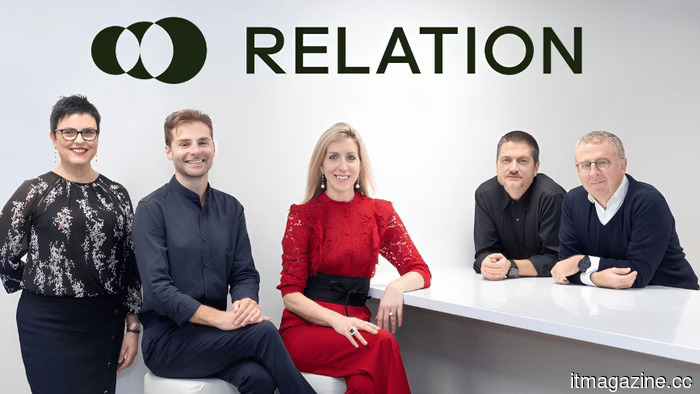 Relation introduces MORGAN, a cell model, along with a $110 million agreement with GSK.
Relation has revealed MORGAN, an AI "foundation model of the cell," along with a GSK partnership valued at up to $110 million to generate the data necessary for its training.
Relation introduces MORGAN, a cell model, along with a $110 million agreement with GSK.
Relation has revealed MORGAN, an AI "foundation model of the cell," along with a GSK partnership valued at up to $110 million to generate the data necessary for its training.
 Blue Owl's Stack is pursuing a $5.9 billion loan, contributing to the surge in debt for AI data centers.
Blue Owl's data center division, Stack, is looking for a loan of approximately $5.9 billion, according to Bloomberg, just months after securing a $2.1 billion deal, as the demand for funding to enhance AI capabilities increases.
Blue Owl's Stack is pursuing a $5.9 billion loan, contributing to the surge in debt for AI data centers.
Blue Owl's data center division, Stack, is looking for a loan of approximately $5.9 billion, according to Bloomberg, just months after securing a $2.1 billion deal, as the demand for funding to enhance AI capabilities increases.
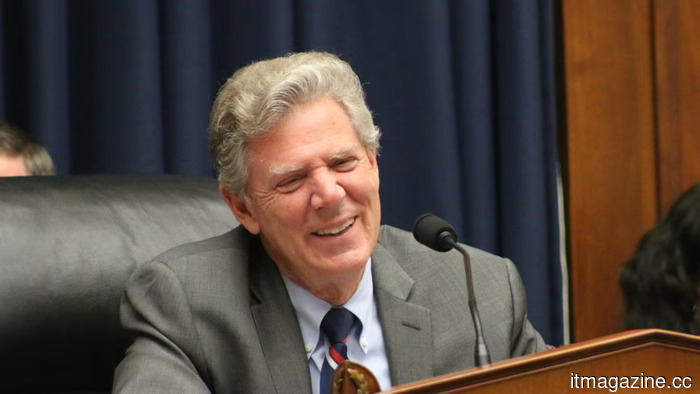 A Democratic member of the House is calling for Musk to be held accountable for the polluting data centers of xAI.
Representative Frank Pallone is calling for emissions data and a site inspection regarding the gas turbines that power xAI’s Colossus supercomputers located near predominantly Black neighborhoods.
A Democratic member of the House is calling for Musk to be held accountable for the polluting data centers of xAI.
Representative Frank Pallone is calling for emissions data and a site inspection regarding the gas turbines that power xAI’s Colossus supercomputers located near predominantly Black neighborhoods.
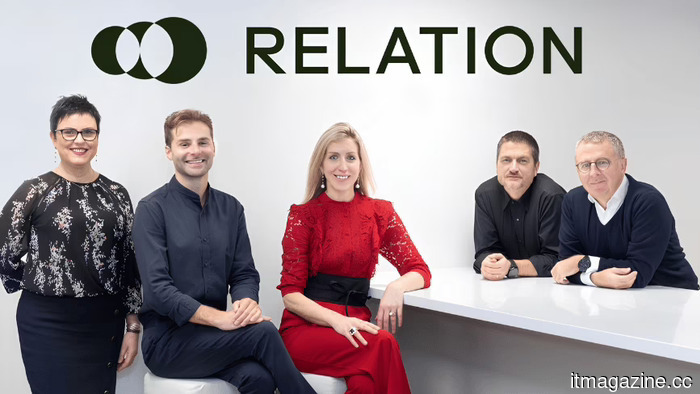 Relation reveals MORGAN, a cellular model, along with a $110 million agreement with GSK.
Relation has revealed MORGAN, an AI "foundation model of the cell," along with a GSK agreement valued at up to $110 million to generate the data needed for its training.
Relation reveals MORGAN, a cellular model, along with a $110 million agreement with GSK.
Relation has revealed MORGAN, an AI "foundation model of the cell," along with a GSK agreement valued at up to $110 million to generate the data needed for its training.
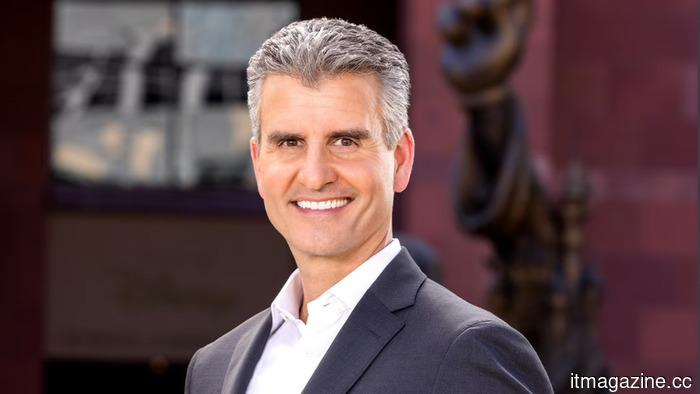 Disney's new CEO aims to transform Disney+ into a 'super app' to compete with Netflix.
Disney CEO Josh D’Amaro is considering transforming Disney+ into a "super app" that integrates theme parks, ticketing, games, and merchandise in order to compete with Netflix.
Disney's new CEO aims to transform Disney+ into a 'super app' to compete with Netflix.
Disney CEO Josh D’Amaro is considering transforming Disney+ into a "super app" that integrates theme parks, ticketing, games, and merchandise in order to compete with Netflix.
Eliyan achieves a $1 billion valuation for its AI chip interconnects.
Eliyan secured a $145 million Series C funding round at a valuation of $1 billion to address the data bottleneck between AI chips, bringing in Cisco and Lumentum for its optical initiative.