
Meta's revenue exceeded expectations, although free cash flow plummeted by 91%.
Two of the largest spenders on AI made announcements on the same day. Microsoft’s spending was reflected in its cloud revenue, while Meta’s showed up as a deficit in its cash flow.
According to CNBC, Meta’s revenue increased by 28% to $60.8 billion, surpassing expectations. However, its profit decreased by 14% to $15.8 billion, earnings per share fell short of forecasts, and its shares dropped around 5% in after-hours trading.
The cash is depleting rapidly.
The most alarming figure is the free cash flow, which plummeted to $784 million from $8.55 billion a year earlier, marking a 91% decline, as reported by Reuters. Meta is currently spending more than it is earning.
The cause of this is the expansion in AI. In the most recent quarter, Meta invested approximately $31 billion in capital projects and revised its full-year guidance upwards to between $130 billion and $145 billion. Last year, its expenditure was $72 billion, essentially doubling the costs.
Lacking cloud benefits
The contrast with its competitors is notable. Microsoft and Alphabet invest in AI and can showcase a cloud business that monetizes this capacity. Meta lacks such a business; its expenditures support its own applications and models, leading investors to notice the costs without a clear new source of revenue.
Meta is not the only one facing this financial pressure. Alphabet announced its first-ever negative free cash flow last week. Financing is also transitioning away from its balance sheet. Recently, Meta established a $14 billion data center partnership with BlackRock, which will take an 80% stake in the campus.
Financial burdens and legal challenges
Two significant one-time expenses contributed to the drop in profit. Meta recorded $2.4 billion in costs linked to legal issues and $1.18 billion in severance pay following its May layoff of around 8,000 employees. Its operating margin decreased to 31%, down from 43% the previous year.
Further legal challenges are anticipated. Meta’s CFO cautioned about upcoming youth-related lawsuits in the US this year that “may ultimately lead to significant losses.” Reality Labs, the segment focused on headsets and eyewear, lost another $4.6 billion, pushing its cumulative losses beyond $80 billion.
The gamble and its potential rewards
Zuckerberg conveyed an optimistic perspective, stating, “AI is accelerating our core business today,” and highlighting new products and enterprise possibilities. The advertising sector supports this assertion, with impressions rising by 14% and prices increasing by 12%.
Yet the market sought evidence that this spending would yield returns and did not receive it. Despite robust revenue, profit is declining, and cash reserves are diminishing. On the same day and with the same AI investment as Microsoft, the outcome was markedly different.
Other articles
 The necessity of verification amid the trust crisis in recruitment
The creation of AI-generated resumes has increased by 239% since the introduction of chatbots, with 67% of HR executives stating that it has hindered the hiring process. Ramu Donikana, the founder of Invent Artificial, contends that what recruitment truly requires now is verification rather than improved screening.
The necessity of verification amid the trust crisis in recruitment
The creation of AI-generated resumes has increased by 239% since the introduction of chatbots, with 67% of HR executives stating that it has hindered the hiring process. Ramu Donikana, the founder of Invent Artificial, contends that what recruitment truly requires now is verification rather than improved screening.
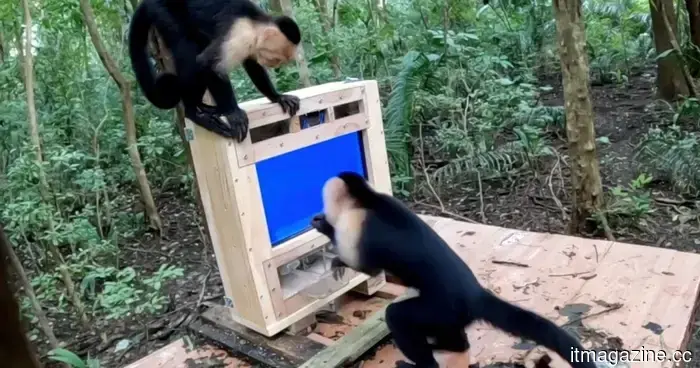 AI is not merely being imposed on us; even monkeys in the forest are now part of the test audience for scientific research.
AI has already infiltrated nearly every facet of our lives. Currently, it is found in the rainforest, where wild capuchin monkeys are using an AI-equipped touchscreen to obtain banana rewards as part of an innovative research project.
AI is not merely being imposed on us; even monkeys in the forest are now part of the test audience for scientific research.
AI has already infiltrated nearly every facet of our lives. Currently, it is found in the rainforest, where wild capuchin monkeys are using an AI-equipped touchscreen to obtain banana rewards as part of an innovative research project.
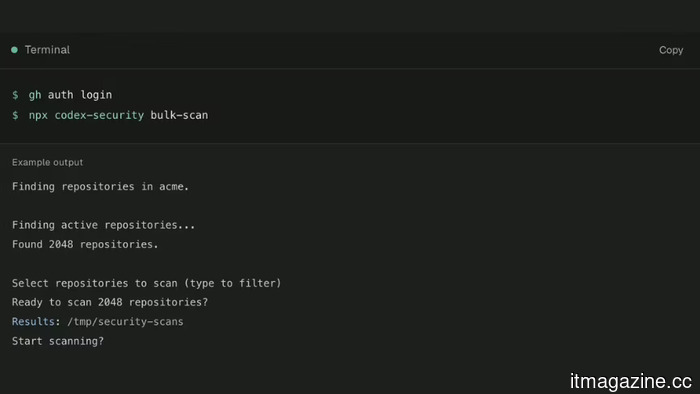 OpenAI has made Codex Security available as open source, but has restricted access to the scanner.
OpenAI has made its Codex Security CLI available as open-source to identify bugs in code, but the scanner remains restricted. This is seen as a strategic move in the AppSec domain and a challenge to Anthropic's Claude Security.
OpenAI has made Codex Security available as open source, but has restricted access to the scanner.
OpenAI has made its Codex Security CLI available as open-source to identify bugs in code, but the scanner remains restricted. This is seen as a strategic move in the AppSec domain and a challenge to Anthropic's Claude Security.
 As AI produces an increasing number of messages, the ability for humans to recognize them becomes more valuable.
AI has accelerated internal communication, but it has also made it more difficult to trust. Motivosity suggests that integrating company updates into recognition platforms, where employees are already engaged, is the way for organizations to stand out amidst the clutter.
As AI produces an increasing number of messages, the ability for humans to recognize them becomes more valuable.
AI has accelerated internal communication, but it has also made it more difficult to trust. Motivosity suggests that integrating company updates into recognition platforms, where employees are already engaged, is the way for organizations to stand out amidst the clutter.
 DeepMind disbands its Nobel Prize-winning AlphaFold team.
Google DeepMind has disbanded its Nobel Prize-winning AlphaFold team, reallocating the majority of its members to the Gemini project as key contributors depart for Anthropic.
DeepMind disbands its Nobel Prize-winning AlphaFold team.
Google DeepMind has disbanded its Nobel Prize-winning AlphaFold team, reallocating the majority of its members to the Gemini project as key contributors depart for Anthropic.
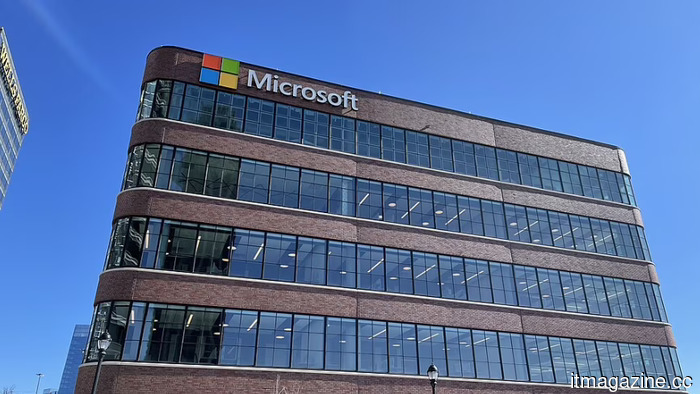 Microsoft Q4: Azure surpasses $100 billion, AI investment yields positive results.
Microsoft's Azure saw a growth of 43% and exceeded $100 billion for the year, with its backlog reaching $678 billion, while the stock increased by 2%. Meanwhile, investment in AI continues to rise.
Microsoft Q4: Azure surpasses $100 billion, AI investment yields positive results.
Microsoft's Azure saw a growth of 43% and exceeded $100 billion for the year, with its backlog reaching $678 billion, while the stock increased by 2%. Meanwhile, investment in AI continues to rise.
Meta's revenue exceeded expectations, although free cash flow plummeted by 91%.
Meta's revenue increased by 28% to reach $60.8 billion; however, profit declined by 14%, and free cash flow plummeted by 91% to $784 million due to rising expenses associated with its AI development. As a result, the stock fell.