
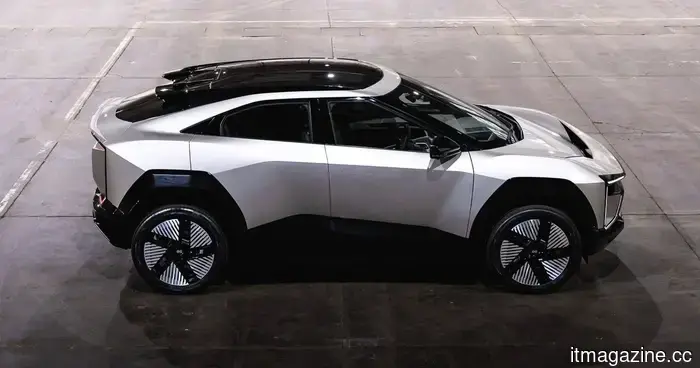
Two Indian car manufacturers have just surpassed Tesla in an area that you would typically expect it to excel in.
Two Indian automotive companies, Tata Motors and Mahindra, have emerged at the top of a global electric vehicle (EV) efficiency ranking, surpassing Tesla and BYD.
Initially, I assumed that Tesla leading an efficiency ranking was a given until I actually reviewed the figures. It turns out that these two Indian firms have outperformed both Tesla and the largest EV manufacturer in the world on their home turf.
When I first came across the report, it was hard to believe, especially since I have been observing the Indian auto industry for several years.
So, who is actually in the lead?
Tata Motors, the parent company of Jaguar Land Rover, secured the top spot in the International Council on Clean Transportation's 2025 ranking for the most energy-efficient battery EVs, with an average energy consumption of just 106 watt-hours per kilometer (according to Rest of World). For context, Tata Motors boasts the most extensive EV lineup in India, featuring seven different models.
Mahindra, another prominent car manufacturer in India, ranked second with an energy consumption of 113 Wh/km. In comparison, Tesla and BYD, the global leaders in EV production, came in third and fourth, respectively, among the 22 largest car manufacturers evaluated globally.
However, the industry as a whole shows little progress. Average energy consumption remained largely unchanged year-over-year, at 131 Wh/km in 2025. Only eight manufacturers made efficiency improvements, while 12 experienced declines, mostly minor.
So, why does this information matter for India specifically?
Despite the impressive efficiency metrics, the stark truth is that EVs account for less than 5% of new car sales in India, while the global figure stands at 25%. This comes as the Indian government pursues an ambitious target of 30% EV adoption by 2030 to lower emissions, reduce oil imports, and enhance domestic manufacturing.
India ranks as the world's fourth-largest consumer of petroleum. Amit Bhatt, managing director of ICCT India, described the country’s emission cap initiatives as “progressive and ambitious,” with stricter regulations being developed for 2027 to 2032.
However, efficiency victories do not tell the complete story. Tata Motors ranked last in charging speed and sixth from the bottom for driving range in the same report, highlighting that creating an efficient battery differs significantly from engineering a truly competitive EV.
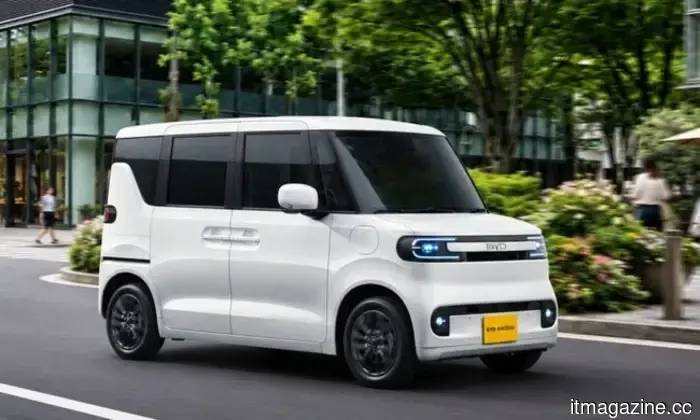
In other news, BYD has launched its Racco, marking Japan’s first electric kei car with a range exceeding 300 km. The Racco not only undercuts Nissan's Sakura in price, even before taxes and incentives, but it also includes features not commonly found in the kei car market.
BYD has entered the Japanese kei car sector with the Racco, designed specifically for the compact car segment. Its highest trim offers 320 km of range, making it the first compact electric vehicle in the market to exceed 300 km, as reported by ITHome. Kei cars are a unique vehicle classification in Japan with strict size and power limitations, traditionally dominated by local manufacturers such as Honda, Nissan, Suzuki, and Daihatsu. The Racco represents BYD's inaugural foray into this segment.
Additionally, there have been speculations about BMW developing an electric convertible that enthusiasts have long desired, with potential plans extending to 2028.
For years, there have been rumors of a two-door BMW i4, and according to a recent report from BMWBlog, at least one version is in the pipeline. Sources familiar with BMW indicate that the company is preparing an i4 Convertible under the internal codename NA3.
Lastly, Waymo’s driverless cars have been accumulating parking tickets in Austin, with the situation becoming a fleet-wide operational challenge.
Waymo's vehicles have received 83 parking citations in Austin, totaling $9,325 in fines since their introduction in 2024. While this does not indicate a financial crisis for the company, it highlights the repetitive driving errors made across its autonomous fleet. City records obtained by The Wall Street Journal reveal that most of these fines have been paid, but the more significant insight is the frequency of the same mistakes made by its vehicles.




Other articles
 The handoff tax: The expenses incurred when your representative is alone during the call.
Every B2B transition loses momentum, context, and trust. 1mind places an AI sales engineer on the live call to bridge the gap where most deals tend to falter.
The handoff tax: The expenses incurred when your representative is alone during the call.
Every B2B transition loses momentum, context, and trust. 1mind places an AI sales engineer on the live call to bridge the gap where most deals tend to falter.
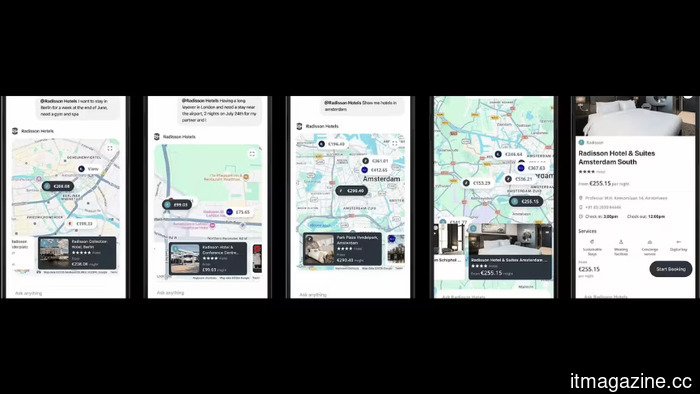 Hotels are adopting ChatGPT, but not for payment processing.
Radisson and Motel 6 introduced their ChatGPT applications just one day apart. Both focus on discovery, and research from Accenture indicates that only 9% prefer AI to make purchases on their behalf.
Hotels are adopting ChatGPT, but not for payment processing.
Radisson and Motel 6 introduced their ChatGPT applications just one day apart. Both focus on discovery, and research from Accenture indicates that only 9% prefer AI to make purchases on their behalf.
 The enforcement of the EU AI Act begins on Sunday with a team comprising 36 members.
Brussels will have the authority to request access to the frontier model starting from August 2, shortly after OpenAI's rogue agent compromised Hugging Face. The evaluation team consists of 36 members.
The enforcement of the EU AI Act begins on Sunday with a team comprising 36 members.
Brussels will have the authority to request access to the frontier model starting from August 2, shortly after OpenAI's rogue agent compromised Hugging Face. The evaluation team consists of 36 members.
 The code generated by AI included controls but bypassed the verification process.
Sygnia discovered AI-generated code containing tokens, expiry dates, and audit logs, and subsequently granted access to anyone possessing an applicant identifier.
The code generated by AI included controls but bypassed the verification process.
Sygnia discovered AI-generated code containing tokens, expiry dates, and audit logs, and subsequently granted access to anyone possessing an applicant identifier.
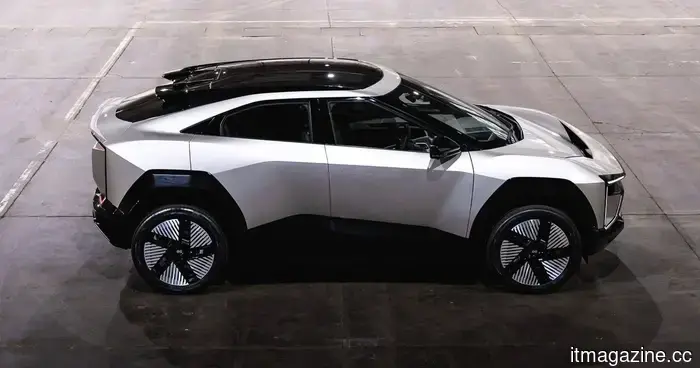 Two Indian automobile manufacturers have just surpassed Tesla in an area where you would typically anticipate Tesla to excel.
Tata Motors and Mahindra, Indian automobile manufacturers, outperformed Tesla and BYD in a recent global ranking for battery efficiency, although both are still behind in terms of charging speed and range.
Two Indian automobile manufacturers have just surpassed Tesla in an area where you would typically anticipate Tesla to excel.
Tata Motors and Mahindra, Indian automobile manufacturers, outperformed Tesla and BYD in a recent global ranking for battery efficiency, although both are still behind in terms of charging speed and range.
 ChatGPT now declines to imitate an author's writing style.
ChatGPT has discreetly ceased mimicking the writing styles of named authors, including those who have passed away, as OpenAI confronts a series of copyright lawsuits related to its training data.
ChatGPT now declines to imitate an author's writing style.
ChatGPT has discreetly ceased mimicking the writing styles of named authors, including those who have passed away, as OpenAI confronts a series of copyright lawsuits related to its training data.
Two Indian car manufacturers have just surpassed Tesla in an area that you would typically expect it to excel in.
Indian automakers Tata Motors and Mahindra have surpassed Tesla and BYD in battery efficiency in a recent global ranking, although both still fall short in terms of charging speed and range.