

Queensland and the Northern Territory oppose Australia's regulations on data centre energy usage.
Australian Prime Minister Anthony Albanese’s proposed national regulations for the environment and energy in relation to the country’s A$150 billion data centre initiative faced its first challenge on Tuesday, as two jurisdictions declined to support them. Federal, state, and territory energy ministers convened virtually to discuss the proposal, but both Queensland and the Northern Territory opposed several measures, including the concept of a unified national rulebook.
The main issue is that the policy demands unanimous approval. For the federal framework to advance, every state and territory must endorse it, giving any single jurisdiction the power to veto.
What the regulations would entail
New data centres would be required to generate at least as much electricity as they consume, a stipulation made by Albanese during a policy speech in July. He characterized this approach as a global first by integrating these issues into a singular national framework.
Additionally, operators would need to develop renewable energy sources, minimize water usage, enhance energy efficiency, and finance any additional water infrastructure they may require. Albanese provided limited details on the practical implementation of these requirements.
Why Queensland opposes the plan
Queensland Premier David Crisafulli had already expressed his position prior to the announcement, indicating that the state does not support imposing renewable energy mandates as it seeks to remain appealing to investors. This contradicts the intent of the national framework, which was designed to deter such actions.
“The policy announced by the Prime Minister won't succeed without support from all states and territories,” stated Rob Nicholls, a senior researcher at the University of Sydney’s Centre for AI, Trust, and Governance. “One of the reasons for having a policy is to prevent a race to the bottom among the states.”
The industry largely supports the framework, albeit with conditions
Belinda Dennett, CEO of the industry group Data Centres Australia, which includes members such as Google, AirTrunk, and Microsoft, expressed support for the principle that new electricity demand should be matched by new supply. She noted that many operators and clients already invest in renewable energy.
The industry is seeking clarity on three key points: whether the compliance responsibility lies with the operator or tenant, when the obligation will begin, and whether the offset is calculated based on actual electricity usage or nameplate capacity.
This last issue is significant, as nameplate capacity often exceeds actual usage, which could greatly affect the size of the obligation.
Public opinion outpaces political developments
A YouGov survey commissioned by Australia’s Climate Council revealed that 82% of respondents believe new data centres should contribute to the additional renewable energy and storage infrastructure necessary to meet their power needs. This measure enjoys considerable public support.
Economic aspects also have both favorable and unfavorable implications. Data centre investments could hit A$150 billion by 2030, with a planned capacity of six gigawatts, according to Commonwealth Bank associate economist Lucinda Jerogin, and the construction surge is providing support to a slowing economy.
Reasons for Australia being a target market
Australia ranked just behind the United States in investments in data centres for 2024, as per Knight Frank. Analysts at Bloomberg Intelligence, led by Matt Ingram, identified the country in June as a prime building location in Asia, citing its renewable energy potential, political stability, and low-latency submarine cables connecting to the broader region.
Demand is being driven by hyperscalers like Microsoft and Meta, while facing resistance from community and environmental advocates. Both pressures are escalating simultaneously.
Common challenges faced globally
Australia is not unique in attempting to impose conditions on computing operations. Brussels has instructed major tech companies to align AI data centres with climate objectives or refrain from participating, demanding that operators utilize clean energy and recycle waste heat.
In areas where regulators hesitate, grid systems are instituting their own limitations. For instance, Denmark has halted all new grid connection agreements after a backlog of 60 gigawatts overwhelmed the cleanest power system in Europe—an issue no policy framework can circumvent.
Ambitious clean energy targets have proven difficult to achieve. China aims for renewables to account for around four-fifths of its AI data centre power by 2030, up from approximately 11% in 2023, though this target is challenging for its own grid to accommodate.
The alternative scenario is even less favorable. The AI expansion has led to the largest construction surge of gas-fired power plants on record, which Australia’s additionality rule is intended to prevent.
Next steps
The federal government plans to collaborate with states, territories, and market entities to refine the policy, considering the option of stricter local requirements. Energy ministers will reconvene in September.
The National Cabinet is expected to review the strategy in August, with legislation projected for early 2027. The likelihood of maintaining the current format hinges on persuading Queensland and the Northern Territory that a national baseline is preferable to competing based on the least demanding requirements.
Other articles
 Friendsurance was valued for its documentation rather than its innovative concept.
Cover Genius has acquired Friendsurance, the Berlin-based company that launched peer-to-peer insurance in 2010. The terms of the deal remain undisclosed, occurring just two weeks after a $100 million fundraising round.
Friendsurance was valued for its documentation rather than its innovative concept.
Cover Genius has acquired Friendsurance, the Berlin-based company that launched peer-to-peer insurance in 2010. The terms of the deal remain undisclosed, occurring just two weeks after a $100 million fundraising round.
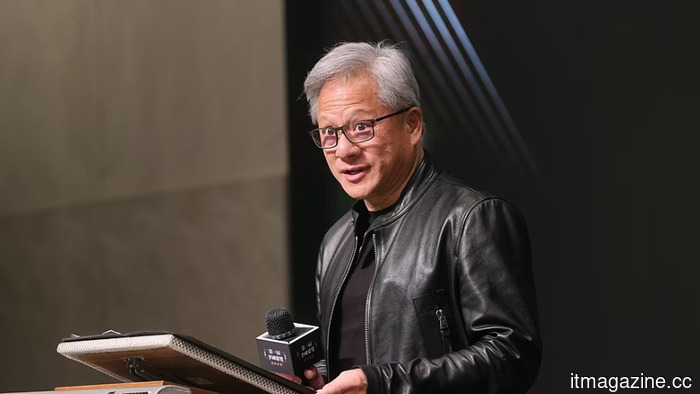 Nvidia's $750 billion AI agreements have driven its credit default swaps to an all-time high.
Nvidia's CDS spread reached an all-time high of 82 bps following $750 billion in AI transactions that sparked concerns about circular financing. Jensen Huang described the criticism as "ridiculous."
Nvidia's $750 billion AI agreements have driven its credit default swaps to an all-time high.
Nvidia's CDS spread reached an all-time high of 82 bps following $750 billion in AI transactions that sparked concerns about circular financing. Jensen Huang described the criticism as "ridiculous."
 Core Scientific shifts its focus to AMD with a 2.5GW AI data center agreement, just months after the CoreWeave deal fell through.
Core Scientific has entered into a data center agreement with AMD that has the potential to reach 2.5GW, just nine months after shareholders turned down a $9 billion acquisition of CoreWeave.
Core Scientific shifts its focus to AMD with a 2.5GW AI data center agreement, just months after the CoreWeave deal fell through.
Core Scientific has entered into a data center agreement with AMD that has the potential to reach 2.5GW, just nine months after shareholders turned down a $9 billion acquisition of CoreWeave.
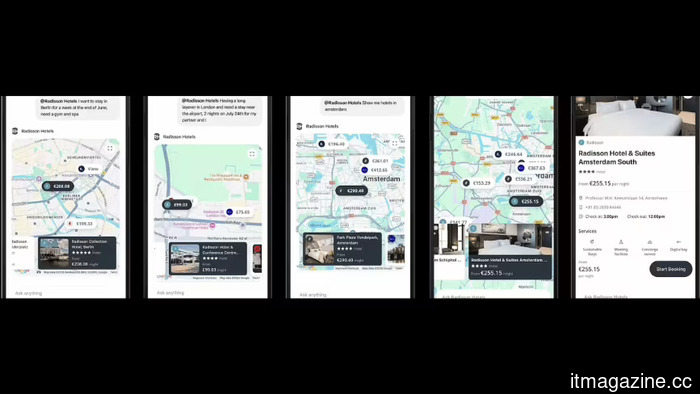 Hotels are adopting ChatGPT, but not the payment systems.
Radisson and Motel 6 introduced ChatGPT applications just one day apart. Both focus on discovery, and research by Accenture indicates that only 9% of people prefer AI to make purchases on their behalf.
Meta and BlackRock establish a $14 billion partnership to create an AI data center in El Paso.
Meta and BlackRock have established a joint venture worth $14 billion to develop a one-gigawatt data center in El Paso, with BlackRock funds holding an 80% stake and Meta leasing the facility back.
Hotels are adopting ChatGPT, but not the payment systems.
Radisson and Motel 6 introduced ChatGPT applications just one day apart. Both focus on discovery, and research by Accenture indicates that only 9% of people prefer AI to make purchases on their behalf.
Meta and BlackRock establish a $14 billion partnership to create an AI data center in El Paso.
Meta and BlackRock have established a joint venture worth $14 billion to develop a one-gigawatt data center in El Paso, with BlackRock funds holding an 80% stake and Meta leasing the facility back.
 Meta AI is entering your Threads direct messages, the perfect place for awkward AI conversations.
Meta is providing Threads users with a more private option to interact with its AI chatbot, allowing them to pose questions and receive context on posts directly within their DMs.
Meta AI is entering your Threads direct messages, the perfect place for awkward AI conversations.
Meta is providing Threads users with a more private option to interact with its AI chatbot, allowing them to pose questions and receive context on posts directly within their DMs.
Queensland and the Northern Territory oppose Australia's regulations on data centre energy usage.
Australia's groundbreaking regulations requiring data centers to contribute as much power as they consume faced obstacles, as Queensland and the Northern Territory opposed many of the proposed measures.