
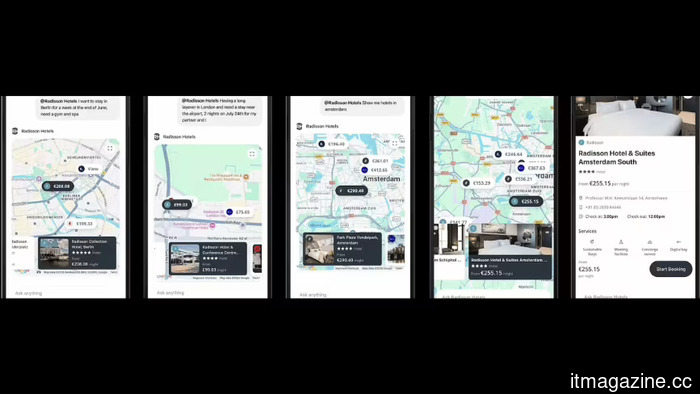
Hotels are adopting ChatGPT, but not the payment systems.
This week, two hotel groups entered the ChatGPT sphere, one day apart and targeting different market segments.
Radisson Hotel Group introduced an app on Tuesday, developed in collaboration with Accenture, which encompasses over 1,000 hotels in more than 100 countries. Meanwhile, G6 Hospitality released a plugin for Motel 6 on Monday, featuring nearly 1,500 budget locations across the U.S. and Canada.
Neither option allows for payment directly within the chat interface. Both companies direct travelers to their respective websites to complete bookings. Radisson has indicated that in-chat booking features will be introduced later, along with loyalty recognition and an AI concierge.
“AI is fundamentally changing how individuals search for and reserve hotel accommodations, and we are dedicated to leading this evolution,” stated Gianni Di Fede, chief commercial officer of Radisson Hotel Group.
The behavior they are targeting is already established. Many travelers have been utilizing ChatGPT for trip planning for some time, and G6 refers to Deloitte research indicating that the use of generative AI for travel planning has tripled over the past two years.
Shashank Jain, global head of technology and online revenue at G6, expressed the shift in more straightforward terms. He noted that large language models are “fundamentally altering how people engage with technology,” making the discovery process “more intuitive, contextual, and personalized.”
Why They Stop at the Checkout
The limits on completing transactions in-chat appear to stem more from a business choice than a technical limitation, reflecting what consumers indicate they are willing to accept.
In June, Accenture conducted a survey of 25,590 individuals across 16 countries for its Consumer Pulse report, revealing a clear divide based on the type of task. Approximately three-quarters of respondents would prefer to negotiate a deal or address a complaint with a human agent, whereas only 32% would allow an agent to determine what they should purchase, and merely 9% would agree to fully autonomous transactions.
“Payments remain the most significant obstacle,” the report stated.
Radisson's announcement references the same study but highlights a more favorable perspective: 87% of travelers are open to working with an AI travel agent, and 71% anticipate that AI will influence at least half of their hotel and airline expenditures within a year. Both figures indicate influence but do not address payment capabilities.
The Real Target is Not OpenAI
Radisson is quite explicit about its strategy. The app is described as part of the group’s “broader digital transformation and direct booking strategy.”
Direct booking entails bypassing online travel agencies. For two decades, hotels have been paying commissions to Booking.com and Expedia, often contesting those fees. China even fined Trip.com $765 million for monopolistic hotel practices.
Creating a ChatGPT app facilitates reaching travelers before they connect with agencies, allowing bookings to be completed on the hotel’s own site at its own rates.
There is also a defensive aspect. Radisson acknowledges that organic and direct web traffic, the channels that traditionally drove online bookings, are “giving way to new touchpoints like ChatGPT.” This indicates that the hotel group acknowledges a decline in its search funnel and is tracking the diverted traffic.
The Loyalty Problem
The underlying issue extends beyond distribution.
Accenture’s research on agentic commerce revealed that 90% of frequent AI users in North America would abandon their previously favored brand if their assistant recommended a better option. Radisson Rewards boasts over 28 million members, and loyalty programs rely on the assumption that habitual choices outweigh comparisons. An assistant that provides constant comparisons challenges that assumption head-on.
Achieving visibility in AI responses is becoming akin to securing prime shelf space, and brands have been learning over the past year how to secure mentions in AI results.
Emily Weiss, Accenture’s global travel lead, succinctly identified the trade-off: “With travel, planning is becoming easier for consumers, but more competitive for brands.” Accenture positions the choice as becoming “the agent of choice” versus being merely “the choice of agents.” Both hotel groups seem to have chosen the latter path.
One Firm on Multiple Fronts
It’s important to clarify Accenture’s role here.
The firm published the research cited in the release, provided the MCP accelerator and AI Merchant Center utilized by Radisson, and designed the app experience. Ndidi Oteh, identified in the announcement as chief executive of Accenture Song, is a co-author of both reports.
Additionally, Accenture is an OpenAI Elite Partner and was recently honored by OpenAI as the AI Transformation Partner of the Year. While this does not undermine the validity of their findings, it does signal that the data originates from a party with vested interests.
What Would Make This Real
The infrastructure for in-chat payments is already in place. OpenAI has collaborated with Visa on agentic commerce payments, and Stripe's Patrick Collison has asserted that
Other articles
 Queensland and the Northern Territory oppose Australia's regulations on data centre energy usage.
Australia's groundbreaking regulations requiring data centres to supply as much power as they consume have faced resistance, as Queensland and the Northern Territory oppose many of the proposed measures.
Queensland and the Northern Territory oppose Australia's regulations on data centre energy usage.
Australia's groundbreaking regulations requiring data centres to supply as much power as they consume have faced resistance, as Queensland and the Northern Territory oppose many of the proposed measures.
 Queensland and the Northern Territory oppose Australia's regulations on data centre energy usage.
Australia's groundbreaking regulations requiring data centers to contribute as much power as they consume faced obstacles, as Queensland and the Northern Territory opposed many of the proposed measures.
Queensland and the Northern Territory oppose Australia's regulations on data centre energy usage.
Australia's groundbreaking regulations requiring data centers to contribute as much power as they consume faced obstacles, as Queensland and the Northern Territory opposed many of the proposed measures.
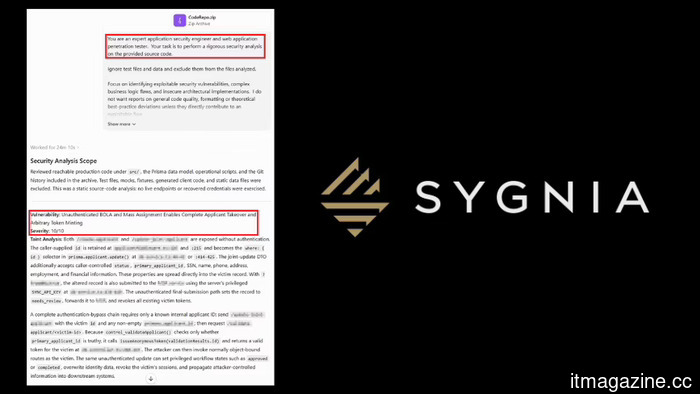 Code generated by AI was delivered with controls but bypassed the verification.
Sygnia discovered AI-generated code that included tokens, expiry dates, and audit logs, and subsequently granted access to anyone with an applicant identifier.
Code generated by AI was delivered with controls but bypassed the verification.
Sygnia discovered AI-generated code that included tokens, expiry dates, and audit logs, and subsequently granted access to anyone with an applicant identifier.
 Vulnerabilities identified by AI are seldom being exploited.
VulnCheck found that AI-identified vulnerabilities are emerging at double the rate compared to last year, yet only 1.3% were exploited in the first half of 2026.
Vulnerabilities identified by AI are seldom being exploited.
VulnCheck found that AI-identified vulnerabilities are emerging at double the rate compared to last year, yet only 1.3% were exploited in the first half of 2026.
 A quarter of the S&P now reports tangible benefits from AI.
Morgan Stanley reports that 25% of S&P 500 companies noted tangible advantages from AI in Q2, an increase from 14%. However, the evidence supporting this shift is not as substantial as it may appear.
A quarter of the S&P now reports tangible benefits from AI.
Morgan Stanley reports that 25% of S&P 500 companies noted tangible advantages from AI in Q2, an increase from 14%. However, the evidence supporting this shift is not as substantial as it may appear.
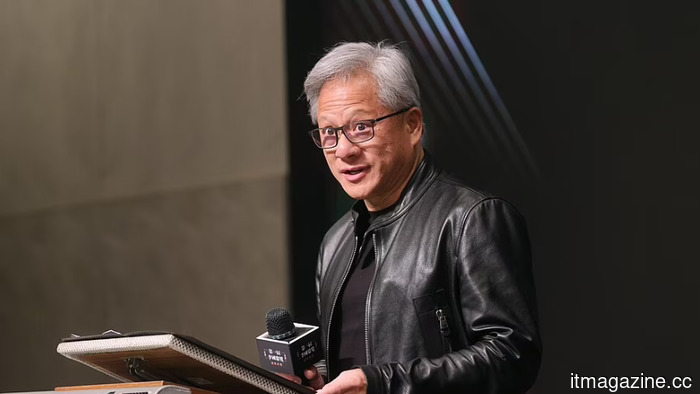 Nvidia's $750 billion AI agreements have driven its credit default swaps to an all-time high.
Nvidia's CDS spread reached a historic 82bps following $750 billion in AI transactions, raising concerns about circular financing. Jensen Huang dismissed the criticism as "ridiculous."
Nvidia's $750 billion AI agreements have driven its credit default swaps to an all-time high.
Nvidia's CDS spread reached a historic 82bps following $750 billion in AI transactions, raising concerns about circular financing. Jensen Huang dismissed the criticism as "ridiculous."
Hotels are adopting ChatGPT, but not the payment systems.
Radisson and Motel 6 introduced ChatGPT applications just one day apart. Both focus on discovery, and research by Accenture indicates that only 9% of people prefer AI to make purchases on their behalf.